
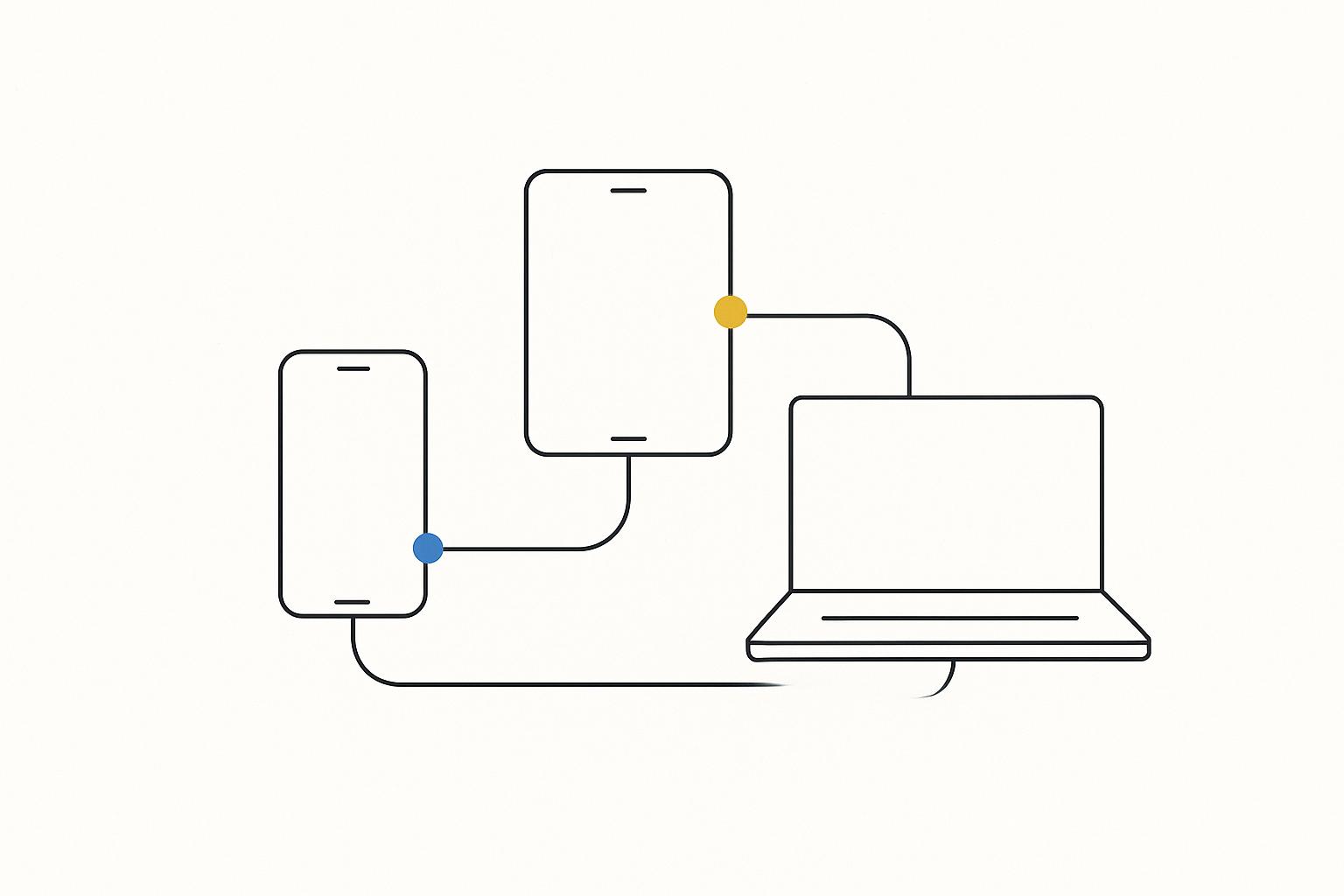
Cross-Device Personalization Strategies
Cross-device personalization ensures your customers enjoy a consistent, tailored experience across all their devices - whether it's a phone, tablet, desktop, or smart TV. Here's why it matters and how you can implement it effectively:
Key Takeaways:
- 90% of users switch between devices during their journey, and 67% complete purchases on a different device than they started on.
- Businesses using this strategy report up to 20% higher conversions and 15% better retention.
- AI and data analytics power this approach by creating unified user profiles and predicting preferences in real time.
Core Strategies:
- Dynamic Content: Show relevant, device-specific content based on browsing habits or location.
- Omnichannel Integration: Keep carts, offers, and messaging consistent across devices and platforms.
- Real-Time Personalization: Tailor experiences instantly based on live user actions.
Challenges:
- Privacy laws like GDPR and CCPA complicate data handling.
- Fragmented data silos lead to inconsistent customer experiences.
- Real-time execution demands advanced infrastructure and precise tracking.
Future Trends:
- AI will evolve to predict user needs and adjust messaging based on context, mood, and location.
- Hyper-personalization will treat every user as a unique audience, enhancing engagement.
Next Steps:
- Map customer touchpoints to identify gaps in device consistency.
- Centralize data using tools like customer data platforms (CDPs).
- Use AI to deliver timely, relevant content and refine strategies with A/B testing.
Cross-device personalization isn't just a nice-to-have - it’s a must for modern businesses aiming to keep customers engaged and loyal.
How to Scale Personalization Across the Digital Experience
Core Strategies for Cross-Device Personalization
This section dives into methods that ensure smooth and consistent experiences across devices.
Dynamic Content Personalization
Dynamic content personalization means adjusting your website, app, or email content in real time based on what you know about the user. This could include their browsing habits, purchase history, location, or even the device they're currently using [1][3].
The goal is to keep content relevant no matter the device. For instance, a travel company might show beach destinations to someone who previously searched for tropical vacations, while highlighting mountain retreats for outdoor enthusiasts. Similarly, if a shopper browses winter coats on their phone during lunch, those same coats could appear prominently when they access your website later on their desktop at work.
Retailers also adapt layouts to match user behavior. Mobile users often prefer quick, scannable information and streamlined checkout options, while desktop users may appreciate detailed product descriptions and tools for comparison.
Research shows that 80% of consumers are more likely to buy from brands offering personalized experiences [3]. This isn’t just about suggesting the right products - it’s about creating interactions that feel tailored to each individual.
Next, let’s look at how integrating multiple channels can enhance this personalization even further.
Omnichannel Integration
Omnichannel integration ensures that your messaging, offers, and user experience remain consistent across every touchpoint - whether it’s mobile, desktop, email, or even an in-store visit [1][8]. This requires centralizing customer data to coordinate communication across all channels. For example, if a customer adds items to their cart on their phone, those items should still be in their cart when they log in on their desktop. Similarly, an email offer should work seamlessly whether accessed on a phone or a computer.
A great example of this is cross-channel coupons. Customers might receive a personalized discount via email and redeem it online or in-store using a QR code [1]. Additionally, product recommendations that follow users across devices create a connected, rather than fragmented, experience.
When customer service representatives can view a shopper’s recent online activity during a call - or when in-store staff can access a customer’s preferences and purchase history - the entire journey feels more unified and personalized.
Real-Time Personalization
Real-time personalization takes things a step further by tailoring experiences based on what a user is doing in the moment. Instead of relying solely on past data, this approach adapts to immediate actions [3][4].
This technology processes live user behavior to update content instantly. For example, if someone adds an item to their cart on mobile, that product might be highlighted when they visit your website on a desktop later [4].
Sequential messaging is a great tool here. A brand might start with general awareness content on mobile and then follow up with detailed product information on desktop, where users are more likely to conduct in-depth research.
Real-time personalization also enables contextual recommendations. For instance, an e-commerce site might promote umbrellas if it’s raining in a customer’s area or suggest warm clothing during a cold snap. These timely and relevant suggestions can increase cross-sells, time spent on your platform, and even the average order value [3].
The key is having systems in place that can analyze data and make decisions in milliseconds. When executed effectively, real-time personalization ensures every interaction feels timely, relevant, and tailored to the customer’s immediate needs.
How to Implement Cross-Device Personalization
Turning cross-device strategies into effective personalization requires a systematic approach. It all starts with tracking every interaction customers have with your brand [2].
Collecting and Analyzing User Data
Begin by identifying every touchpoint where customers engage with your brand - whether it’s through your website, mobile app, in-store systems, or email campaigns [2].
Encourage users to log in or provide identifiers to link their actions across different devices. Tools like cookies, device fingerprinting, and mobile IDs are essential for capturing app interactions [7].
Once collected, consolidate this data into a single customer data platform. Analytics tools can then bring together information from various channels, offering insights into user behavior. For instance, customers might browse products on their phones during a commute but finalize purchases on a desktop. Attribution modeling pinpoints which touchpoints drive conversions, while A/B testing refines personalized content for better performance across devices [1][4].
When the data is centralized, it’s time to use these insights to create unified customer profiles.
Creating Unified Customer Profiles
A unified customer profile combines all interactions a user has with your brand into one comprehensive view, regardless of the device they use.
This is made possible through identity resolution solutions. Tools like universal IDs, mobile advertising IDs, and login-based identifiers connect user activity across devices [2]. Providers such as LiveRamp or The Trade Desk use identity graphs to merge first-party data with device IDs, creating detailed profiles [2]. Customer data platforms and CRM systems then update these profiles in real time [8], enabling a smooth and consistent customer experience that can boost satisfaction, loyalty, and conversions [1][4].
A great example of this in action comes from 2024, when Blue Sea Holidays used unified profiles to automate customer engagement across email and website channels. This approach allowed them to deliver AI-driven email recommendations and dynamic website content, leading to better engagement and higher conversion rates [1].
Using AI and Machine Learning
With unified profiles in place, AI and machine learning become the engines driving personalization. These technologies process vast amounts of cross-device data to predict user behavior, segment audiences, and deliver tailored content [1][3].
For example, predictive recommendations suggest products based on browsing history or trigger targeted offers when a customer shows buying intent. Machine learning models can also determine the best timing and channel for personalized messages, maximizing their impact [1].
Real-time AI takes it a step further by analyzing behavior instantly and updating content on the fly, ensuring offers are always timely and relevant [1][3].
For professionals in technical leadership roles, understanding how AI enables personalization at scale can be a game-changer. Programs like those from Tech Leaders help bridge the gap, equipping leaders with the necessary business strategy skills to leverage these technologies effectively.
While implementing AI and machine learning requires a robust infrastructure capable of processing data and making split-second decisions, the payoff is clear. Higher engagement, better conversion rates, and seamless customer experiences make the investment worthwhile.
sbb-itb-8feac72
Common Challenges in Cross-Device Personalization
Cross-device personalization offers a powerful way to enhance user engagement, but it comes with its fair share of challenges. Knowing these obstacles ahead of time can help you design better systems and avoid costly missteps.
Privacy and Compliance Concerns
With regulations like GDPR and CCPA now in place, handling user data across devices has become a tightrope walk. These laws require clear consent for data collection, and failing to comply can lead to fines running into millions of dollars. One of the toughest issues is managing consent across multiple devices. For example, a user granting data collection permission on their smartphone doesn’t mean that consent automatically applies to their desktop or tablet. This makes robust consent management systems a must.
A 2024 survey revealed that while 72% of consumers expect brands to recognize them across all channels and devices, only 45% of marketers feel prepared to meet that expectation[4]. Much of this gap stems from privacy concerns that restrict data sharing between platforms.
To tackle these issues, integrate privacy protections directly into your system from the start. This includes offering clear opt-in and opt-out options that work seamlessly across devices. Regular audits of your data flows can help ensure compliance. Tools like cookie consent banners and preference centers allow users to control their data while still enabling personalization for those who opt in[4][7]. Transparency is critical - make sure users understand what data you’re collecting and how it will improve their experience.
Maintaining Consistency Across Devices
Device fragmentation is another major challenge. A single user might interact with your brand using an iPhone, a Windows laptop, and a smart TV, each with its own operating system, screen size, and capabilities. Your personalization system needs to adapt to these differences while keeping the core message and experience consistent.
According to a 2023 Forrester report, 60% of companies face issues with data silos, which prevent the creation of unified customer profiles essential for cross-device personalization[2]. When your email marketing platform doesn’t sync with your mobile app data, it leads to fragmented experiences that can erode trust and hurt conversions.
Real-time synchronization is also tricky. If a customer adds items to their cart on mobile, those items should immediately appear when they switch to desktop. Achieving this requires strong APIs, reliable cloud infrastructure, and precise session management.
Breaking down silos and addressing device fragmentation demands both technological and organizational changes. Centralized data management platforms can unify customer profiles, ensuring a seamless experience across devices[2]. Additionally, forming cross-functional teams that bring together technical and marketing expertise can help identify and resolve inconsistencies. Regular audits of user journeys will also highlight areas that need improvement[1][6].
Real-Time Implementation Challenges
Real-time personalization raises the bar even higher. To deliver a seamless experience, your system must make decisions and execute them in milliseconds. This level of complexity can overwhelm even the most experienced teams.
For instance, when a user switches from browsing on mobile to purchasing on desktop, your system has mere moments to recognize them, retrieve their profile, and serve personalized content. This requires advanced identity graphs and universal IDs to track user behavior across devices[2].
The stakes are high - cart abandonment rates average 69.57% across devices, but personalized, cross-device cart abandonment emails can reduce this by up to 20%[1]. To capture these opportunities, your system must trigger responses instantly, regardless of the device.
Handling real-time data processing for thousands of users across multiple devices demands a highly scalable infrastructure. Any delay in processing behavioral signals or updating customer profiles can disrupt the user experience and weaken the impact of personalization.
Attribution modeling adds yet another layer of difficulty. When a customer sees an ad on mobile, researches on desktop, and completes a purchase on a tablet, figuring out which touchpoint deserves credit becomes a significant challenge. Privacy regulations further complicate this by restricting cross-device tracking[4].
To navigate these hurdles, consider investing in AI-powered personalization platforms capable of processing data and making decisions in real time[1][3][4]. Tools like LiveRamp and OnAudience can help link user interactions across devices with greater precision[2]. Scalable cloud infrastructure is also essential to handle traffic spikes and ensure smooth data processing.
For technical leaders, balancing the complexities of technology and business strategy is key. Programs like those from Tech Leaders can provide the skills needed to manage these challenges effectively.
The road to perfect real-time personalization is a marathon, not a sprint. Start with small, manageable goals, test your systems thoroughly, and scale gradually. Building a strong foundation is far more important than rushing to implement advanced features.
Future Trends in Cross-Device Personalization
The world of cross-device personalization is evolving rapidly, driven by advancements in technology and shifting user expectations. Several emerging trends are redefining how brands engage with customers across various platforms.
Advances in AI and Predictive Analytics
Artificial intelligence is stepping up its game, moving beyond simple recommendation engines to offer smarter, more intuitive personalization. Deep learning models now analyze large volumes of cross-device behavioral data, enabling highly accurate predictions about user preferences and intentions[1][4]. These systems don’t just respond to past actions - they anticipate what users might do next.
One exciting development is the use of emotional intelligence in AI. These systems analyze sentiment and mood to adjust messaging in real time. For instance, if a mobile user appears frustrated, the system might deliver more supportive, empathetic messaging when the user switches to desktop, rather than pushing promotional content.
Real-time analytics have also hit new levels. Tools like Dotdigital and Fresh Relevance leverage AI to tailor recommendations and automate interactions across email and web platforms, creating seamless, connected experiences for users[1].
Better Context Awareness
AI-powered systems are becoming increasingly adept at understanding context, which is key to delivering relevant personalization. Future platforms will use factors like time of day, location, device type, and user activity to craft more meaningful interactions[4]. For example, a brand might deliver quick, awareness-focused messages on mobile during a morning commute, followed by detailed product information on desktop later in the evening.
Enhanced sensors and geolocation capabilities add another layer of sophistication. AI can now distinguish between casual browsing and serious shopping. It can even incorporate external factors like weather or local events. Picture this: a retailer promoting rain jackets during a storm, or a restaurant highlighting delivery options during a big game.
Hyper-Personalization and Adaptive Experiences
Hyper-personalization takes things a step further by using real-time data and predictive analytics to treat every user as a unique audience of one[3]. This approach adapts user journeys in the moment, ensuring that content, recommendations, and interfaces evolve as users switch between devices. For example, Google Play Books might send targeted discounts via email or mobile push notifications when items on a user’s wishlist drop in price, boosting both sales and satisfaction[3].
The ability to adjust on the fly is a game-changer. If a user adds an item to their cart on mobile, the system can highlight that same item when they log in on desktop, maintaining continuity[4][5]. Machine learning algorithms enhance this process by recognizing patterns, such as a preference for researching on one device and completing purchases on another.
A great example of this in action comes from Neal’s Yard Remedies. In 2024, they revamped their cart abandonment strategy by combining personalized emails with A/B testing. Using Fresh Relevance, they delivered tailored recommendations based on user behavior, creating adaptive experiences that significantly boosted customer engagement[1].
For technical leaders, programs like those offered by Tech Leaders help bridge the gap between technical expertise and strategic leadership, equipping them to tackle these challenges head-on.
Brands that embrace these trends will position themselves to thrive in an increasingly competitive landscape.
Key Takeaways for Cross-Device Personalization
Cross-device personalization is a powerful way to boost engagement, build customer loyalty, and drive revenue.
Summary of Core Strategies
At its heart, successful cross-device personalization relies on three main strategies: dynamic content, omnichannel integration, and real-time personalization.
By using AI-driven, data-focused approaches, businesses can analyze user behavior and predict preferences with impressive precision. Companies like Blue Sea Holidays and Neal's Yard Remedies have shown how unified customer profiles and AI-powered recommendations can significantly improve conversion rates[1].
A standout example comes from a major American fashion retailer in 2025. By connecting user interactions across web, mobile, and app platforms through account data, they delivered personalized recommendations based on cross-device behavior. This approach led to higher engagement and conversion rates[5].
However, personalization efforts must always respect user privacy. Investing in secure tracking systems and centralized data platforms ensures data is handled responsibly while still enabling real-time, relevant user experiences.
Next Steps to Take
To implement a seamless personalization framework, consider these actionable steps:
- Map the customer journey: Identify areas where users face friction or inconsistent experiences when switching between devices. This insight helps pinpoint gaps in the overall experience.
- Centralize your data and adopt identity solutions: Use tools like universal IDs or mobile ad IDs to recognize users across all their devices. A unified approach ensures consistent messaging and tailored offers, no matter how customers interact with your brand.
- Leverage AI for real-time personalization: AI can help deliver content that feels timely and relevant, adapting to user preferences as they evolve.
- Test and refine your strategies: Use A/B testing and analytics to measure the effectiveness of your efforts. Key metrics to track include cross-device conversion rates, customer engagement, retention rates, and return on ad spend (ROAS).
Leadership's Role in Driving Personalization
Even with the right strategies in place, strong leadership is critical to ensure ongoing success in cross-device personalization.
Leaders play a pivotal role by setting a clear vision, allocating resources for the necessary technology and talent, and fostering a workplace culture that values experimentation and data-driven decisions. Collaboration across teams - marketing, IT, and data - is essential, and leaders must actively encourage this teamwork.
For technical leaders, the challenge goes beyond implementing technology. They must also develop the ability to communicate the benefits of cross-device personalization to senior executives. This requires a mix of technical expertise and strategic insight, along with the skills to navigate organizational dynamics and secure buy-in for complex initiatives.
Ultimately, the digital landscape is evolving at a rapid pace. Companies that fail to prioritize cross-device personalization risk delivering fragmented user experiences, lower conversion rates, and losing ground to competitors who offer seamless, personalized journeys. Success demands a combination of technical know-how and strategic leadership working together effectively.
FAQs
How can businesses comply with privacy laws like GDPR and CCPA while using cross-device personalization?
When working on cross-device personalization, it's crucial to respect privacy laws like GDPR and CCPA. Start by ensuring user consent and maintaining transparency. Let users know exactly how their data will be collected, shared, and used across devices. And most importantly, always give them the option to opt out whenever they choose.
Beyond transparency, focus on data security. Put strong measures in place to safeguard user information and stick to collecting only the data you truly need for personalization. To stay compliant and avoid legal troubles, regularly review your practices and adjust them to meet changing regulations. This approach not only keeps you within the law but also helps build and maintain user trust.
How can I create unified customer profiles that work seamlessly across multiple devices?
To build unified customer profiles across various devices, start by integrating data from all user touchpoints into one centralized system. Tools like Customer Data Platforms (CDPs) are incredibly helpful for gathering and consolidating interactions from websites, apps, and other channels. This approach ensures that users enjoy a seamless and personalized experience, no matter which device they’re on.
Focus on maintaining data accuracy by identifying and merging duplicate or fragmented profiles. It’s also crucial to enable real-time data synchronization so profiles stay up-to-date as users move between devices. This way, you can deliver a more connected and personalized experience that aligns with each user's preferences and behavior.
How does AI improve real-time personalization, and what systems are required to support it?
AI takes real-time personalization to the next level by analyzing user behavior, preferences, and interactions across multiple devices. This allows it to deliver customized experiences almost instantly. Machine learning algorithms play a key role here, predicting what users might need, fine-tuning recommendations, and adjusting content on the fly to create a smooth, engaging experience.
To make this happen, a strong technical foundation is crucial. This includes cloud computing for scalable and efficient data processing, real-time analytics platforms to quickly interpret user data, and AI models trained on diverse datasets to ensure predictions are accurate and relevant. Equally important is secure data storage and strict adherence to privacy regulations, which are essential for building and maintaining user trust.