
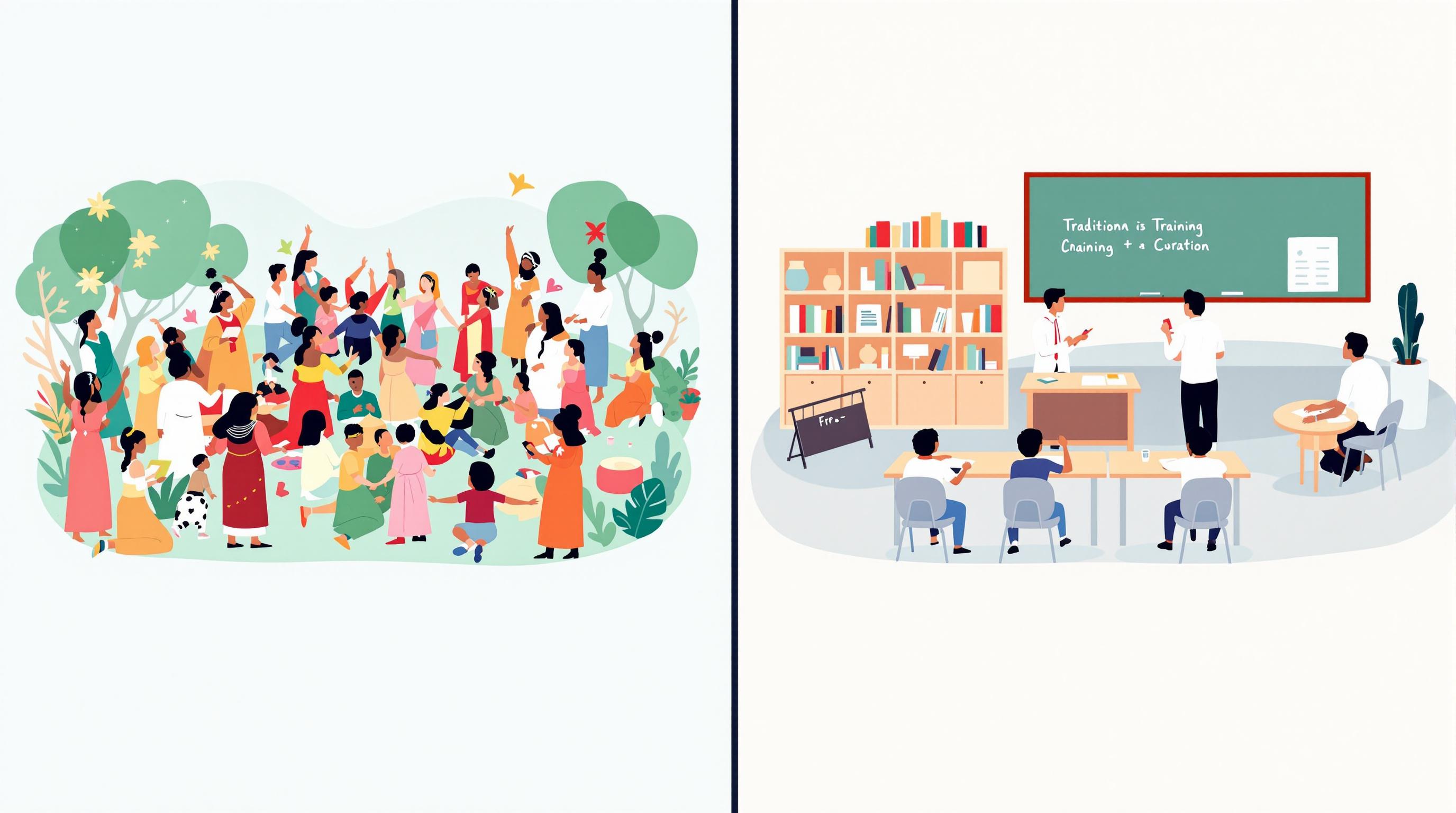
Cultural Immersion vs. Traditional Training Methods
Cultural immersion and classroom-based training are two popular methods for diversity training. Which one works better? Here’s a quick breakdown:
- Cultural Immersion: Hands-on, experience-driven training that builds empathy and long-term skills. It’s 2x more effective at improving cross-cultural communication but costs $2,500+ per person and takes 3-6 months.
- Classroom Training: Scalable and affordable ($200-$1,000 per person), focusing on compliance and policy. However, only 20-30% of knowledge is retained after six months.
Quick Comparison Table
| Metric | Cultural Immersion | Classroom Training |
|---|---|---|
| Cost per Participant | $2,500 - $10,000 | $200 - $1,000 |
| Time Investment | 3-14 days | 4-16 hours |
| Engagement Rate | 80-90% | 40-60% |
| Knowledge Retention | 60-70% (6 months) | 20-30% (6 months) |
| Empathy Development | 70-80% improvement | 30-40% improvement |
For the best results, a combined approach works well: start with classroom training for foundational knowledge, then use cultural immersion for hands-on experience. This mix improves retention, communication, and leadership skills, especially for tech leaders managing global teams.
Learning Through Immersion
How Immersion Works
Cultural immersion addresses the challenges of traditional compliance training by using a structured, three-phase method. This approach directly tackles the 68% of engineering delays caused by cultural misunderstandings, as mentioned earlier.
- Phase 1 focuses on building cultural knowledge by teaching key terminology.
- Phase 2 involves pairing leaders with diverse teams for hands-on shadowing experiences.
- Phase 3 turns these insights into practical workflows that teams can implement [1][4].
Advantages of Immersion
For technical leaders managing global teams, immersion offers clear operational improvements:
- Companies have seen 63% faster product localization by involving diverse teams in immersion programs.
- Engineering teams report a 41% drop in conflicts during global launches [7][8].
Drawbacks of Immersion
Despite its benefits, immersion programs come with notable challenges. The average cost is $2,500 per employee, which is five times higher than traditional classroom training [1][8]. Additionally, these programs require a longer commitment, typically lasting 3-6 months, compared to single-day workshops.
Key implementation challenges include:
- Inadequate preparation: Without proper pre-training, effectiveness drops by 38%. A solution is to mandate preparatory sessions.
- High costs: At $2,500 per employee, immersion is costly compared to $500 for traditional methods. VR-based alternatives, costing around $800 per headset, offer a potential solution.
- Scaling issues: 87% of S&P 500 companies rely on local partnerships to make scaling feasible.
Because of these hurdles, full immersion programs may not be practical for every organization. This has led to the development of hybrid approaches, which will be discussed further in the section on Combined Training Approach [1][4].
Classroom-Based Training
Standard Training Methods
Despite the rise of immersive programs, 87% of enterprises still stick with classroom-based methods because they can scale better for larger teams [2]. These programs usually focus on legal compliance and policy education through three main formats: instructor-led workshops (42%), compliance-focused lectures (35%), and e-learning modules (23%) [2].
For example, tech companies like Sweetwater use a mix of video courses and pre-designed curricula to streamline their training processes [2].
Advantages of Standard Training
Classroom-based training offers clear benefits for organizations rolling out diversity initiatives:
| Advantage | Impact |
|---|---|
| Scalability | Train over 1,000 employees at once |
| Compliance Tracking | Keep accurate, auditable completion records |
| Standardization | Ensure consistent messaging organization-wide |
For large organizations, this approach is especially useful. Learning management systems (LMS) make it easy to track compliance on a large scale [6][2].
Drawbacks of Standard Training
However, these benefits come with limitations. Standardized methods often struggle to address team-specific dynamics. Unlike IBM's immersive program, traditional classroom training tends to lack long-term impact. Research shows 42% of employees feel lecture-based DEI training doesn’t connect to their daily work [9].
"Our studies show that mandatory diversity training can actually lead to a 6% decrease in representation of Black women in management roles, highlighting the importance of voluntary participation", says Dr. Kristal Walker, VP at Sweetwater [9].
Here are some of the key challenges:
- Low retention rates: Only 13% of content is remembered after 90 days [11].
- Engagement problems: Generic approaches fail to reflect team-specific needs [9].
- Overly broad content: Standardized material rarely tackles unique challenges [9].
To address these issues, some companies are adding customized case studies and small-group breakout sessions. These adjustments improve application rates by 31%, but still don’t match the engagement levels seen with immersive training programs [9][11].
The Evolution of Cultural Competence: Traditional vs Modern Approaches
sbb-itb-8feac72
Direct Comparison of Methods
When you put cultural immersion side by side with classroom-based diversity training, the differences in impact and resources become clear. A look at data from over 830 companies highlights contrasting results across key metrics.
Here’s how the two stack up:
Performance Metrics Table
| Metric | Cultural Immersion | Traditional Training | Impact Difference |
|---|---|---|---|
| Cost per Participant | $2,500 - $10,000 | $200 - $1,000 | 10x higher investment |
| Time Investment | 3-14 days | 4-16 hours | 5x longer duration |
| Engagement Rate | 80-90% | 40-60% | +30% higher engagement |
| Knowledge Retention (6 months) | 60-70% | 20-30% | +40% better retention |
| Maximum Group Size | 10-20 people | 50-100+ people | 5x smaller capacity |
| Empathy Development | 70-80% increase | 30-40% increase | 2x more effective |
Best Method for Tech Leaders
For tech professionals stepping into leadership roles, the right training method depends on goals and resources. Companies with diverse leadership teams are 33% more likely to outperform their competitors [12].
Sweetwater's research shows that voluntary immersive programs consistently outperform mandatory classroom training in building leadership soft skills. For example, a combined approach used by Tech Leaders led to a 70% improvement in cross-cultural communication, compared to just 30% for classroom-only methods [1][6][13].
A balanced strategy works best: traditional training lays the groundwork, while quarterly 3-5 day immersion programs provide hands-on experience. Periodic refreshers help reinforce these skills. This phased method tackles the 2.3x delays in team-building identified earlier, making it especially effective for technical organizations.
However, scaling immersion programs can be tricky. While classroom training is more affordable and can reach larger groups, immersive experiences deliver deeper, lasting changes in leadership behavior and cultural understanding [1][4].
Combined Training Approach
Combining immersion and classroom training has become a go-to strategy for organizations aiming for better results. The numbers back it up: Microsoft's six-month blended program boosted cultural competency scores by 28% and increased diverse hiring by 15%.
Mixed Method Training
Integrated training programs are proving their worth, with companies reporting a 40-50% boost in concept retention compared to traditional methods [5]. This success lies in a structured learning cycle that reinforces key ideas through various channels.
Here’s how top organizations design their training programs:
| Phase | Duration | Key Focus |
|---|---|---|
| Foundation | 2-3 days | Establishing cultural awareness |
| Application | 1-2 days | Developing practical skills |
| Immersion | 3-5 days | Gaining in-depth understanding |
| Integration | Ongoing | Encouraging behavioral changes |
Virtual reality (VR) serves as a bridge between theory and practice. For instance, Accenture uses VR to simulate cross-cultural scenarios, offering real-time feedback [10][14].
Tech Leaders Program Benefits
This blended approach aligns perfectly with Tech Leaders' training methods for technical professionals. It builds on the earlier-cited 70% improvement in communication by combining both training styles. This phased model directly tackles the 2.3x delays often seen during technical leadership transitions.
AI-driven customization during immersion ensures teams stay cohesive. Organizations have reported a 35% improvement in cross-cultural communication [4], along with measurable gains in leadership performance within diverse teams.
Conclusion
Key Insights
Immersive and classroom-based training methods each bring unique strengths. Immersive experiences boast a 98% success rate in helping participants recognize their cultural values and biases [1], while traditional classroom training excels at delivering structured knowledge on policies and compliance [3].
Here’s how they differ:
- Immersive training fosters personal growth and long-lasting behavior shifts.
- Traditional methods ensure scalable, consistent delivery of core concepts.
- A combined approach strengthens skill-building and knowledge retention.
This strategy directly tackles the 2.3x team-building delays often faced by technical leaders, as noted earlier.
Suggestions for Implementation
Research and real-world outcomes suggest diversity training works best when participation is voluntary, as it leads to stronger results compared to mandatory programs.
Start with traditional training to establish foundational knowledge, then introduce immersive experiences enhanced by VR or AI tools. These tools can sharpen technical leaders’ cross-cultural skills. Additionally, set up systems to measure team performance, retention, and communication improvements. According to McKinsey, companies that focus on cultural competency are 35% more likely to outperform financially.
For organizations aiming to grow technical leaders, Tech Leaders’ blended training framework offers a practical solution. It balances cultural understanding with technical expertise - key for managing cross-cultural engineering projects in global tech teams.