
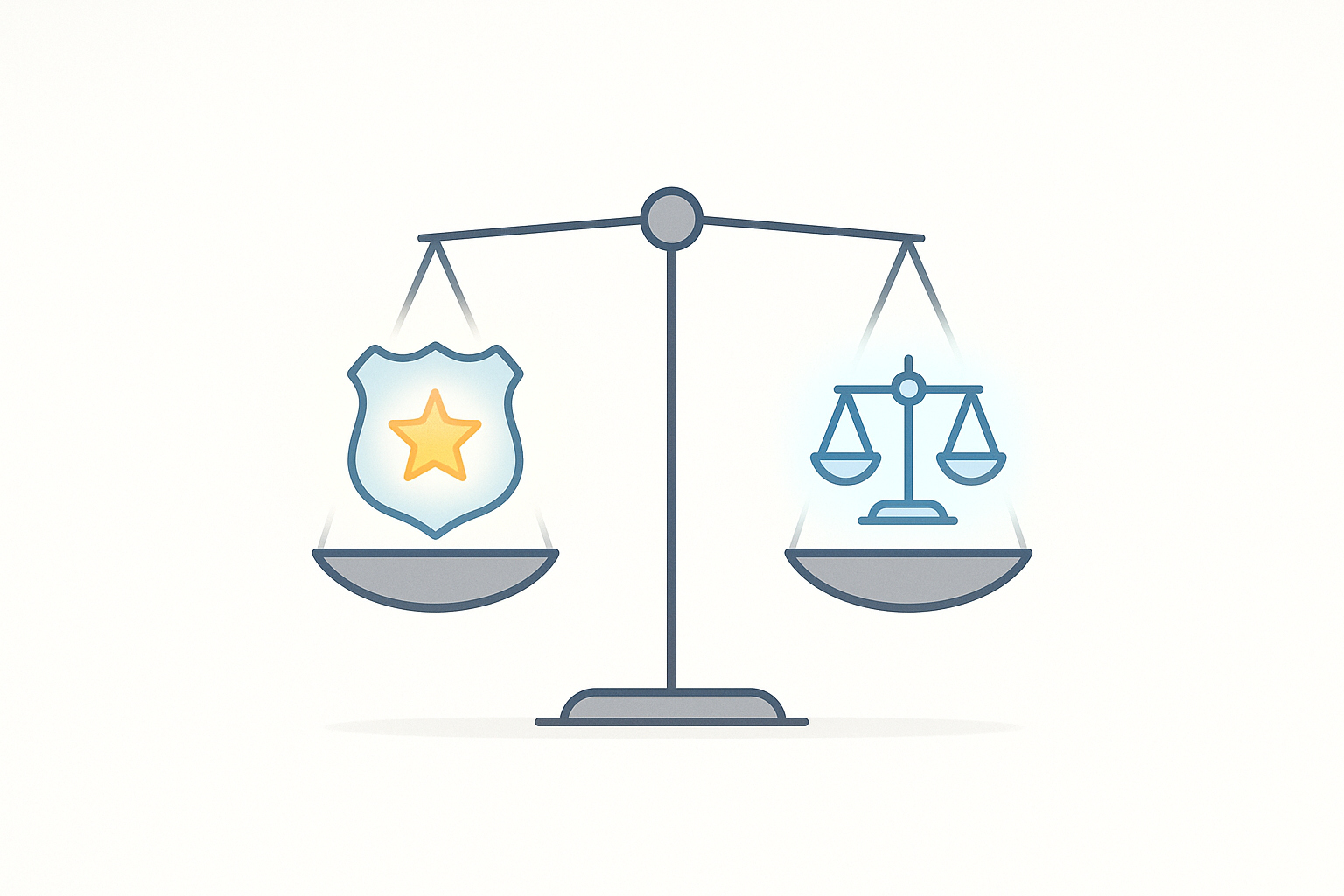
Ethical AI Use in Law Enforcement: A Guide
The article explores how artificial intelligence (AI) is transforming law enforcement, while emphasizing the need for ethical practices to prevent harm and protect rights. AI tools like facial recognition, predictive policing, and risk assessment systems can enhance policing efforts but come with challenges like bias, privacy violations, and transparency issues. To address these, law enforcement agencies must follow key principles:
- Transparency: Explain how AI tools work and their decision-making processes.
- Accountability: Assign responsibility for AI outcomes and maintain detailed records.
- Bias Prevention: Regularly monitor systems to avoid discriminatory effects.
- Privacy Protection: Safeguard personal data and respect constitutional rights.
- Human Oversight: Ensure humans make critical decisions, not AI alone.
The U.S. regulatory landscape, including federal, state, and local laws, stresses oversight, audits, and compliance with civil rights protections. Agencies are encouraged to establish ethics committees, conduct risk assessments, and implement policies to ensure AI systems are used responsibly. By prioritizing these steps, law enforcement can balance public safety with individual rights and maintain trust within communities.
Core Principles for Ethical AI Deployment
Key Ethical Principles
To ensure ethical AI deployment, it's crucial to follow five guiding principles that prioritize public safety and protect civil liberties.
Transparency is about making AI decision-making processes understandable. Law enforcement agencies need to explain how their AI tools work, detailing the data they use and how decisions are reached. While proprietary details can remain confidential, the reasoning behind decisions must be clear to relevant stakeholders.
Accountability means assigning responsibility for the outcomes of AI systems. Every AI deployment should have designated individuals who oversee the system’s performance, decisions, and any consequences. This includes keeping detailed records of how AI tools are used and ensuring accountability if issues arise.
Bias prevention focuses on identifying and addressing discriminatory outcomes in AI systems. Continuous monitoring is essential to ensure AI tools do not disproportionately impact specific demographic groups.
Privacy protection ensures AI systems respect constitutional rights, particularly those under the Fourth Amendment, which guards against unreasonable searches and seizures. Agencies should enforce strict data governance policies, limit data collection to legitimate purposes, and establish clear protocols for data retention and deletion.
Human oversight requires that humans remain in control of critical decisions, especially those affecting individual rights or freedoms.
These principles lay the groundwork for creating policies and oversight mechanisms that guide ethical AI use in law enforcement.
Alignment with Regulatory Frameworks
Integrating these ethical principles with existing regulatory standards ensures both operational effectiveness and protection of civil rights. These principles are closely aligned with U.S. and international frameworks that govern AI practices.
The NIST AI Risk Management Framework emphasizes trustworthiness, accountability, and bias mitigation, particularly in government applications of AI.
The OECD AI Principles, endorsed by 42 countries including the United States, provide international guidelines that reflect these ethical foundations. They stress human-centered AI values, safety, and transparency - essential elements for law enforcement applications.
At the federal level, the Executive Order on Maintaining American Leadership in Artificial Intelligence underscores the importance of these principles in governmental AI use. Additionally, the Department of Justice requires law enforcement AI systems to include human oversight, regular audits, and bias testing to comply with civil rights laws.
State-level regulations are also catching up. For example, California's SB-1001 mandates disclosure of bot interactions, while Illinois's Biometric Information Privacy Act enforces transparency and privacy measures that align with these ethical standards.
Clear Policies and Human Oversight Requirements
To translate these principles into practice, agencies must establish clear policies and robust oversight mechanisms.
Written policies should require comprehensive audit trails for all AI interactions to ensure compliance and accountability. Agencies should also mandate human review of AI outputs before any enforcement actions and provide regular training on AI's capabilities, limitations, and appropriate applications.
For predictive policing systems, human analysts should evaluate AI-generated patrol recommendations before implementation. In the case of facial recognition tools, officers must confirm AI matches before taking action. Similarly, when using risk assessment tools, human judgment should complement AI scores to ensure decisions uphold public safety and civil liberties.
Quarterly reviews of AI systems are essential to maintain ethical compliance. These reviews should include bias testing, policy evaluations, and assessments to verify that AI tools are meeting public safety goals without eroding community trust or infringing on individual rights.
Step-by-Step Guide to Implementing Ethical AI
Conduct Risk Assessments for AI Applications
Turning ethical principles into actionable steps starts with evaluating potential risks and identifying which AI applications require the most oversight.
Categorize AI applications by risk levels. High-risk systems include tools like facial recognition, predictive policing algorithms, and automated license plate readers - technologies that can significantly impact civil liberties. Medium-risk applications might include tools for analyzing crime patterns, while low-risk systems could involve administrative tasks like scheduling.
Evaluate potential discriminatory impacts. For example, studies show facial recognition systems often have higher error rates for women and people with darker skin tones. Risk assessments should carefully analyze whether an AI tool might disproportionately affect specific demographic groups or communities.
Review data quality and sources. Ensure the training data reflects the diversity of the community the agency serves. If the data includes historical biases - such as patterns in policing - it could perpetuate unfair practices. Addressing these issues upfront is critical.
Document these findings in a risk matrix, scoring each AI application based on factors like civil rights concerns, accuracy issues, and public safety risks. This matrix not only helps prioritize oversight but also serves as a key resource for compliance and accountability.
Once risks are clearly outlined, the next step is to create oversight mechanisms to ensure the ethical use of AI.
Establish AI Ethics Committees and Policies
Setting up an ethics committee and clear policies is essential for ethical AI deployment.
Form a diverse, cross-functional ethics committee. Include individuals from various roles, such as officers, legal advisors, data scientists, and community representatives. This diversity ensures a broad range of perspectives, helping to identify ethical concerns that might otherwise be overlooked.
The committee must have real authority to oversee AI projects. This includes the power to approve or reject systems, require changes to existing tools, and enforce additional safeguards for high-risk applications [1][2][3].
Develop detailed policies that translate ethical principles into actionable guidelines. These policies should require pre-deployment ethical reviews, specify protocols for human oversight, and define acceptable uses for each AI tool.
Policies should also be updated regularly to keep pace with technological advancements and regulatory changes. Schedule annual reviews and create a process for emergency updates when new ethical challenges or requirements arise.
With committees and policies in place, the focus shifts to continuous monitoring and education to maintain ethical standards.
Implement Monitoring, Audits, and Training
Ongoing oversight ensures AI systems operate ethically throughout their lifespan.
Enable real-time monitoring with automated alerts. Track metrics like accuracy, error rates, and usage patterns. Pay special attention to how these metrics vary across different demographic groups, and set alerts for any anomalies.
Conduct quarterly bias testing to check for discriminatory outcomes. Analyze decision patterns by race, gender, ethnicity, and socioeconomic status. If bias is detected, take immediate corrective action and document the steps taken to address it.
Provide staff training that covers both the technical and ethical aspects of using AI. Officers need to understand the system’s capabilities and limits, recognize questionable outputs, and follow proper procedures for human oversight. Emphasize that AI is a tool to assist - not replace - human judgment.
Establish feedback loops between officers and the ethics committee. Officers working with AI systems daily may notice practical ethical issues that initial assessments missed. Regular feedback sessions help address these concerns and improve system performance.
Maintain detailed records of AI decisions, overrides, and performance. This documentation is invaluable for compliance audits, legal reviews, and refining the system.
Finally, schedule annual comprehensive audits by independent third parties whenever possible. External auditors bring an unbiased perspective, often catching issues that internal reviews might overlook. These audits should evaluate technical accuracy, policy adherence, and the broader impact on the community.
Managing Bias, Data Privacy, and Public Trust
Reducing Algorithmic Bias
One of the biggest challenges with AI in law enforcement is tackling algorithmic bias. To address this, agencies need to ensure the training data for AI systems represents diverse and inclusive perspectives. Historical data often carries the weight of past inequities, so it’s crucial to audit these datasets regularly to prevent perpetuating unfair practices.
It’s not enough to focus on overall accuracy. Agencies should also use fairness metrics like equalized odds, demographic parity, and individual fairness to identify and address disparities among different demographic groups. When bias is detected, swift action is necessary - this might mean tweaking model parameters or retraining the system with updated data. To ensure objectivity, independent auditors can provide fairness assessments that agencies can rely on.
Protecting Data Privacy
While addressing bias is important, protecting personal data is equally critical. AI systems in law enforcement often handle sensitive information, so safeguarding this data should be a top priority. Agencies should limit data collection to only what’s absolutely necessary for specific operations. Additionally, implementing strong encryption and access controls - both for data in transit and at rest - can help prevent unauthorized access.
Agencies should also establish clear policies for how long data is kept and when it must be deleted to minimize the risk of exposure. Compliance with privacy laws and setting up detailed data-sharing agreements are essential steps to ensure security and proper use. Regular monitoring for unauthorized access, along with audits of access logs, adds another layer of protection to maintain data integrity.
Building Public Trust Through Transparency
Ethical practices alone aren’t enough - public trust hinges on transparency. Law enforcement agencies need to clearly communicate how AI systems are being used and what safeguards are in place. Publishing transparent AI policies that outline the systems’ purposes and protections can help the public understand and feel more confident in their use.
Engaging with community stakeholders early on, through public forums or advisory committees, allows agencies to integrate a range of perspectives. Regular reports on system performance - sharing metrics on accuracy and fairness - can help demystify AI without compromising sensitive operational details. Finally, creating easy-to-use channels for filing complaints or appealing AI-driven decisions ensures accountability. By fostering open dialogue and maintaining transparent practices, agencies can build stronger, more trusting relationships with the communities they serve.
Regulatory Frameworks and Compliance Requirements
Key U.S. Regulatory Frameworks
In addition to the ethical principles discussed earlier, law enforcement agencies must operate within a specific legal framework when adopting AI technologies. These frameworks emphasize accountability, fairness, and transparency. Agencies need to carefully evaluate federal, state, and local regulations, as well as constitutional protections, to ensure that the use of AI respects individual rights. This legal foundation provides the groundwork for creating a practical compliance plan.
Compliance Checklist for Law Enforcement Agencies
To align with these regulatory requirements, agencies should focus on the following actions:
- Document Everything: Keep detailed records of how AI systems are selected, risk assessments are conducted, and vendors are evaluated.
- Training: Ensure all personnel receive thorough training on the capabilities and limitations of AI tools.
- Regular Audits: Perform routine audits to evaluate system performance, identify biases, and ensure fairness.
- Data Governance: Develop clear policies for managing data, including how it is collected, stored, shared, and deleted.
- Incident Response Testing: Frequently test protocols for addressing issues like system errors or bias.
- Legal Reviews: Continuously review legal standards to confirm compliance with constitutional and statutory requirements.
sbb-itb-8feac72
International Policing, Ethics, & the Use of AI in Law Enforcement, with Interpol's Jürgen Stock
Conclusion
Implementing ethical AI in law enforcement is a delicate balancing act - one that requires aligning technological advancements with constitutional rights and the trust of the public. As agencies in the United States increasingly integrate AI tools like predictive policing and facial recognition, the pressure to get it right has never been more intense.
This guide provides a practical framework for bridging the gap between policy and practice. By establishing clear ethical principles, conducting detailed risk evaluations, and ensuring strong oversight, law enforcement agencies can leverage AI's capabilities while protecting individual rights and fostering public confidence.
Transparency plays a central role in this process. Open communication, engaging stakeholders, and maintaining clear documentation are essential to building trust and demonstrating accountability.
As regulations continue to develop, agencies that prioritize ethical practices today will find it easier to adapt to future changes. Investments in proper training, regular audits, and thorough data governance not only ensure compliance but also improve overall effectiveness. The rapidly shifting landscape of AI highlights the importance of embedding ethical considerations into every stage of its use.
Ethical AI is not a one-time effort - it’s a continual process. Agencies must make ethical standards a core part of their culture, keeping pace with evolving technology and societal expectations. By adhering to the strategies outlined in this guide - risk assessments, oversight, and transparency - law enforcement can ensure that AI serves justice, protects rights, and strengthens community relationships.
The decision is straightforward: adopt ethical AI practices now or risk losing the public trust that is vital to effective policing.
FAQs
How can law enforcement ensure AI tools are fair and unbiased, avoiding harm to specific demographic groups?
To promote fairness and reduce bias in AI tools, law enforcement agencies need to focus on transparency and accountability in their systems. This means conducting regular audits of algorithms to identify and address any biases. It also involves using diverse, high-quality datasets that don’t perpetuate past patterns of discrimination.
Equally important is maintaining human oversight. Officers and staff should be trained to understand AI processes and critically assess the technology’s outputs. Avoiding biased data sources, such as certain historical crime statistics, can further reduce the risk of harm. By routinely assessing how AI tools affect various demographic groups, agencies can ensure their systems operate in a fair and ethical manner.
How can law enforcement agencies ensure transparency and accountability when using AI technologies?
Building Transparency and Accountability in AI Use by Law Enforcement
For law enforcement agencies to maintain public trust, they need to adopt clear, transparent policies surrounding their use of AI. Regular audits of these systems are a must - they help spot and fix potential biases or errors that could otherwise undermine fairness. Beyond internal checks, agencies should openly share details about the AI tools they use. Explaining their purpose, how they work, and their limitations can go a long way in building trust with the community.
Another critical step is establishing oversight committees and governance structures. These groups can monitor how AI is being used and ensure it aligns with ethical and legal standards. On top of that, officers should receive continuous training on both AI technologies and the ethical considerations tied to their use. This combination of oversight and education helps make sure AI tools are used responsibly and in ways that respect the rights of individuals. Together, these practices not only improve accountability but also strengthen public confidence in law enforcement.
What U.S. regulations guide the ethical use of AI in law enforcement, and what are the main compliance requirements?
While the U.S. doesn’t yet have broad federal laws specifically governing AI in law enforcement, several frameworks and policies are guiding its ethical use. Agencies are encouraged to align with principles from initiatives like the AI in Law Enforcement Usage Policy, which focuses on transparency, accountability, and building public trust.
To meet compliance expectations, agencies are advised to:
- Establish clear AI usage policies to outline how these tools will be implemented.
- Promote transparency by making AI decision-making processes understandable.
- Address bias through regular audits to ensure fairness in AI systems.
- Safeguard privacy and civil rights by adhering to existing legal protections.
These steps aim to strike a balance - encouraging technological progress while upholding ethical standards and maintaining human oversight.