
Global Teams and Risk Communication: Best Practices
Managing risk communication in global tech teams is all about clarity, trust, and timing. Without the right systems, even small communication gaps can lead to major project delays or security issues. Here's a quick breakdown of what matters most:
- Why It’s Important: Teams with strong communication practices see 47% higher returns over five years.
- Key Challenges: Time zone differences, language barriers, and cultural misunderstandings slow down 85% of international operations.
- Core Solutions: Build trust with transparency, use structured frameworks like ISO 31000, and create a shared risk vocabulary.
- Leadership Focus: Invest in communication training and feedback loops to improve decision-making.
Bottom line: Clear, timely communication is critical for tech leaders managing distributed teams. Without it, risks can escalate quickly. Let's dive into the details.
How do I communicate risk to stakeholders?
Core Principles of Risk Communication
Creating effective risk communication within global teams starts with a strong foundation of well-established principles. These principles become even more critical when working with teams spread across various time zones, languages, and cultural backgrounds.
The key elements of successful risk communication include transparency, empathy, proactive engagement, clarity, consistency, and timeliness [3]. Together, these principles support the adoption of standards like ISO 31000 and ensure open communication with stakeholders.
Understanding the ISO 31000 Framework
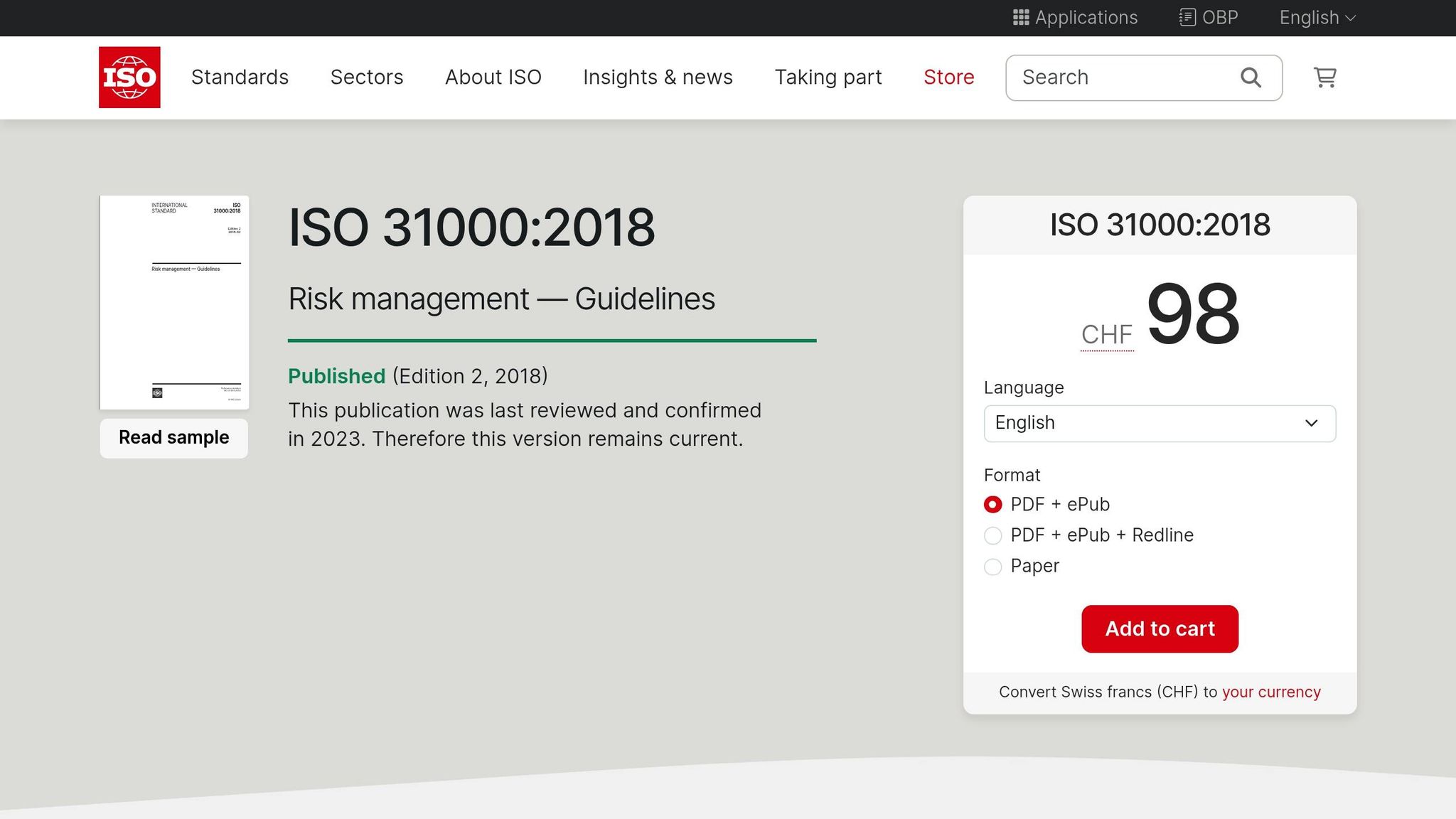
For tech leaders, ISO 31000 serves as a cornerstone for effective risk communication [6]. This international standard provides a set of guidelines for managing risks systematically and efficiently. Reaffirmed in 2023, the framework remains highly relevant for today’s business challenges [4].
ISO 31000 emphasizes structured communication, consultation, and consistent risk reporting [8]. These practices ensure that risk communication is seamlessly integrated into every decision-making process.
The framework is built around three key components: principles, framework structure, and the risk management process, all of which require consistent and clear communication with stakeholders [8].
Jason Brown, Chair of technical committee ISO/TC 262, highlights the framework’s focus: "The revised version of ISO 31000 focuses on the integration with the organization and the role of leaders and their responsibility. Risk practitioners are often at the margins of organizational management and this emphasis will help them demonstrate that risk management is an integral part of business" [7].
By following ISO 31000, organizations can establish a systematic, transparent, and accountable method for managing risks [6]. Beyond risk management, the framework also helps shape communication strategies for diverse, multinational teams [8]. To maximize its effectiveness, companies should adapt ISO 31000 to match their unique operational needs [5].
Once a solid framework is in place, the next priority is fostering trust and clarity.
Building Trust and Transparency
Trust is the foundation of effective risk communication, particularly in global teams where face-to-face interactions are rare. Without trust, collaboration falters, making it harder to build relationships, work toward shared goals, or even handle basic transactions [10].
Tech leaders must also recognize that trust levels can vary significantly across cultures [10].
To build trust, it’s essential to consistently apply core principles. Transparency - sharing honest and thorough information - plays a critical role in earning trust among stakeholders [3]. This involves being upfront about uncertainties and providing regular updates, even when there’s little new to report.
Empathy and proactive engagement further strengthen trust by addressing concerns and involving stakeholders in decision-making [3]. For global teams, where time zone gaps can create feelings of isolation, structured opportunities for input - whether through live discussions or asynchronous channels - are vital.
Rupert Younger, Director of the Oxford University Centre for Corporate Reputation, stresses the importance of understanding cultural differences, noting that “trust is key to achieving desired outcomes” [10].
Creating a Shared Risk Vocabulary
Understanding cultural differences is just as important as mastering technical processes. One of the biggest challenges in global teams is the absence of a shared language for discussing risks. A common risk vocabulary ensures that everyone on the team views risk as a critical business factor [9].
This shared vocabulary acts as a bridge, helping teams and departments align on risk-related terminology and fostering a unified understanding of its role in business [9]. This is especially valuable in international teams, where technical jargon can have varying interpretations.
Clarity doesn’t mean oversimplifying complex ideas - it’s about presenting them in a way that’s easy for everyone to grasp. In multicultural teams, clear communication is essential to ensure messages are understood as intended [11].
To establish a shared vocabulary, organizations should rely on consistent control frameworks and apply them thoughtfully across different areas of work [9]. This involves defining risk levels, escalation procedures, and response protocols that work across diverse cultural contexts.
Adapting Communication Across Cultures
When it comes to understanding risk, cultural backgrounds play a much bigger role than just language differences. A striking 84% of managers agree that cultural differences significantly shape how risks are perceived. For example, in Western countries, individual choice is a priority for 65% of people, while in collectivist cultures like those in East Asia, only 32% share that perspective [13]. Companies that invest in cross-cultural training see tangible benefits, including a 30% improvement in project outcomes and a 35% boost in performance [13]. These insights highlight the need to tailor communication to bridge cultural gaps and foster inclusivity in global teams.
Tailoring Messages for Different Cultures
Effective communication isn’t just about speaking the same language - it’s about understanding how different cultures exchange information. Tailoring messages to fit cultural communication styles aligns with the ISO 31000 framework, ensuring that risk communication is clear and systematic for everyone involved.
Communication styles can vary widely. For instance, North Americans often prefer direct and explicit messaging, while Japanese employees rely heavily on context and non-verbal cues [1]. Similarly, fear-based messaging tends to resonate more with Western audiences, whereas Eastern cultures are often more responsive to messages focusing on collective societal benefits [12].
Take the example of a multinational tech company with offices in North America, Europe, and Asia. North American employees perceived their Asian colleagues as overly reserved, while Asian employees found their North American counterparts overly assertive [1]. After introducing cultural competence training and updating conflict resolution policies, the company saw a 40% drop in workplace conflicts and a 20% rise in productivity [1].
Even time management differs across cultures. Monochronic cultures, like those in the U.S., value punctuality and structured schedules, while polychronic cultures, such as in parts of Latin America, embrace flexibility and multitasking [1]. Trust in authority also shapes risk perception - societies with high trust in leadership often view risks as lower, while low-trust societies see risks as more significant [12].
Tailoring messages is just one part of the equation. Ensuring that every team member can access and understand these communications is equally important.
Making Communication Accessible to All Team Members
Inclusive communication ensures that everyone on the team - regardless of their cultural background, language skills, or accessibility needs - can engage with and act on critical information.
Start with language accessibility. Sharing information in multiple languages, using plain and clear language, and incorporating culturally relevant examples can make a big difference [14] [16]. Trusted local voices can also help deliver messages effectively [16].
Diversifying formats is another key step. Use culturally relevant visuals, videos, and infographics to cater to different learning styles [16]. Technology can further enhance accessibility with tools like text-to-speech, multilingual content, captions, alt text, and screen reader compatibility [15] [16].
Building trust is essential. Open and respectful communication about risks fosters trust while acknowledging diverse perspectives [16]. Creating multiple feedback channels - whether through focus groups, anonymous surveys, or digital suggestion boxes - encourages open dialogue and ensures everyone’s voice is heard [14] [15].
The effort pays off. Research from McKinsey shows that companies aligning with cultural values see a 25% boost in employee engagement and a 15% increase in productivity [13]. When team members feel included and understood, they’re more likely to engage deeply with risk communication and contribute meaningful insights.
sbb-itb-8feac72
Stakeholder Engagement Best Practices
Engaging stakeholders effectively means understanding their specific needs and involving them in a meaningful way. With 59% of IT projects now relying on distributed teams and 73% of companies expected to operate remotely by 2028, this skill has become increasingly important for tech leaders [17]. Consistent, tailored engagement with stakeholders helps reinforce decisions, especially those tied to risk management.
At its core, successful stakeholder engagement requires recognizing that each stakeholder has unique interests and needs. Communication must be personalized to address these differences [20].
Working with Internal and External Stakeholders
Engaging stakeholders requires consistent effort and focus. It’s not just about sharing information but also listening to concerns and involving them in key decisions [21].
Internal stakeholders - such as team members, department leads, and other employees - benefit from regular check-ins and open communication channels. Creating an environment where inclusivity and psychological safety are prioritized encourages them to share ideas and concerns without hesitation [24].
External stakeholders, including clients, partners, regulators, and local communities, often require tailored communication strategies. For instance, when a major energy company worked on an offshore wind farm, it used tools like stakeholder maps, geographical mapping, and relationship network maps. These tools helped the company meet consultation requirements, customize its messaging, understand local perspectives, and build strategic relationships [18]. Using multiple mapping methods can uncover opportunities that might otherwise go unnoticed [18].
Once roles and expectations are clear, the next step is selecting the right tools for communication.
Tools for Regular Communication
Choosing effective communication tools is essential for keeping stakeholders engaged. These tools help bridge gaps, especially for distributed teams, allowing them to share ideas and collaborate in real time [17]. Establishing clear communication practices - like selecting appropriate channels, setting response time expectations, and defining tone and style - helps streamline interactions [17]. For example, senior executives might prefer concise emails or scheduled video calls, while team members working on daily tasks might rely more on instant messaging and platforms like Slack [26].
Regular video check-ins can boost team cohesion and help align goals [19]. Balancing synchronous communication (like video calls) with asynchronous methods (like emails or shared documents) is particularly important for global teams spread across time zones. Asynchronous tools allow team members to contribute at their own pace while staying informed [17]. Feedback mechanisms, such as anonymous surveys or dedicated feedback channels, help identify gaps and improve communication strategies [17][19]. Brief debriefs and regular updates ensure everyone stays on the same page. Even informal activities, like virtual coffee chats or team-building exercises, can strengthen relationships among remote team members [17].
These tools create a foundation for consistent communication while respecting cultural nuances across global teams.
Aligning Messages Across Distributed Teams
Ensuring consistent messaging across global teams requires careful planning and cultural sensitivity. Companies with diverse management teams report that 45% of their revenue comes from innovative products and services, compared to 26% for less diverse companies [25]. However, diversity also brings communication challenges that leaders must address. Training in cultural intelligence (CQ) helps leaders adapt their communication styles to fit different cultural contexts [22]. Denis Leclerc highlights the importance of adjusting leadership approaches to align with cultural differences [22].
Clear policies and technology solutions, such as translation tools or multilingual communication channels, can help overcome language barriers while respecting cultural differences [24][25]. These measures address variations in communication styles and values [22].
A shared vision and clearly defined goals act as a unifying force for distributed teams. Leaders can inspire a sense of purpose by articulating a vision that resonates across cultures. Research shows that adapting leadership styles to celebrate both individual and team achievements can further strengthen team cohesion [22].
Regularly reviewing and refining communication strategies ensures they remain effective as teams grow and change [23]. Encouraging open discussions about cultural differences and seeking ongoing feedback can highlight areas for improvement [22][23].
Building Leadership Skills for Risk Communication
Developing leadership skills in risk communication is essential for tackling the challenges faced by global tech teams. Effective communication in this area requires leaders who can bridge cultural divides and motivate teams across different regions.
The stakes are high. Poor risk communication costs large companies about $64.2 million annually, while smaller businesses lose around $420,000. Even more striking, 93% of the impact comes from nonverbal cues that are often lost in digital communication channels [27]. For tech leaders managing distributed teams, the risks are magnified - miscommunication can lead to delays, security breaches, or even regulatory issues. This highlights the need for a structured approach to leadership development.
Investing in Leadership Training
Transitioning from a technical expert to an effective communicator requires intentional skill-building. Luke Garad from Duke Energy emphasizes, "Regardless of your job tenure or experience, leadership training will enhance your existing skills" [32].
Leadership programs designed for tech professionals, like those offered by Tech Leaders, are crucial. These initiatives focus on bridging the gap between technical expertise and leadership abilities, covering areas like managing AI-driven strategies and honing communication skills. Such training prepares technical professionals to move from individual contributor roles to leadership positions where risk communication is critical.
The benefits of investing in leadership development go beyond individual growth. Organizations with diverse leadership teams are 33% more likely to outperform their competitors [29]. This makes culturally aware leadership training a strategic necessity. Programs should focus on real-world scenarios tech leaders face, such as explaining compliance requirements to teams with different regulatory knowledge or managing security incidents across time zones. Comprehensive training should address key risks in the tech industry, including data protection, workplace safety, and compliance [33]. The best programs make these topics engaging through interactive learning methods rather than traditional lectures.
Once leaders have the foundational skills, continuous feedback becomes essential for refining their abilities.
Improving Through Feedback and Practice
Strong risk communication skills require ongoing improvement through real-world feedback and consistent practice. Effective leadership relies on authenticity, clarity, empathy, and trust - qualities that are honed over time [28].
Tools like regular surveys, one-on-one check-ins, and 360-degree feedback can gauge how well leaders communicate across cultural boundaries [31]. These methods help leaders understand how their messages are received and pinpoint areas for improvement.
Creating formal feedback channels encourages employees to share insights on risk management practices [33]. This two-way communication allows leaders to not only share critical risk information but also learn from team members who may have unique cultural perspectives on risk.
Practice is equally important. Leaders should incorporate discussions about risks into team meetings, fostering transparency and shared accountability [33]. Practicing in low-pressure settings builds confidence and provides opportunities for immediate feedback on their communication strategies.
Analyzing past risk events is another valuable learning tool. By examining the root causes of failures or successes, leaders can identify which communication strategies worked and adjust their approach accordingly [33]. This reflection helps leaders fine-tune their skills for future scenarios.
Great leaders also demonstrate cultural sensitivity and address misunderstandings proactively [30]. Combining structured feedback with continuous learning opportunities equips leaders to handle complex risk scenarios effectively, strengthening their ability to guide global teams through challenges.
Conclusion: Putting Global Risk Communication into Practice
Navigating risk communication in global tech teams is all about cultivating a shared understanding that crosses cultural lines. When organizations get this right, the results speak for themselves: inclusive teams can outperform others by up to 35%, while improving decision-making 87% of the time [35].
The journey begins with cultural intelligence. Denis Leclerc highlights the importance of leaders developing cultural awareness and adapting to varied communication styles [22]. Some cultures thrive on direct communication, while others lean toward a more subtle approach. Decision-making, too, can range from collective processes to hierarchical structures, depending on the region [34]. Understanding these nuances lays the groundwork for addressing communication obstacles through stakeholder engagement and leadership training.
Stakeholder engagement acts as the critical link between cultural awareness and actionable outcomes. Studies reveal that 86% of individuals in multinational teams have faced communication breakdowns, and 60% have felt misunderstood [2][35]. Structured and deliberate engagement helps reduce these issues, ensuring that everyone is on the same page.
Marcos Semola, Managing Director at Accenture US, puts it succinctly: "Effectively navigating diverse cultural landscapes and leveraging anticipatory communication strategies, organizations foster a shared understanding of risks, transforming them from obstacles into navigable pathways for informed decision-making." [36]
Leadership development ties everything together. When tech leaders invest in communication training, they sharpen their ability to listen actively, respect cultural differences, and lead with transparency. These skills are essential for building trust, which is the backbone of effective risk management across global teams.
To succeed, organizations need continuous feedback loops, cultural training, and adaptable leadership practices. By blending cultural awareness with structured stakeholder engagement and leadership development, they can turn the challenges of global collaboration into a competitive edge.
With 70% of international project failures linked to cultural miscommunication [35], mastering global risk communication isn’t just a nice-to-have - it’s a necessity for thriving in today’s interconnected world.
FAQs
How can tech leaders improve risk communication in global teams while addressing cultural differences?
To improve risk communication in global teams, tech leaders need to focus on understanding and respecting the diverse cultural backgrounds of their team members. Tailoring communication to align with different cultural norms and values can go a long way in creating a space where everyone feels heard and respected. This approach not only minimizes misunderstandings but also strengthens teamwork.
Fostering open and respectful conversations is key. Building trust and using a mix of communication tools - such as emails, video calls, or instant messaging - can help ensure that messages are clear to everyone. Additionally, scheduling regular check-ins gives team members the opportunity to voice concerns, address challenges, and stay aligned despite cultural differences.
What are the main components of the ISO 31000 framework, and how can I adapt it to meet my organization's unique needs?
The ISO 31000 framework revolves around three main components: principles, a framework, and a risk management process. The principles emphasize that risk management should fit your organization's specific needs, be inclusive, follow a structured approach, and adapt to evolving circumstances. The framework itself includes steps like setting the context, assessing risks (through identification, analysis, and evaluation), and applying strategies to address, monitor, and communicate risks effectively.
To implement ISO 31000 within your organization, align it with your objectives, governance structure, and strategic priorities. Tailor the process to match your business's unique environment, ensuring it integrates naturally into your decision-making and daily operations. This way, risk management becomes a proactive and essential part of your organization's practices.
How can leaders build trust and transparency in global teams with limited in-person interaction?
Building trust and transparency in global teams begins with regular and open communication. Set up consistent virtual check-ins to ensure everyone stays on the same page regarding goals, progress, and expectations. Keep your messages clear and straightforward to avoid misunderstandings, especially when working across different cultures.
Encouraging a video-first approach during meetings can help create personal connections and make conversations more engaging. To deepen relationships, consider organizing informal virtual activities like team-building games or casual hangouts. These moments can go a long way in fostering camaraderie and trust.
When leaders emphasize openness, dependability, and respect for cultural differences, they build a space where team members feel appreciated and connected, even from afar.