
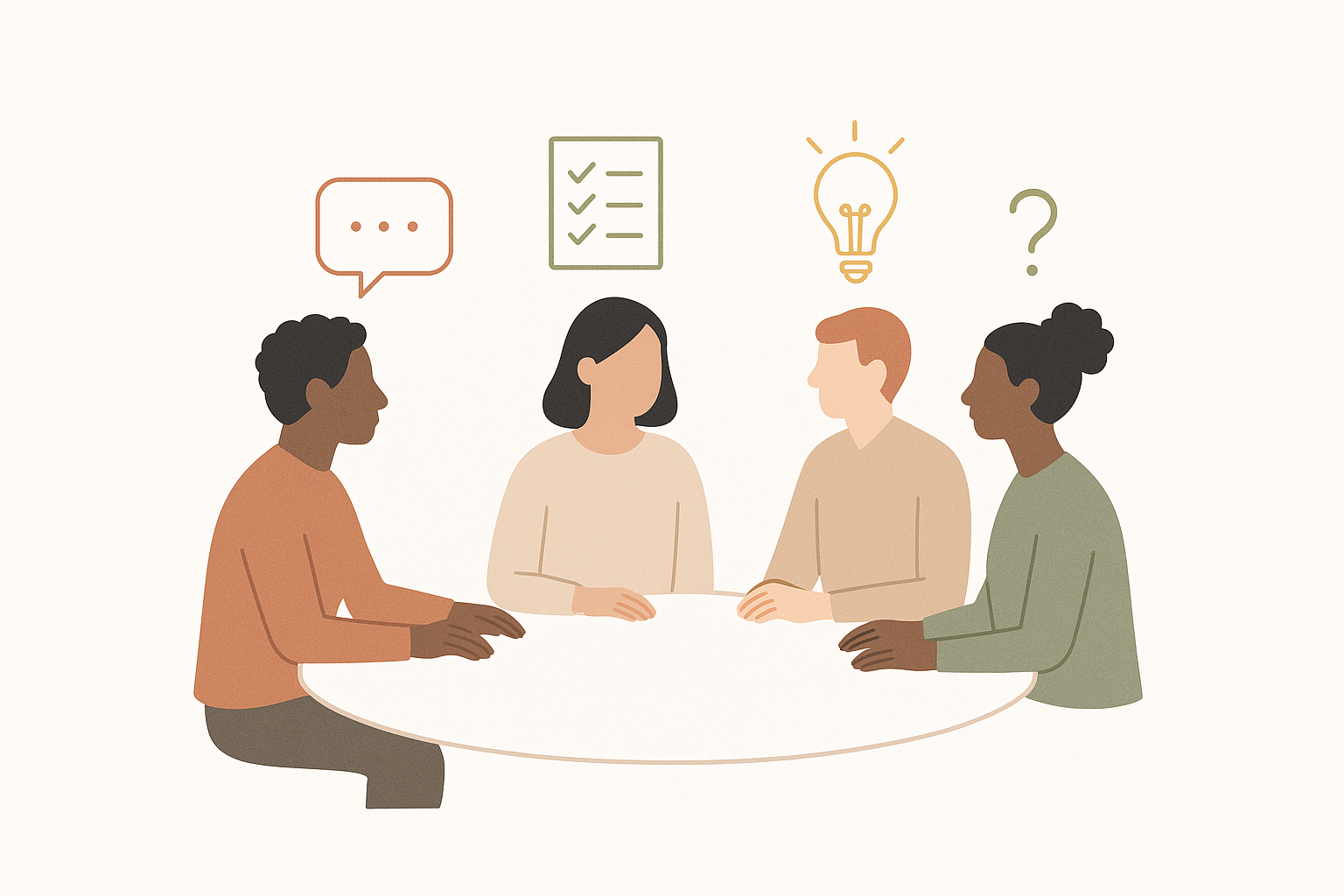
How to Train Diverse Teams for Change Adoption
Training diverse teams for change is all about addressing differences in communication, learning styles, and past experiences. A one-size-fits-all approach doesn’t work. Here’s what you need to know:
- Why it matters: Diverse teams can boost performance by 15% and improve decision-making by 87%. But these benefits only happen when teams are well-prepared for change.
- Challenges: Communication barriers, attitudes toward authority, and past negative experiences with change can slow progress.
- Steps to success:
- Assess team readiness through surveys, focus groups, and interviews.
- Customize training to fit different learning preferences (e.g., visual, auditory, hands-on).
- Use relatable examples and case studies to make concepts clear.
- Build skills in communication, adaptability, and collaboration.
- Provide ongoing support with feedback systems and leadership involvement.
- Measure results: Track progress with metrics like engagement, retention, and employee feedback. Update training regularly to stay relevant.
Managing change in a multi-generational workforce
Assessing Team Readiness for Change
Before diving into designing training programs, it’s essential to take a step back and assess where your team stands. This step helps uncover strengths, pinpoint gaps, and identify potential challenges that could influence how well your team adapts to change. Without this groundwork, training efforts risk missing the mark. These insights form the backbone for creating training programs tailored to your team’s needs.
Evaluating readiness means looking at how diversity shapes communication, engagement, and past experiences with change. It’s about understanding how differences in background and perspective affect openness to change, preferred communication styles, and experiences with previous organizational transitions.
"Change readiness is the level to which an organization is prepared, willing and able to implement change." - Prosci [4]
This concept becomes even more nuanced in diverse teams, where individual readiness can vary widely based on factors like cultural background, personal experiences, and communication preferences.
Conducting Team Assessments and Surveys
The process starts by gathering detailed information about your team’s composition and mindset. Begin with a demographic analysis, examining factors such as race, ethnicity, gender, sexual orientation, age, and disability status. This helps you understand the broad scope of diversity within your team and the challenges that may come with it [1]. But numbers alone don’t tell the full story. You’ll also need to explore team perceptions and their engagement with diversity initiatives.
Surveys are a practical tool for collecting both quantitative and qualitative feedback. Craft your survey questions to delve into areas like employees’ sense of belonging, attitudes toward diversity, and their experiences with past organizational changes [1]. Use a mix of question types to get a fuller picture.
Key topics to address in your surveys include:
- Perceptions and Understanding: Gauge whether team members have a clear understanding of the upcoming change.
- Communication Effectiveness: Determine if current communication channels are inclusive and whether any team members feel left out [3].
- Employee Involvement and Leadership Support: Assess how involved team members feel in the change process and whether they trust their managers to guide them through it [3].
Additionally, ask about specific concerns, challenges, and needs for resources or training. Keep in mind that what seems straightforward to leadership may be interpreted differently by employees from diverse backgrounds or with varying learning styles.
For deeper insights, consider focus groups. These are particularly useful for gathering feedback from individuals who might hesitate to share sensitive thoughts in a survey [1]. Organizing focus groups by demographic can help uncover issues like bias or cultural barriers.
Individual interviews with key team members can also provide valuable perspectives. Conducting these early in the process can help shape your training design.
Identifying Barriers to Team Participation
Once you’ve gathered your data, the next step is identifying barriers that might hinder participation. Some challenges may not be immediately obvious and require careful analysis to uncover. Addressing these barriers ensures that your training programs are effective for everyone.
One common obstacle is unconscious bias, which can lead team members to undervalue certain contributions, unintentionally excluding important perspectives. Look for patterns in your data where specific demographic groups consistently report lower confidence or feel their input isn’t valued.
Communication gaps are another frequent issue in diverse teams. Cultural norms around communication can impact participation. For instance, in environments where assertiveness is less common, discussions about change might be indirect, making it harder for some team members to engage. Similarly, individuals from backgrounds where questioning authority is discouraged may be reluctant to voice concerns, while others may expect a more collaborative decision-making process [4].
Past experiences with change initiatives can also shape how team members approach new programs. If previous efforts didn’t consider diverse learning needs, employees may approach new initiatives with skepticism.
Pay attention to inclusion metrics by reviewing data like turnover rates, promotion rates, and pay equity across different demographic groups [1]. Disparities in these areas can signal deeper organizational issues that might influence how employees respond to change. Also, consider the variety of learning and participation preferences within your team. Some people thrive with hands-on experiences, while others prefer detailed written materials. Planning for these differences is crucial for meaningful engagement.
Recent studies highlight the importance of thorough assessments. Over half of executives (52%) admitted their organizations weren’t fully prepared for change, and 43% of employees felt the same way [4]. Additionally, 87% of participants in a recent report emphasized the importance of cultural awareness in change management initiatives [4].
"Diversity is about representation or the make-up of an entity. Inclusion is about how well the contributions, presence, and perspectives of different groups of people are valued and integrated into an environment." - Matt Bush, Culture Coaching Lead at Great Place to Work [2]
These findings underscore the importance of a detailed assessment phase. Skipping or rushing through this step risks creating training programs that only benefit part of the team, ultimately undermining the goal of successful change adoption.
Creating Customized Training Programs
When it comes to training programs, one size doesn’t fit all. Tailoring your approach to address specific challenges and opportunities ensures that every team member feels empowered to embrace change. By understanding team readiness and potential barriers, you can design training programs that resonate with diverse learning styles, communication preferences, and professional experiences. The goal is simple: make the process of adopting change feel relevant and approachable for everyone, regardless of their background.
Recognizing diverse perspectives is key to driving successful change. Research shows that companies in the top quartile for racial and ethnic diversity are 35% more likely to outperform their competitors [7]. Additionally, almost 75% of employees prefer working for organizations that prioritize diversity, equity, inclusion, and belonging [5]. These numbers make it clear: personalized training isn't just an option - it’s a necessity.
"Corporate diversity training programs must be based on a foundational understanding of the unique diversity and inclusion objectives and challenges of each organization." - Weldon Latham, Principal at Jackson Lewis [9]
The next step? Adapting your content and methods to meet these diverse needs.
Adapting Training Content and Methods
To truly engage your team, it’s essential to consider different learning preferences. Moving away from lecture-heavy formats and incorporating interactive elements can make a world of difference [6].
- Visual learners thrive with infographics, flowcharts, and videos. Use visual aids like color-coded roadmaps to simplify complex processes and provide written materials for future reference.
- Auditory learners benefit from discussions, podcasts, and storytelling. Group conversations, Q&A sessions, and verbal explanations can help them absorb information effectively.
- Kinesthetic learners need hands-on experiences. Simulations, role-playing, and interactive activities allow them to engage directly. For instance, when introducing new software, provide a sandbox environment where they can practice without real-world consequences.
Language and accessibility are equally important. Offering multilingual materials and avoiding jargon ensures clarity for non-native speakers [7]. Translation services or multilingual resource libraries can further enhance understanding. Don’t forget to accommodate individuals with disabilities by providing materials in alternative formats (e.g., large print or audio) and ensuring training venues are fully accessible.
Cultural differences also play a role in how people approach learning. While some cultures emphasize individual achievement, others focus on group harmony. Strike a balance by including both personal reflection activities and collaborative exercises. Be mindful of norms around authority and questioning - what’s seen as constructive feedback in one culture might feel disrespectful in another.
Using Practical Examples and Case Studies
Abstract concepts often feel distant, but real-world examples can bring them to life. Case studies that reflect your team’s diversity and challenges make training relatable and actionable.
Take Google’s program, which involved over 26,000 employees and focused on addressing unconscious bias [8]. By using real workplace scenarios, the training helped employees recognize and tackle biases in their daily decisions. They integrated tools like structured hiring practices and a "bias-busting checklist" to make the lessons practical.
Similarly, Microsoft’s Allyship Program, which reaches all 160,000 employees worldwide, uses interactive workshops and various media formats to explore real-life situations [8]. These workshops encourage employees to practice allyship in scenarios they’re likely to encounter, making the lessons immediately applicable.
When creating your own examples, draw from your team’s experiences. For instance, if you’re rolling out new project management software, illustrate how team members with varying technical skills might adapt. Highlight both successes and challenges to show how diverse communication styles or problem-solving approaches can become assets, not obstacles.
Accenture’s "Inclusion Starts with I" program is another standout example. Through interactive workshops and real-life scenarios, employees are encouraged to discuss biases openly [8]. By presenting relatable situations, the program fosters a deeper connection to the material, helping participants apply the lessons in their day-to-day work.
Role-playing exercises are another powerful tool. Design scenarios that reflect your team’s diversity, such as a new hire navigating processes, a senior employee adapting to new technology, or a manager addressing resistance. Incorporate different cultural approaches to conflict resolution and decision-making to make the exercises more inclusive and impactful.
Building Awareness, Skills, and New Behaviors
Once you’ve tailored your content and introduced practical examples, the next step is fostering lasting change. This involves building awareness, developing skills, and encouraging new behaviors - all of which work together to create a strong foundation for success.
Awareness building starts with helping team members understand not just what’s changing, but why it matters. This is especially important in diverse teams, where cultural backgrounds may shape how people interpret organizational messages. Some may need more context about business goals, while others might focus on how changes affect team dynamics.
"Clarity isn't just about knowing what to do. It's about understanding why it matters and how it connects to each individual." - Srima McQuillan, Transformation and Change Executive [10]
Use storytelling to connect with different values and experiences. Share success stories from similar organizations and address potential challenges openly. Deliver these messages through multiple channels - videos, emails, in-person meetings - to ensure they reach everyone.
Skills development goes beyond technical training. It includes soft skills like adaptability, cross-cultural communication, and collaborative problem-solving. For example, Salesforce’s "Leading Equality" program led to a 50% increase in leadership representation among underrepresented minorities over five years [8]. This success stemmed from comprehensive training that addressed both technical and leadership skills.
Create learning paths tailored to different starting points. Some team members may need foundational support, while others are ready for advanced applications. Allow people to progress at their own pace while ensuring everyone reaches the required competency levels.
Behavioral change is often the hardest part, as it involves breaking old habits. Cultural sensitivity is crucial here - what feels natural in one culture may be uncomfortable in another.
"The goal of diversity training is less about agreeing with another person's perspective or orientation [than] about accepting that we are all different, and those differences should not preclude us to minimize that person's abilities, opportunities or being a part of the team." - Shane Green, Culture Coach and Author [9]
Create safe spaces for practicing new behaviors and offer constructive feedback. Peer learning and ongoing coaching can also reinforce these changes. For example, Procter & Gamble achieved significant progress in inclusion, with women making up 40% of their global workforce and 49% of senior-level positions as of 2021 [8]. Their approach combined bias training, flexible work policies, and inclusive leadership practices.
Behavioral change takes time, so build in follow-ups, peer support, and recognition systems to celebrate progress. Encourage team members to share their experiences, learning from both successes and setbacks.
"Diversity awareness and focus must be a part of a company's culture in all aspects … For training to be effective, the message must be reinforced regularly, and managers must coach their employees when they see behaviors and attitudes that contradict an inclusive environment." - Shane Green, Culture Coach and Author [9]
sbb-itb-8feac72
Rolling Out Training and Providing Support
Launching a training program is where all the planning and preparation come to life. This phase requires more than just a well-designed curriculum - it demands strategic execution and ongoing support to help teams navigate changes effectively. Without proper implementation, even the most well-thought-out training plans can fall short.
It’s important to remember that rolling out training isn’t a one-and-done event. It’s an evolving process that calls for careful coordination and adaptability. Leaders play a critical role here, acting as champions of change and setting up systems to address challenges early. This ensures every team member has the tools and guidance they need to thrive.
Leadership Practices That Support All Team Members
Effective leadership is about more than just announcing new initiatives. Leaders must actively commit to the change, creating an environment where diverse perspectives are welcomed and valued. This means being visible, approachable, and genuinely invested in the success of every individual.
Clear communication is at the heart of a successful rollout. For example, Morgan Stanley achieved a 90% training completion rate before a major system conversion by aligning their efforts with a shared vision and customizing training for different audiences [11]. Their success stemmed from leadership’s dedication to tailoring messages and maintaining transparency throughout the process.
Diverse teams often require varied communication strategies. Some employees might need more context about overarching business goals, while others focus on the practical application. Additionally, cultural differences can shape how messages are received, so offering multiple explanations and relatable examples is essential.
Active listening is another cornerstone of strong leadership. Leaders should create opportunities for open dialogue through Q&A sessions, surveys, and regular check-ins. This not only helps address concerns early but also shows employees that their input matters.
Setting clear expectations while allowing for flexibility is equally important. Team members may progress at different speeds due to varying experience levels or learning styles. Leaders should establish firm standards but offer alternative methods - such as extended timelines or different assessment approaches - to meet those goals.
These leadership practices naturally pave the way for robust feedback and support systems.
Setting Up Feedback and Support Systems
A strong feedback and support system is vital to ensure training doesn’t end when the formal sessions do. These systems act as safety nets, helping identify and address issues before they become major obstacles. For diverse teams, feedback mechanisms must be culturally aware and offer multiple ways for employees to share their thoughts.
Providing several feedback channels - such as anonymous surveys, in-person conversations, and digital tools - ensures everyone has a voice. Anonymity and confidentiality are especially important in workplaces where cultural norms or power dynamics might discourage open communication.
Regular check-ins and progress monitoring are invaluable for spotting challenges early and celebrating achievements. Understanding how cultural differences may influence how concerns are raised can make these interactions even more effective.
"Frequent, two-way conversations about performance and development create shared responsibility and accelerate employee growth and impact" - MIT Human Resources [12].
Peer support networks can also play a big role in reinforcing training. Pairing team members with complementary skills and backgrounds allows for informal learning opportunities that formal programs might not provide.
Creating a center of excellence - a dedicated resource hub with specialized staff, processes, and tools - can provide ongoing support even after the initial rollout [13]. This hub can answer questions, offer additional training materials, and serve as a go-to source for continuous improvement.
To make resources accessible to everyone, offer them in multiple formats. Beyond just uploading documents online, consider video tutorials, step-by-step guides, or interactive examples. This ensures that each team member can engage with the material in a way that suits their learning style.
Finally, the feedback process must lead to action. When employees see their suggestions result in meaningful changes, their trust in the system grows. Tracking metrics like participation rates, time to competency, and satisfaction scores can help measure whether the support systems are working effectively. These insights enable further adjustments to better meet the needs of all team members.
Measuring Results and Maintaining Progress
When training begins, it’s not just about who shows up - it’s about whether teams genuinely embrace and sustain the changes introduced. Effective training rollout is just the start; measuring its impact ensures those changes stick.
To truly gauge success, it’s important to assess both immediate results and long-term behavioral shifts. Without consistent tracking, even well-designed training programs can lose momentum, leaving organizations wondering if their investment paid off.
Tracking Success Metrics
Start by establishing benchmarks for employee engagement, skill levels, and awareness before training begins. Then, track progress with both numbers (like retention rates and engagement scores) and personal feedback (like surveys or focus groups). This combination helps organizations set clear goals and continuously evaluate their diversity training efforts [14].
Here’s why this matters: Companies that focus on diversity are 2.6 times better at retaining employees, and inclusive teams perform 35% better. Employees who feel their company values diversity are 84% more engaged, and diversity-focused companies enjoy a 6.8% stock price advantage [14][16][17].
Yet, many organizations struggle with tracking. A 2023 study found that 35% of companies don’t measure the impact of diversity, equity, and inclusion (DEI) training at all. Only 20% rate themselves as effective in this area, while 56% say improving measurement is their top priority [17].
To measure effectively:
- Use numbers like representation, retention, and engagement to track progress.
- Rely on feedback tools like surveys and focus groups to understand the human side of change - whether employees feel equipped to apply what they’ve learned.
As Marissa Mayer, former Yahoo! President, aptly put it:
"With data collection, 'the sooner the better' is always the best answer" [18].
Collecting data right after training, then again at 30-day intervals and quarterly, helps capture both initial reactions and lasting behavioral changes.
Updating and Improving Training Programs
No training program is one-and-done. As your workforce evolves, so should your training. Feedback gathered through assessments provides the roadmap for making improvements that keep the program relevant and impactful.
Peter Drucker’s well-known principle applies here:
"If you can't measure it, you can't improve it" [18].
Data helps identify gaps - like areas where training might not be resonating - and highlights unexpected wins. For example, demographic-specific feedback can reveal whether certain groups need more tailored delivery methods or practice sessions.
Adjusting how training is delivered can also make a difference. If data shows that employees respond better to hands-on activities, incorporating interactive elements like virtual reality exercises or group discussions can boost engagement. A blended approach - combining eLearning, video messages from senior leaders, and instructor-led sessions - can cater to diverse learning styles [15].
Regular reviews of training effectiveness, ideally every quarter, ensure the program stays aligned with real-world needs. Companies that invest in ongoing training improvements see tangible benefits, like a 24% boost in employee retention and potential revenue growth of the same percentage [19].
Maintaining Long-Term Team Practices
Sustaining change means weaving new behaviors into the fabric of everyday work. This involves integrating training outcomes into policies, performance reviews, and operational procedures. For instance, updating evaluation criteria to include diversity competencies or revising promotion requirements to reflect inclusive practices can reinforce what employees learn.
Rosabeth Moss Kanter, a change management expert, once said:
"Change is disturbing when it is done to us, exhilarating when it is done by us" [21].
This underscores the importance of giving employees ownership over changes, rather than imposing them from the top down.
To keep progress from slipping away, organizations can:
- Offer regular refresher courses.
- Create learning communities where employees share experiences.
- Provide ongoing resources for skill development.
Interestingly, 70% of learning happens informally, so it’s essential to support growth beyond formal sessions [19]. Leadership also plays a crucial role. When leaders model inclusive behaviors, it sets the tone for the rest of the organization. Regular updates, team meetings focused on diversity goals, and structured feedback sessions further reinforce the commitment.
Accountability systems, like Change Ambassador programs or recognition initiatives, help maintain momentum. Embedding these practices into daily operations strengthens the inclusive culture and ensures training benefits are felt across the organization. Companies prioritizing ongoing development can see productivity rise by up to 14%, and 94% of employees say they’d stay longer with a company that invests in their learning [19][20].
These numbers make it clear: integrating diversity and inclusion into everyday practices isn’t just good for culture - it’s good for business. By making these principles a natural part of how work gets done, organizations can extend the impact of training far beyond the initial rollout.
Conclusion: Building Strong and Adaptable Teams
Preparing diverse teams to embrace change is a continuous effort that demands thoughtful planning, strong leadership, and regular adjustments to create systems that can evolve over time.
Start by evaluating your team's readiness for change. This assessment provides a foundation for designing training programs that align with different learning preferences and backgrounds, ensuring everyone can actively participate in the process.
From there, effective leadership plays a key role. Leaders must turn insights from assessments into actionable strategies while demonstrating inclusive behaviors that support change as an organizational norm.
Regularly measure the impact of training through feedback and performance metrics. For instance, Toyota’s Kaizen program incorporates over one million employee suggestions each year, embedding improvement into its culture [22][24]. Successful organizations fine-tune their training methods by updating content every six months and leveraging pre- and post-training surveys to track progress [22]. Beyond formal training, offering ongoing opportunities for growth helps businesses stay agile and responsive to new challenges [23].
By combining these strategies, companies can foster a culture of learning and innovation, equipping teams to handle future challenges with confidence. In a world where rapid change is the norm, the ability to adapt is essential for sustained success.
For technical leaders, bridging the gap between technical expertise and leadership skills is more crucial than ever. Designing training programs that resonate with diverse teams and cater to varied learning styles is a fundamental aspect of effective leadership.
FAQs
How can organizations evaluate if their diverse teams are ready to embrace change?
To determine if diverse teams are prepared for change, organizations can rely on a combination of qualitative and quantitative tools. This might involve using surveys, interviews, and focus groups to assess team members' awareness, confidence, and overall attitudes toward the upcoming changes. At the same time, reviewing organizational data and metrics can reveal areas where there might be gaps in skills, engagement, or workplace dynamics that could affect readiness.
By identifying these potential obstacles and gauging readiness levels, leaders can create tailored strategies to ease the transition. This ensures that teams feel supported and capable of embracing changes, paving the way for both individual and company-wide progress.
How can organizations address communication barriers and unconscious biases in diverse teams during change initiatives?
To tackle communication barriers and unconscious biases in diverse teams during periods of change, organizations should prioritize building awareness and inclusivity. One effective approach is implementing sensitivity and bias-awareness training, which helps team members recognize their own biases and improve interactions with colleagues. Alongside this, encouraging open conversations and practicing active listening fosters a workplace where everyone feels valued and understood.
It's also important to establish clear communication guidelines and promote awareness of different cultural perspectives. These efforts not only strengthen team connections but also make the transition to organizational changes smoother by creating a more understanding and supportive environment.
How can companies evaluate the effectiveness of their training programs and promote lasting change within their teams?
To determine how well training programs are working, businesses can monitor core metrics like improvements in employee performance, engagement levels, and completion rates of training sessions. Tracking behavior shifts and assessing operational results over time also helps gauge the program's overall success.
For lasting adoption of new skills and habits, companies can use tools such as key performance indicators (KPIs), employee surveys, and feedback sessions with both staff and stakeholders. Consistently reviewing these findings helps ensure the training stays effective and meaningful, encouraging long-term positive changes within the team.