
Stakeholder Mapping Tools: Comparison 2025
Stakeholder mapping tools are crucial for managing relationships, engagement, and influence across diverse groups like employees, clients, and regulators. By 2025, these tools have evolved with AI features such as sentiment analysis and automated alerts, helping organizations improve communication, detect issues early, and stay compliant with stricter regulations. This article compares four leading tools: DemandFarm, Smaply, Simply Stakeholders, and Totango, highlighting their features, strengths, and limitations to help you choose the best fit.
Key Takeaways:
- DemandFarm: AI-driven automation for faster mapping and real-time collaboration. Simple to use but limited integration details.
- Smaply: Visual mapping with drag-and-drop tools and customer journey linkage. Offers a free version but limited integration documentation.
- Simply Stakeholders: Advanced AI features like sentiment analysis and customizable dashboards. Pricing requires contacting sales.
- Totango: Modular design with lifecycle tracking and seamless integration. Steep learning curve and custom pricing.
Quick Comparison
| Tool | Key Features | Pricing Details |
|---|---|---|
| DemandFarm | AI for automation, real-time collaboration | Unavailable publicly |
| Smaply | Free version, drag-and-drop interface | Free and paid plans |
| Simply Stakeholders | Sentiment analysis, customizable dashboards | Contact sales for pricing |
| Totango | Modular setup, lifecycle tracking | Custom pricing via consultation |
Each tool serves different needs, from small teams seeking simplicity to enterprises managing complex networks. Read on for detailed insights into these platforms and their unique offerings.
Stakeholder Mapping with Simply Stakeholders
1. DemandFarm
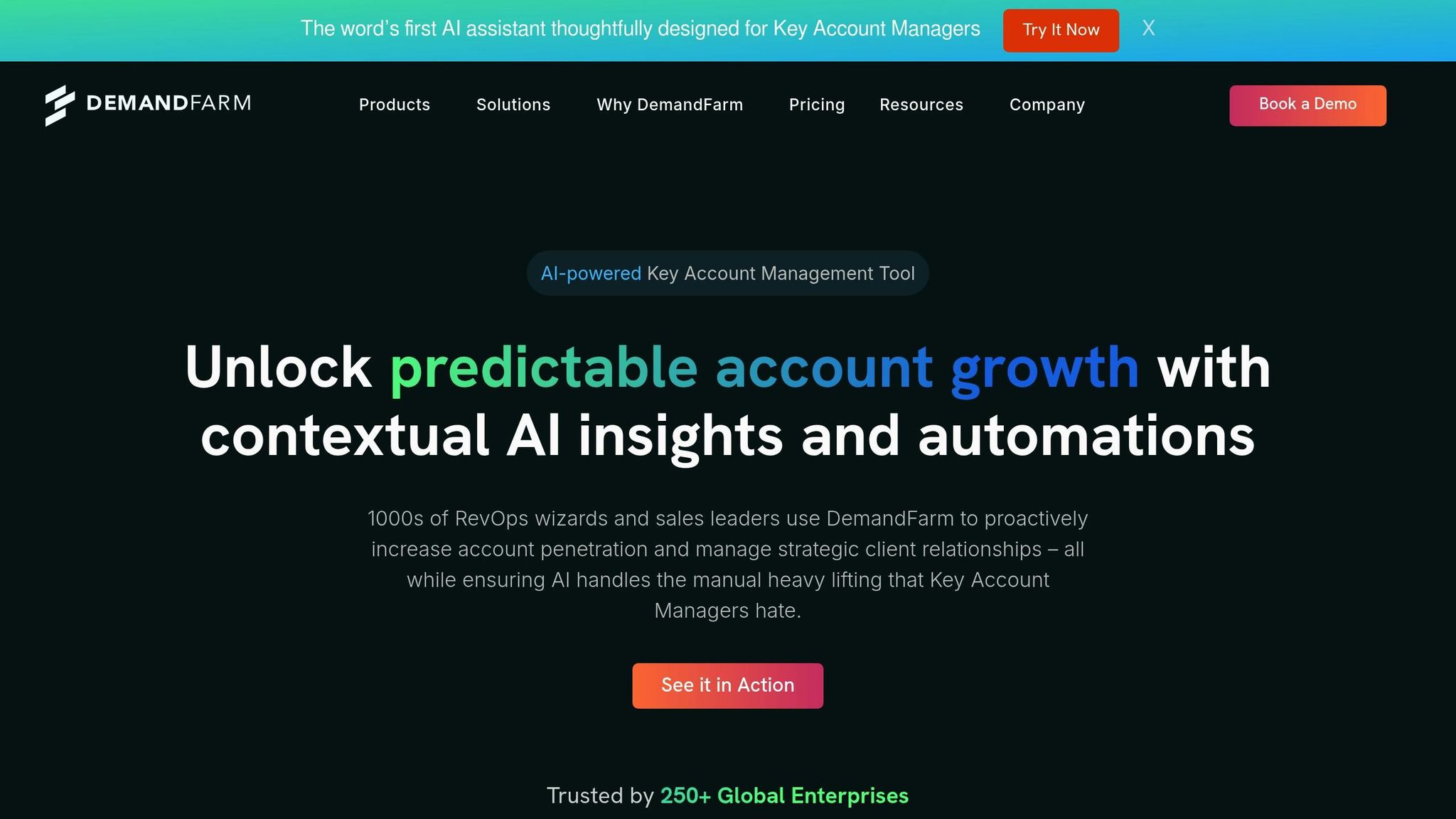
DemandFarm is an AI-powered platform designed to simplify stakeholder mapping and relationship tracking. Instead of spending hours on manual data entry and organizing complex relationships, this tool automates those tasks, making the process faster and more efficient. Let’s dive into how its features bring clarity and collaboration to stakeholder management.
Visualization and Mapping
DemandFarm’s visualization tools transform raw data into easy-to-understand stakeholder maps. These customizable visuals lay out key influencers, hierarchies, and potential areas of tension, whether you're mapping internal teams, external partners, or community groups. By offering a clear picture of relationships, the platform helps teams craft focused engagement strategies without getting bogged down by messy spreadsheets or scattered information.
AI and Automation
The platform’s AI capabilities take care of repetitive tasks like data entry and relationship mapping, ensuring everything stays consistent and accurate. This lets teams spend more time analyzing insights and fine-tuning strategies. Plus, the inclusion of pre-designed templates makes it easy to adapt the tool to various projects, saving even more time.
Collaboration Features
DemandFarm shines when it comes to teamwork. Its real-time collaboration tools allow team members to update and share stakeholder information simultaneously, reducing miscommunication and improving decision-making. Whether you’re part of a small startup or a large enterprise, the platform scales to meet your needs. With its user-friendly interface and extensive support resources, DemandFarm is designed for quick implementation, even for teams with minimal training.
2. Smaply
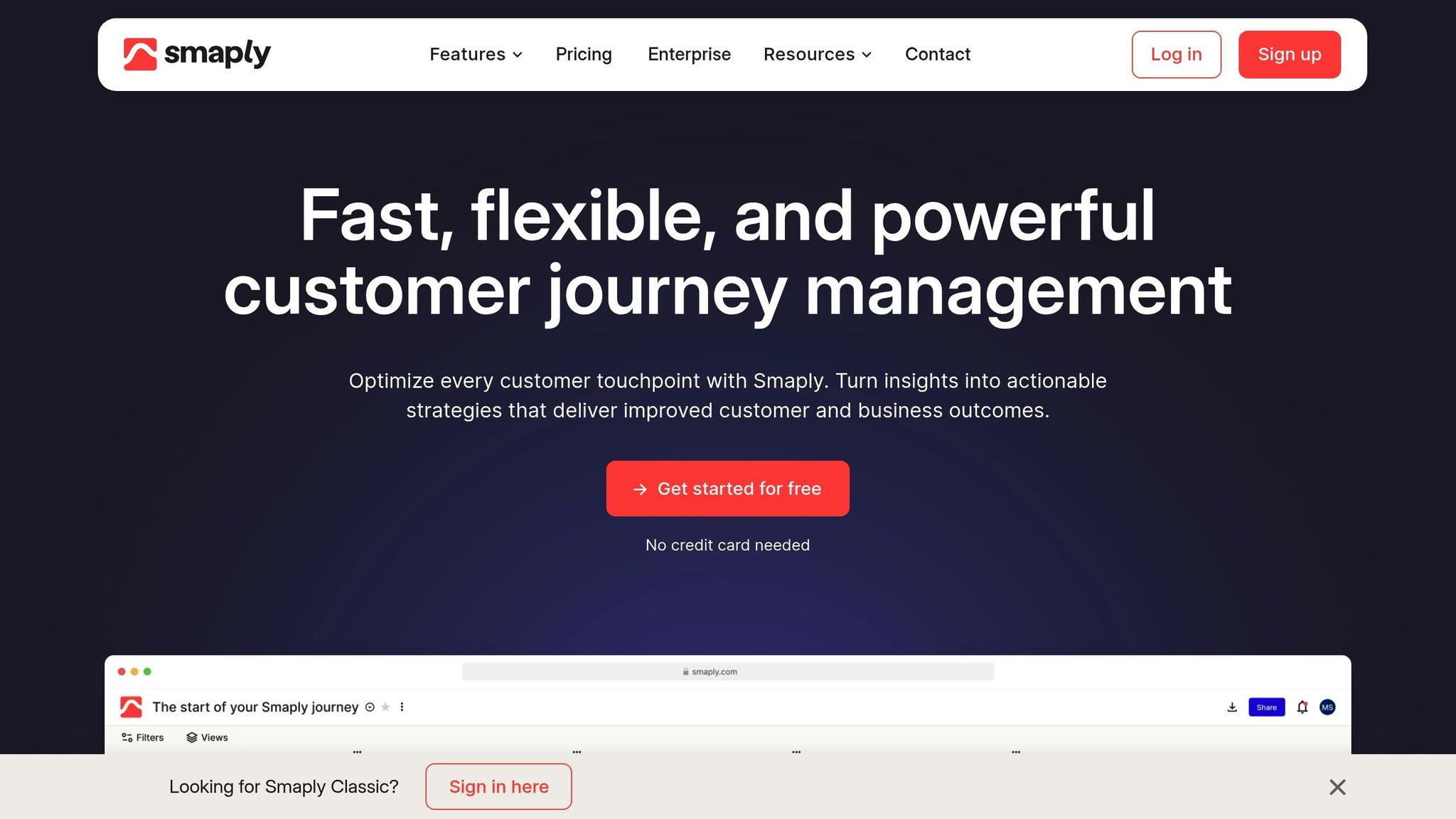
Smaply takes a visual approach to understanding stakeholder ecosystems. Instead of simply tracking relationships, it offers organizations a way to see the bigger picture - how their product or service interacts with various stakeholders. This helps teams prioritize stakeholders more effectively.
Visualization and Mapping
Smaply’s visual tools make it simple to understand how stakeholders influence one another within your ecosystem. You can group stakeholders into categories like essential, important, or interesting, making it easier to focus your efforts. Its intuitive drag-and-drop interface allows you to quickly add, move, and connect stakeholders. Plus, you can create separate maps for different products, tailoring your analysis to specific needs.
What sets Smaply apart is its ability to link stakeholder maps directly to customer journey maps. This connection highlights how stakeholders impact the customer experience at different stages, offering valuable insights into your ecosystem. These visual tools lay the groundwork for Smaply’s collaborative and segmentation features.
Collaboration Features
Smaply isn’t just about mapping - it’s built for teamwork. Its tools are designed to enhance collaboration, especially during workshops. The platform can generate high-resolution maps, making it easier to share clear visuals during live sessions and discussions.
Integration Capabilities
Smaply also excels in filtering and segmentation. You can sort stakeholders by influence, interest, or impact, allowing you to craft engagement strategies tailored to each group’s needs. This precise segmentation helps you manage complex stakeholder relationships with greater efficiency, ensuring your communication and prioritization efforts hit the mark.
For those interested in testing the waters, Smaply offers a free version. This trial option includes enough features to explore visual stakeholder mapping and decide if it aligns with your goals before committing to a paid plan.
3. Simply Stakeholders
Simply Stakeholders is a cloud-based platform designed specifically for stakeholder management. It combines advanced mapping tools with AI-powered insights, offering a detailed perspective that sets it apart from competitors.
Visualization and Mapping
One of the standout features of Simply Stakeholders is its mapping functionality. The platform provides multi-dimensional maps, enabling users to visualize stakeholders across six key dimensions, such as influence, interest, impact, and geographic location. This geo-referenced mapping is especially helpful for managing stakeholders across different regions, allowing teams to pinpoint issues with precision.
Another highlight is the customizable dashboard. Instead of imposing a one-size-fits-all view, Simply Stakeholders lets teams tailor dashboards to display the metrics that matter most to them. Whether it's tracking stakeholder sentiment, engagement status, or relationship dynamics, users can quickly identify which stakeholders need immediate attention. Additionally, segmentation tools help categorize stakeholders by their roles and connections, making it easier to align priorities.
The platform’s use of AI and automation takes efficiency to the next level.
AI/Automation Features
Simply Stakeholders leverages AI to streamline engagement. Its AI-driven sentiment analysis monitors stakeholder attitudes, tagging and alerting teams about changes that may require action. This proactive approach helps address concerns early, preventing them from escalating into bigger challenges.
The platform’s smart tagging system further reduces manual work by automatically categorizing stakeholders and interactions. Workflow management is also automated, simplifying engagement strategies and relationship tracking without constant manual updates. Notifications keep teams informed about key developments, ensuring timely follow-ups.
These features allow organizations to scale their stakeholder engagement efforts more effectively. By automating routine tasks like record updates and issue tracking, teams can focus on building stronger relationships and addressing strategic priorities.
Collaboration Features
By centralizing stakeholder data, Simply Stakeholders enables secure, simultaneous access for multiple team members. User roles, permissions, and ownership settings ensure that sensitive information is accessible only to the right people.
The platform tracks engagement across various channels, including face-to-face meetings, online communications, task management, and grievance tracking. It also maintains a detailed audit and activity trail, offering transparency into all stakeholder interactions and decisions. This is particularly beneficial for regulated industries and community-focused projects.
Custom fields allow teams to track organization-specific data, while distribution lists streamline outreach efforts. A central address book keeps contact information well-organized and easily accessible to authorized users.
Integration Capabilities
Simply Stakeholders integrates seamlessly with existing project management and collaboration tools, allowing organizations to enhance their workflows without disruption. Stakeholder data can also be imported from spreadsheets, making the transition from manual systems much smoother.
The platform supports email and SMS messaging, enabling direct communication without the need to switch between applications. Its design ensures accessibility across devices, making cross-functional collaboration more flexible. These integration features solidify Simply Stakeholders as a comprehensive solution for stakeholder management.
With a 4.4 out of 5 rating on G2 and 4.5 out of 5 on Capterra, users frequently commend its mapping tools and AI-powered sentiment analysis. However, it’s worth noting that Simply Stakeholders offers three customizable pricing plans, and obtaining a quote requires contacting their sales team, which could delay the evaluation process compared to platforms with upfront pricing details.
sbb-itb-8feac72
4. Totango
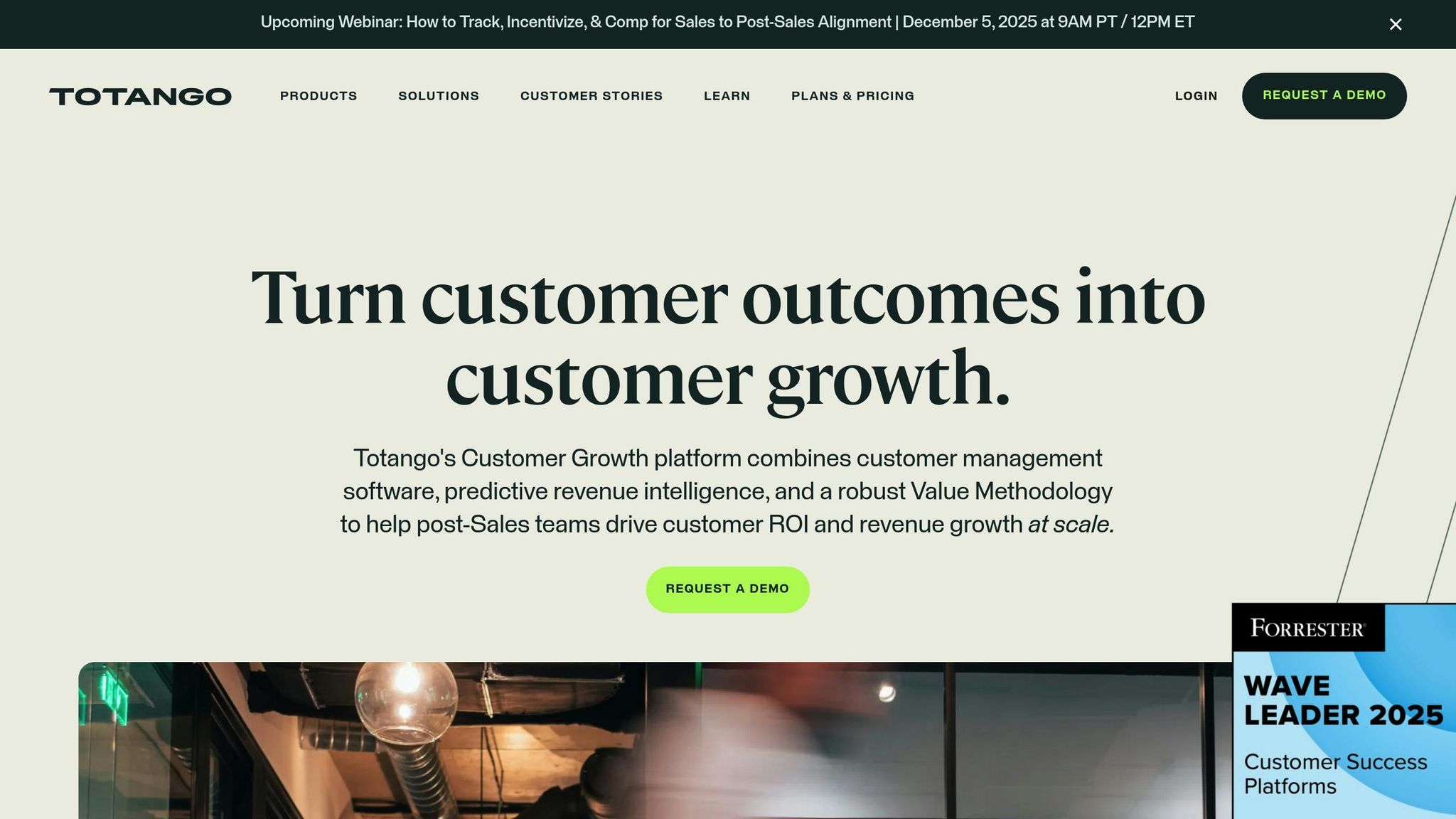
Totango takes a modular approach, giving organizations the freedom to pick just the features they need. Instead of pushing a one-size-fits-all platform, it lets teams build a solution tailored to their specific needs.
Visualization and Mapping
Totango's design prioritizes flexibility, especially when it comes to visualizing stakeholder interactions. The platform offers tools to create detailed profiles segmented by key criteria, making it easier to craft targeted engagement strategies. With a strong focus on tracking the stakeholder lifecycle, teams can monitor interactions from the initial connection to ongoing engagement. This visibility provides clear insights into each stakeholder’s journey, helping teams fine-tune their engagement strategies as needed [1].
Collaboration Features
Totango centralizes all stakeholder data in one place, providing a single source of truth for details, interaction history, and engagement status. This eliminates the hassle of jumping between multiple systems and boosts accountability and coordination - especially useful for organizations managing complex stakeholder networks. Plus, Totango’s setup integrates smoothly with existing workflows, making it easier to incorporate into daily operations [1].
Integration Capabilities
Staying true to its modular philosophy, Totango is designed to integrate seamlessly with your current systems. Its flexible setup allows teams to customize the platform to align with their existing tools, making it possible to start small and expand as needs grow [1].
AI/Automation Features
Totango streamlines engagement workflows by automating repetitive tasks and ensuring consistent communication. Its automation tools tie into lifecycle tracking, enabling teams to set triggers and workflows based on a stakeholder's progress through different stages. This approach fits well with Totango's customizable design, allowing teams to implement only the automation features they actually need. However, the platform does come with a steep learning curve and a less-than-ideal in-app experience, which might require teams to invest extra time in training. Additionally, Totango uses a custom pricing model, so you'll need to contact their sales team for a quote [1].
Pros and Cons
Every tool comes with its own set of strengths and limitations. Below, we break down these trade-offs to help you make informed decisions, building on the analysis from earlier sections.
DemandFarm simplifies stakeholder chart creation by automating the process, cutting down on manual data entry tasks [3]. Its interface is straightforward, requiring little training, and includes pre-designed templates for a quick start. The platform also supports real-time collaboration, allowing teams to share insights and update stakeholder information together. Plus, it scales well for businesses of all sizes, from startups to large enterprises. On the flip side, details about its third-party integration options aren’t easily accessible.
Smaply stands out for its free version, which appeals to budget-conscious teams. Its drag-and-drop interface makes it easy to create and adjust stakeholder maps. Additionally, the ability to link these maps directly to customer journey maps offers a broader view of stakeholder influence. Users can categorize stakeholders based on various factors, such as local, national, or international reach, and export high-resolution maps perfect for workshops and presentations. However, its documentation on integration capabilities is somewhat limited.
Simply Stakeholders offers advanced features like AI-powered sentiment analysis, smart tagging, automated workflows, and task management with assignment tracking. Its dashboards are customizable, equipped with built-in reporting tools, and include real-time alerts to flag issues. However, pricing details are only available upon request, which could slow down decision-making.
Totango centralizes stakeholder data, providing a clear view of the stakeholder lifecycle and tracking team activity. It integrates seamlessly into existing workflows, but its steep learning curve may require extra training. Like Simply Stakeholders, Totango uses a custom pricing model that necessitates direct consultation with their sales team.
Here’s a quick comparison of these tools' key features:
| Tool | Visualization & Mapping | Collaboration Features | Integration Capabilities | AI/Automation Features |
|---|---|---|---|---|
| DemandFarm | Customizable visual maps auto-created using AI | Real-time collaboration with shared insights | Limited documentation | AI-powered automation eliminates manual chart building |
| Smaply | High-resolution maps with drag-and-drop interface; connects to journey maps | Intuitive, workshop-ready map management | Limited documentation | - |
| Simply Stakeholders | Visualizes stakeholders by influence, interest, and impact across key dimensions | Multiple projects viewable with team engagement tracking | Supports data imports with centralized storage | AI-driven sentiment analysis, automatic tagging, and issue detection |
| Totango | Centralized stakeholder data with lifecycle visibility | Consolidates data for team review | Integrates smoothly with existing workflows | - |
Pricing Overview
Pricing structures vary widely across these tools. Smaply offers a free version, making it accessible for smaller teams. DemandFarm doesn’t disclose its pricing publicly. Simply Stakeholders provides three customizable plans, but you’ll need to contact their sales team for details. Similarly, Totango uses a custom pricing model that requires consultation [1][2].
For organizations moving away from manual stakeholder management, DemandFarm offers a smooth transition with its user-friendly interface and ready-to-use templates. Teams looking for detailed reporting and AI-driven insights may prefer Simply Stakeholders. If polished, presentation-ready outputs are a priority, Smaply’s high-resolution maps are a great fit. Meanwhile, businesses that need comprehensive lifecycle visibility might opt for Totango, despite its steeper learning curve.
Conclusion
Selecting the best stakeholder mapping tool comes down to understanding your organization's size, budget, and specific needs. Each platform in this comparison caters to different priorities, whether it's automation, detailed analytics, or compliance-focused reporting.
For small teams and startups, Smaply's free version is a practical choice. It offers essential visualization tools without any upfront investment. Its drag-and-drop interface is easy to use, requiring little training, and its high-resolution outputs are perfect for workshops and presentations.
Large enterprises with more intricate stakeholder networks might find Simply Stakeholders or Totango better suited to their needs. Simply Stakeholders stands out with its ability to manage multiple projects via a centralized dashboard. Its AI-driven sentiment analysis and real-time alerts are particularly useful for industries with strict compliance requirements. On the other hand, Totango offers a comprehensive approach to managing stakeholder data throughout its lifecycle while tracking team activities. However, its steeper learning curve means teams should plan for additional training time. For organizations needing quicker responses, solutions with more automation may be a better fit.
For those prioritizing speed, DemandFarm's AI-driven automation is a standout. It eliminates the manual work of creating stakeholder charts, saving significant time. Its user-friendly interface works well for both startups and larger enterprises, and real-time collaboration features help keep teams aligned without extensive onboarding.
Teams that focus on customer experience will appreciate Smaply’s integration of stakeholder and customer journey maps. This feature highlights how stakeholders influence the customer journey, offering insights that other tools might overlook.
When it comes to pricing, Smaply provides a free entry-level option, while enterprise-grade tools like Simply Stakeholders and Totango require contacting sales teams for custom quotes. DemandFarm also keeps its pricing undisclosed, so a consultation may be necessary.
Technical proficiency is another factor to consider. DemandFarm’s intuitive design requires minimal training, while Totango’s complexity might pose a challenge for new users. Integration capabilities are equally important - ensure the tool can work seamlessly with your existing spreadsheets or systems. For distributed teams, platforms with strong collaboration features and mobile accessibility should take priority.
AI-powered analytics are changing the way organizations approach stakeholder management. Features like sentiment analysis, automated workflows, and early issue detection reduce manual effort and allow teams to address stakeholder concerns more efficiently. These capabilities are especially valuable for industries dealing with social risks or heavy compliance demands. Whether your focus is on speed, customer experience, or compliance, the tools reviewed here provide options to effectively manage complex stakeholder relationships in an increasingly AI-driven world.
FAQs
How do AI features like sentiment analysis and automated alerts improve stakeholder mapping tools in 2025?
AI-powered tools like sentiment analysis and automated alerts are transforming how stakeholder mapping is done, offering sharper insights and real-time updates. Sentiment analysis dives into stakeholder attitudes and emotions toward your organization or project, giving you the ability to fine-tune communication and build stronger relationships. Meanwhile, automated alerts keep you in the loop about crucial changes - whether it’s a shift in engagement or a rise in someone’s influence - so you can adapt your strategy right when it matters most.
By incorporating these features, stakeholder mapping tools become more dynamic and data-focused, helping users make informed decisions and cultivate lasting connections in ever-changing scenarios.
What key factors should organizations evaluate when selecting stakeholder mapping tools like DemandFarm, Smaply, Simply Stakeholders, or Totango?
When selecting a stakeholder mapping tool, it's important to weigh a few key factors to ensure it meets your organization's needs. Start by examining the features the tool provides. Look for things like visualization options, the ability to integrate with your current systems, and flexibility for customization. These can make a big difference in how well the tool fits into your workflow.
Another critical aspect is ease of use. A tool with a simple, intuitive interface can save your team time and encourage consistent use across departments. No one wants to wrestle with a complicated system.
The cost is another factor you can't overlook. Make sure the tool is within your budget but still delivers solid value. For growing organizations, scalability is worth considering - can the tool handle your needs as your team or stakeholder base expands? Finally, check if the platform offers adequate support and training resources. These can be invaluable in helping your team get up to speed and make the most of the tool.
By taking the time to evaluate these elements, you'll be better equipped to choose a tool that aligns with your stakeholder management goals.
How do integration features of stakeholder mapping tools influence their effectiveness for various organizational needs?
Integration options are a key factor when deciding if a stakeholder mapping tool aligns with your organization’s needs. Tools that work smoothly with your existing software - like project management systems, communication platforms, or data analytics tools - can streamline workflows and improve how data is shared across teams.
Strong integration features also help centralize stakeholder information, cutting down on manual tasks and ensuring updates happen in real time. To make the most of a tool’s potential, take a close look at your current tech stack and choose one that’s compatible for better efficiency and usability.