
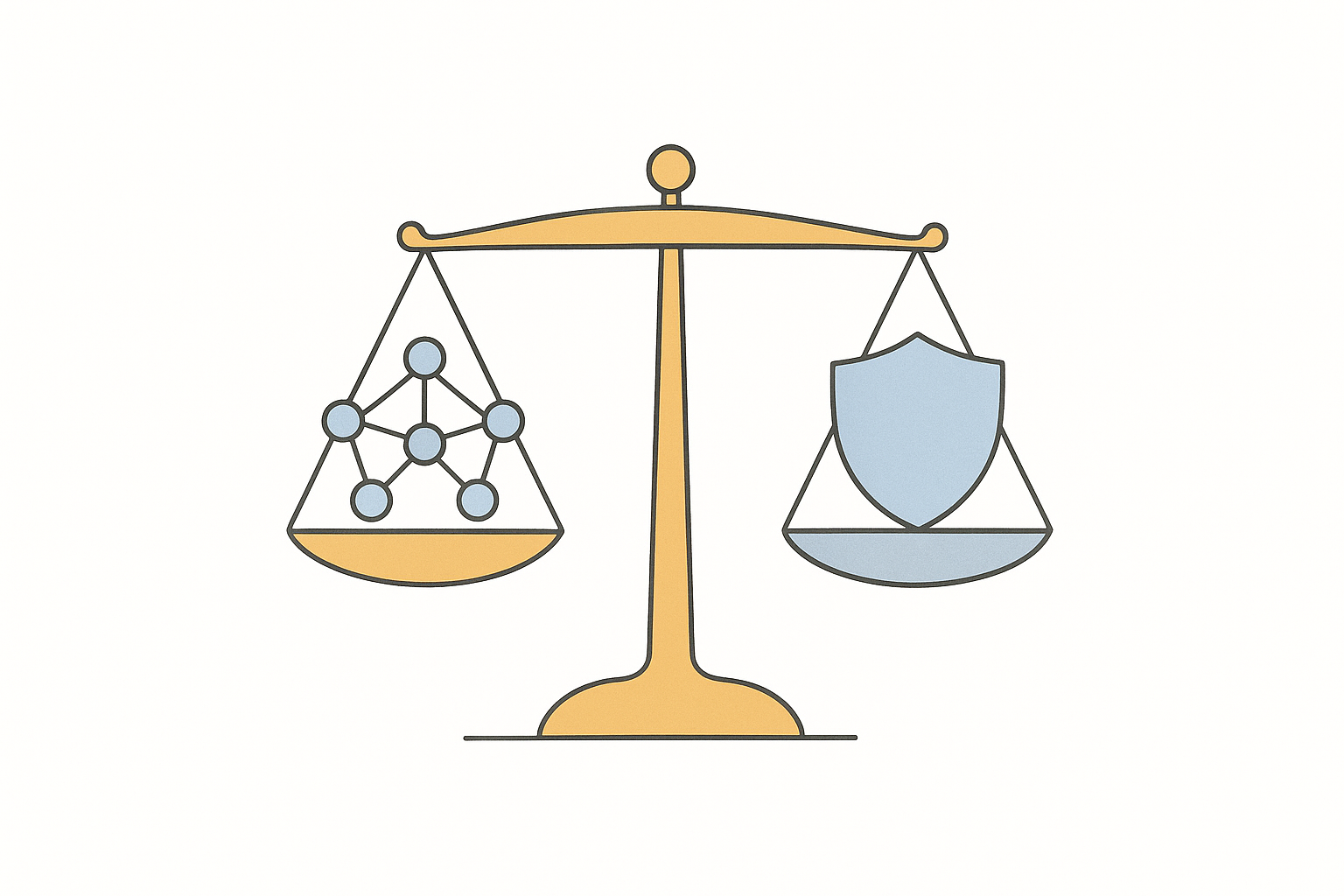
Ultimate Guide to Fairness Evaluation in Federated Learning
Federated learning (FL) is changing how machine learning models are built, but it poses unique challenges in ensuring models treat all participants equitably. Unlike centralized systems, FL involves decentralized data and diverse client contributions, which can lead to bias. Here's what you need to know:
- Bias in FL happens when the global model performs unevenly across demographics or client groups due to factors like data imbalance or aggregation methods.
- Equity aims to ensure all clients, regardless of size or resources, benefit fairly from the global model.
- Key challenges include data heterogeneity, privacy constraints, and defining fairness standards for diverse client needs.
- Bias in FL can cause issues in fields like healthcare (misdiagnoses) and finance (unfair loan denials), while also affecting trust, adoption, and regulatory compliance.
To address these issues, organizations should:
- Use metrics like demographic parity or performance consistency across groups.
- Apply privacy-preserving tools for bias evaluation.
- Monitor and address bias at both local (client) and global levels.
Emerging trends include real-time bias monitoring, automated detection, and sector-specific metrics. By tackling bias effectively, FL systems can improve outcomes across industries while meeting ethical and legal standards.
GIFAIR-FL: A Framework for Group and Individual Fairness in Federated Learning
Bias Metrics and Evaluation Techniques in Federated Learning
Federated learning operates on a decentralized framework, where multiple clients contribute data that often varies significantly in distribution. This setup necessitates assessing bias across three main areas: demographic bias, performance-related bias, and contribution-related bias [1][2].
Key Dimensions of Bias in Federated Learning
- Demographic Bias: This focuses on identifying disparities in model outcomes across different demographic groups, such as gender, race, or age. For instance, if a model performs better for one group over another, it signals a potential imbalance that needs to be addressed.
- Performance-Related Bias: This dimension evaluates how well the global model serves diverse client populations. Uneven performance - like variations in accuracy or prediction quality - can highlight that some clients benefit less from the model compared to others.
- Contribution-Related Bias: Since clients contribute varying amounts of data and computational resources, this metric examines whether the benefits of the global model are fairly distributed. It ensures that clients' efforts and inputs are proportionately rewarded.
Tackling these biases is critical for building federated learning systems that uphold fairness and align with responsible AI principles. Up next, we'll explore the tools and frameworks designed to measure and address these biases within federated learning environments.
Tools and Frameworks for Bias Evaluation in Federated Learning
When it comes to addressing bias in federated learning, having the right tools is just as important as understanding the metrics themselves. Evaluating bias in this decentralized setting calls for tools specifically designed to tackle the unique challenges posed by distributed data.
Overview of Popular Bias Evaluation Tools
There’s a mix of open-source and enterprise frameworks available to help measure and analyze bias. These tools are built to compute fairness metrics like demographic parity, equalized odds, and individual fairness while seamlessly working with federated learning libraries. Some tools go a step further, focusing on contribution-based fairness by tracking client participation and individual contributions. Others offer visualization and performance monitoring features, making it easier to identify and interpret bias trends.
Comparison of Tools and Frameworks
Choosing the right tool depends on several factors:
- Fairness Metrics: Does the tool support the metrics you need, and how complex are they?
- Integration: How well does it integrate with your existing machine learning and federated learning setups?
- Scalability: Can it handle federated networks of different sizes?
- Customization: Does it allow you to define new fairness measures if needed?
- Efficiency: How much computational overhead does it add to training and inference?
For early-stage experiments, lightweight tools with minimal computational impact can be a good starting point. On the other hand, production environments may require more robust platforms that offer detailed metric calculations and automation features. Ultimately, the decision boils down to finding the right balance between thorough bias evaluation and practical considerations like ease of use and resource constraints. These tools play a key role in tackling the real-world challenges of bias evaluation in federated learning.
sbb-itb-8feac72
Challenges and Best Practices in Bias Evaluation
When it comes to federated learning (FL), tackling bias isn’t just about picking the right metrics - it’s about navigating a host of unique challenges tied to its decentralized nature. These hurdles can disrupt traditional evaluation methods, making it tricky to ensure fairness across the board. Let’s dive into the key challenges and explore strategies to address them effectively.
Key Challenges in Bias Evaluation
One of the biggest obstacles is data heterogeneity. In centralized systems, you can analyze a unified dataset. Federated learning, however, scatters data across multiple clients, each with its own quirks and distributions. For instance, one client might focus on a specific demographic or specialization, making it hard to establish a universal standard for fairness. What seems fair for one client could appear biased for another.
Then there’s the issue of privacy constraints. Traditional bias evaluation often relies on detailed demographic data and sensitive attributes. But FL is built on the principle of keeping data private and local. This means you’re limited to using aggregated statistics or privacy-preserving techniques like differential privacy. While these methods protect client data, they can also obscure patterns of bias or introduce noise, making it harder to draw reliable conclusions.
Scalability limitations also come into play as the network grows. With hundreds or even thousands of clients, calculating fairness metrics becomes a logistical challenge. Metrics requiring comparisons across clients demand significant coordination and communication, which can be especially difficult when clients have varying computational power or unreliable connectivity.
Another layer of complexity is defining acceptable bias thresholds. In centralized models, you might set a single fairness standard, like demographic parity. But in federated systems, different clients may have valid reasons for needing tailored fairness criteria. For example, a loan approval system operating in different states must account for local laws and economic conditions. A fairness standard appropriate for California may not align with what’s needed in Texas, yet the global model must balance these competing demands.
Finally, communication costs pose a practical challenge. Bias evaluation often requires multiple exchanges of information between clients and the central server. Each round of communication can strain bandwidth and increase latency, especially in mobile or IoT environments where connectivity is limited or expensive.
Best Practices for Bias Evaluation in FL
To address these challenges, adopting thoughtful strategies is essential. Here are some practices to ensure fairness while respecting the decentralized and privacy-focused nature of FL:
- Layered bias monitoring: Start by evaluating bias locally at each client, where participants can assess fairness using their own data and context. Then, use privacy-preserving methods to aggregate statistics across all clients for global monitoring. Finally, compare fairness metrics between client groups to uncover disparities in model performance.
- Clear reporting protocols: Develop standardized templates for clients to report bias metrics without exposing sensitive data. Use techniques like differential privacy to add controlled noise, ensuring privacy while maintaining the utility of the shared data.
- Client-specific thresholds: Allow for flexibility in fairness standards based on local needs, regulations, or population characteristics. Create a framework that enforces global fairness while accommodating legitimate local variations.
- Efficient bias computation: Choose metrics that provide valuable insights with minimal communication overhead. Focus on those that can be calculated locally and aggregated efficiently, such as statistical parity differences. Avoid metrics requiring extensive cross-client coordination unless absolutely necessary.
- Stakeholder involvement: Engage technical teams, domain experts, ethicists, legal advisors, and community representatives early in the process. Define fairness goals collaboratively and integrate bias evaluation into your FL workflow from the start. Automate the computation of bias metrics during model training and set up alerts for when metrics exceed predefined thresholds.
- Bias remediation planning: Detecting bias is only half the battle. Develop actionable strategies to address it, whether through data preprocessing, algorithmic adjustments, or changes in client participation. Regularly test these strategies to ensure they’re effective in your federated setup.
Ultimately, bias evaluation in federated learning isn’t just a technical challenge - it’s an ethical and organizational one. FL’s distributed nature demands new approaches to fairness, balancing privacy, scalability, and the diverse needs of participants while striving for equitable outcomes. By addressing these challenges head-on, you can build systems that are not only efficient but also fair and inclusive.
Future Directions and Research Opportunities in Bias Evaluation for FL
The field of bias evaluation in federated learning (FL) is growing rapidly, paving the way for new and inventive solutions. As FL becomes a go-to approach for applications like healthcare diagnostics and financial services, there's an increasing need for advanced methods to assess and address bias. These efforts build on past discussions about the unique bias challenges FL presents.
Emerging Trends in Bias Evaluation
One of the key shifts in bias evaluation is the move toward real-time bias monitoring. These systems aim to detect fairness issues as they happen, requiring computational frameworks that can handle fairness metrics across thousands of clients without compromising privacy or overwhelming the network.
Another noteworthy development is automated bias detection. Machine learning models are now being designed to spot subtle patterns of unfairness, including intersectional bias - bias that affects individuals who belong to multiple protected groups simultaneously. Detecting such nuanced issues has been particularly tricky in federated environments, but automation is making strides in this area.
There's also a push for domain-specific fairness metrics that cater to the unique needs of different sectors. For example, fairness in medical diagnostics might focus on ensuring equitable treatment outcomes, while fairness in credit scoring could prioritize equal access to financial opportunities. Tailoring metrics to specific use cases avoids the pitfalls of one-size-fits-all approaches.
Privacy-preserving bias evaluation techniques are gaining traction as well. Methods like secure multi-party computation and homomorphic encryption allow organizations to assess bias without exposing sensitive demographic data or proprietary information. This balance between transparency and privacy is a critical step forward.
The development of standardized benchmarking datasets tailored for federated learning is another promising trend. These datasets mimic the diverse, distributed nature of real-world FL setups, enabling fair comparisons of different bias evaluation methods.
Finally, incorporating explainable AI (XAI) techniques into bias evaluation is shedding light not just on whether bias exists, but on why it happens and how it spreads during federated training. Understanding the "why" is crucial for designing effective solutions.
Opportunities for Responsible AI Leadership
These emerging trends also highlight opportunities for leadership in creating fair and ethical AI systems. Bias evaluation in FL is not just a technical challenge - it’s a chance for professionals to lead the way in responsible AI practices.
Cross-industry collaboration is one such opportunity. By bringing together expertise from sectors like healthcare, finance, and technology, organizations can develop comprehensive frameworks that address fairness across various domains. Each industry has its own fairness priorities, and collaboration can help create solutions that work universally.
With the rise of regulatory compliance requirements, there's also room for innovation in building bias evaluation systems that meet legal standards. Frameworks like the EU's AI Act and state-level regulations in the U.S. are driving the need for tools that ensure fairness while maintaining detailed documentation and audit trails. Open-source tools for bias evaluation are particularly valuable here, as they make fairness evaluation accessible to more organizations and help establish industry-wide standards.
The connection between bias evaluation and business value is becoming increasingly evident. Companies that prioritize fairness in AI not only enhance customer trust but also gain advantages in regulatory approvals and market access. Leaders who can align fairness initiatives with business goals will play a pivotal role in their organizations’ success.
For professionals looking to step into leadership roles, expertise in bias evaluation offers a unique blend of technical knowledge and strategic business impact. The ability to design fair AI systems while balancing privacy, performance, and equity is a highly sought-after skill in today’s AI-driven world.
The future of bias evaluation in federated learning will depend on leaders who can navigate the intersection of technology, ethics, regulation, and business. By taking a multidisciplinary approach, these leaders have the chance to create AI systems that genuinely serve and empower diverse communities.
Conclusion
Federated learning introduces distinct challenges when it comes to evaluating fairness, requiring tailored metrics and tools. Unlike traditional centralized systems, the distributed nature of FL makes addressing bias more complex, especially when dealing with diverse client populations. This calls for a shift in how fairness is assessed, as conventional methods simply don’t fit the federated framework.
Bias in federated learning isn’t just a technical hurdle - it carries ethical and business implications as well. Companies adopting FL must recognize that fairness evaluation is not only a regulatory necessity but also a way to build trust and gain a competitive edge in creating reliable AI systems.
To tackle these issues, organizations should adopt bias metrics like demographic parity or equalized odds, incorporate privacy-preserving techniques, and maintain continuous monitoring for fairness-related problems throughout training. The tools and frameworks chosen should align with the specific demands of the industry - whether it's healthcare, finance, or another regulated field.
For technical leaders, integrating fairness evaluations into the FL development process is critical. This involves assembling cross-disciplinary teams and staying aligned with evolving regulations. Companies that take a proactive stance on bias will foster stronger customer trust and ensure compliance with regulatory standards.
The field of federated learning is advancing quickly, with innovations like real-time bias monitoring, automated detection systems, and industry-specific metrics becoming increasingly refined. Those who can blend technical expertise with ethical foresight are best positioned to lead in this new era of AI.
The goal isn’t just to create functional FL systems - it’s to build systems that are fair and equitable for all. Achieving this demands dedication, a willingness to learn, and the resolve to prioritize fairness, even when it complicates the path forward. For professionals in this space, expertise in AI ethics, technical strategy, and business leadership will be key to thriving in today’s tech landscape. The tools and knowledge are already available to make fairness in federated learning achievable; what’s needed now is the commitment and leadership to bring it to life.
FAQs
How can organizations address privacy concerns while ensuring fairness in federated learning systems?
Organizations can tackle privacy concerns and promote fairness in federated learning by adopting privacy-preserving techniques like differential privacy, secure aggregation, and encryption. These approaches safeguard sensitive data by introducing noise or employing cryptographic methods, allowing fairness assessments without exposing individual information.
By leveraging these methods, organizations can measure fairness metrics, identify potential biases, and protect data confidentiality. This approach ensures ethical AI practices while adhering to privacy regulations.
What tools or frameworks can help evaluate and address bias in federated learning systems?
When tackling bias in federated learning, tools like FedBEAL (Bias-Eliminating Augmentation Learning) and frameworks such as FedGFT and DeceFL offer practical solutions. These approaches address challenges like data imbalance, demographic bias, and non-IID data distributions through tailored algorithms and decentralized methods.
For instance, FedBEAL uses augmentation techniques to minimize bias, while FedGFT ensures fairness across diverse data sources by promoting global equity. Meanwhile, DeceFL takes a unique approach by removing the need for a central client, enabling fairness in fully decentralized setups. These tools are specifically designed to align with federated learning's privacy requirements while enhancing fairness across all datasets involved.
Why are industry-specific fairness metrics important in federated learning, and how can they be designed to ensure fair outcomes?
Industry-specific fairness metrics play a crucial role in federated learning because every sector operates with its own unique data patterns, fairness concerns, and regulatory demands. These factors heavily influence how fairness is defined and applied. For example, in healthcare, fairness might center on achieving equal health outcomes across different demographic groups. In contrast, the finance sector may focus on ensuring impartiality in credit assessments.
Developing these metrics requires a deep dive into the specific traits of an industry’s data. This involves identifying where biases might arise and examining any performance gaps. By customizing fairness standards to address these nuances, federated learning systems can provide results that are both equitable and dependable. This approach helps meet ethical obligations while addressing the practical needs of each sector.