
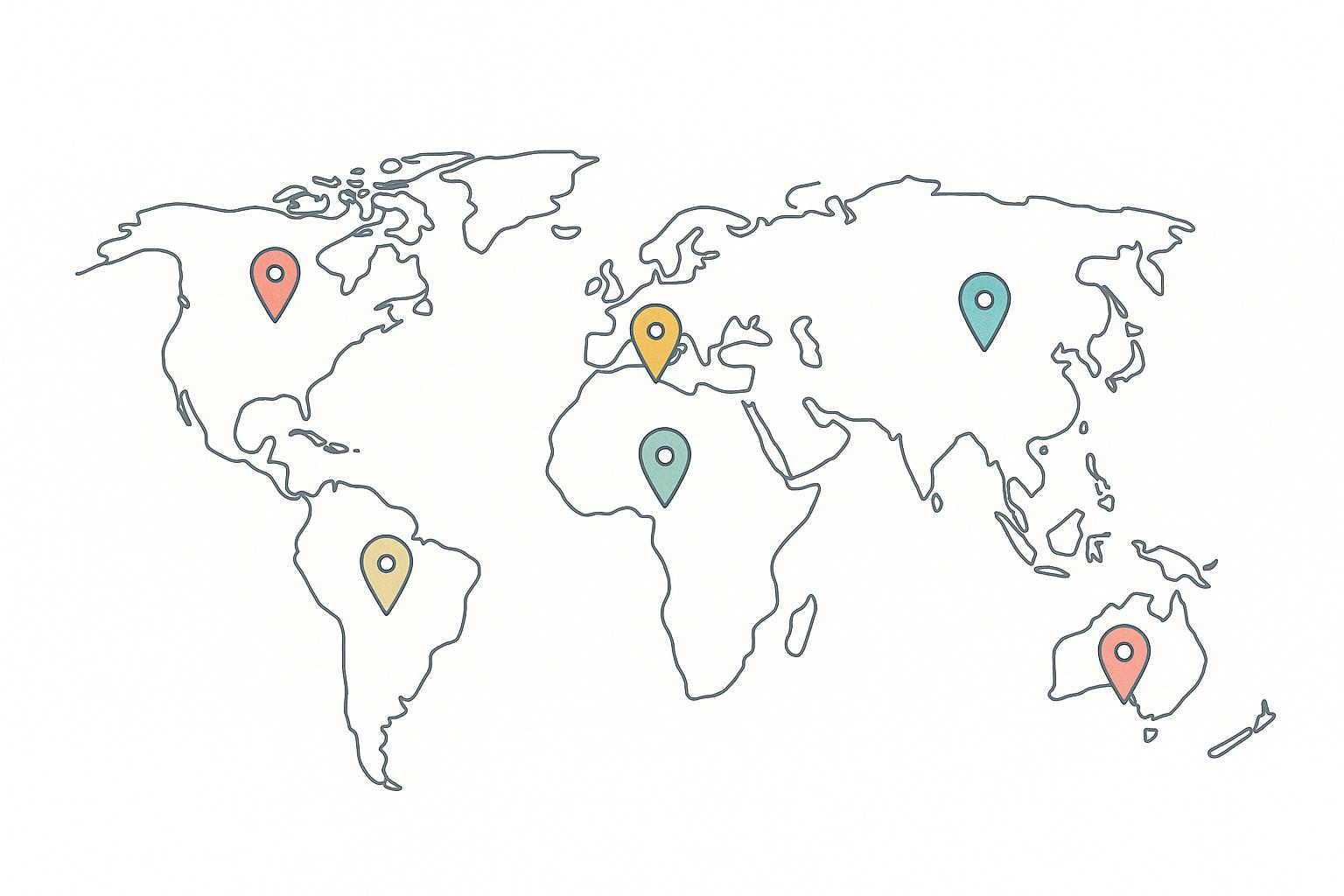
Why Cultural Context Matters in Personalization
Want to connect better with your audience? Start by understanding their cultural background. Personalization isn’t just about using someone’s name or offering tailored products - it’s about respecting and reflecting the values, communication styles, and social norms of different communities. Here’s why this matters and how to get it right:
- Ignoring local nuances can harm your brand. From misinterpreting color meanings to using awkward translations, small mistakes can erode trust and even go viral for the wrong reasons.
- Frameworks like Hofstede’s dimensions help you understand global differences. Factors like individualism, power distance, and long-term orientation shape how people respond to messaging.
- AI helps scale personalization but isn’t perfect. Machines can analyze behavior and suggest tweaks, but human oversight ensures deeper understanding.
- Measuring success is key. Track region-specific metrics like click-through rates, conversion rates, and customer feedback to fine-tune your approach.
To connect globally, you need more than translation. It’s about tailoring experiences - whether through research, design, or functionality - to fit local expectations. This isn’t just good practice; it’s essential for building trust, loyalty, and growth in today’s interconnected world.
Personalized Content Marketing: Creativity, Cultural Awareness, & The Way Forward
Key Frameworks for Understanding Culture in Personalization
To grasp how culture influences personalization, certain frameworks provide valuable structure for examining these differences. One widely recognized approach is Geert Hofstede's cultural dimensions theory. This model identifies six dimensions that help compare national cultures: Power Distance, Uncertainty Avoidance, Individualism vs. Collectivism, Masculinity vs. Femininity, Long-Term vs. Short-Term Orientation, and Indulgence vs. Restraint [1]. Each dimension sheds light on how cultural values can shape behaviors and expectations, making it a key tool for understanding personalization on a global scale.
The Cost of Ignoring Culture in Personalization
Overlooking cultural nuances in personalization can have serious consequences for businesses. What might seem like a small oversight in messaging or design can quickly damage a brand's reputation and erode customer trust. In today's interconnected world, cultural missteps can go viral on social media, amplifying the negative impact.
Examples of Common Mistakes
Many cultural personalization failures arise from a lack of understanding about market-specific meanings. Take color symbolism, for example: while white is often associated with purity and cleanliness in some Western cultures, it symbolizes mourning in others. Misinterpreting these nuances can lead to messaging that feels out of place or even offensive, weakening the connection with the target audience.
Literal translations are another common pitfall. Without adapting language to reflect local customs and values, messaging can come across as awkward or even alienating. Similarly, using culturally significant symbols without proper context can backfire, leaving audiences feeling misunderstood or disrespected.
Religious and cultural sensitivities are equally critical. Brands have faced backlash for incorporating symbols or recommendations that clash with local practices, damaging their credibility and alienating customers. Timing is another factor that can't be ignored. Launching campaigns during periods of mourning or ignoring local holidays and seasonal events can make a brand appear out of touch, reducing engagement with key segments.
These kinds of missteps don’t just harm customer relationships - they can also lead to broader business challenges.
Business Impact of Insensitive Content
The fallout from cultural insensitivity can ripple far beyond the initial mistake. Rebuilding trust and repairing a tarnished reputation often comes with steep costs. Insensitive content not only weakens customer loyalty but also fuels negative word-of-mouth, which can spread quickly and damage a brand's image.
Ignoring cultural nuances can also hinder market expansion. Without a deep understanding of local contexts, brands may struggle to establish meaningful connections with their audience, slowing growth and weakening their competitive edge.
On top of that, cultural missteps can lead to regulatory fines or penalties, adding financial strain. The resources spent on damage control are resources that could have been invested in innovation or other growth opportunities.
Recognizing these risks highlights the importance of crafting strategies that respect and reflect local cultures.
sbb-itb-8feac72
Strategies for Personalization That Respects Local Context
Creating personalized experiences that resonate with local audiences requires a thoughtful and detailed approach. The most successful brands go beyond surface-level adjustments, diving deep into understanding their audience and tailoring experiences that feel genuinely relevant to each market.
Conducting Research and Audits
To truly connect with local audiences, start by gathering insights through methods like ethnographic research, focus groups, cultural audits, and partnerships with local experts. These tools reveal not only what people prefer but also the why behind those preferences, offering insights you can act on.
Keeping up with cultural trends is equally important. Regularly collecting feedback from local customers ensures your strategy stays aligned with shifting preferences. After all, what works today might not resonate tomorrow, especially in fast-changing markets.
With this knowledge, brands can decide whether to stick to basic localization or go further with a more immersive approach.
Localization vs. Deep Adaptation
Basic localization addresses the essentials - language, currency, and date formats. While these adjustments are necessary, they’re just the foundation.
Deep adaptation takes things further. It involves tailoring navigation, visual design, and functional features to match local tastes. For instance, adapting content might mean using locally relevant examples, testimonials, and case studies. Including familiar locations, local currency figures, or featuring people who reflect the target audience can make the experience feel more relatable.
Functional changes are also key. Payment methods, shipping options, or customer service preferences vary widely across regions. Some markets might prefer phone support, while others lean toward email or chat. Adapting to these preferences creates a seamless experience for users.
In many cases, personalization requires more than just translation - it’s about rethinking and rebuilding the experience from the ground up to truly align with local expectations.
Using AI for Personalization
Artificial intelligence can play a major role in creating personalized experiences. Machine learning and behavioral analysis help identify trends and adjust content in real time. Natural language processing ensures that translations maintain the right tone and cultural nuances, avoiding potential missteps.
AI can also analyze how different audiences respond to content. If a particular message underperforms in one market, the system can learn from this and suggest improvements. Predictive modeling takes it a step further, offering insights into what might work in new markets by comparing data from similar regions.
That said, AI is not a standalone solution. While it excels at identifying patterns and automating processes, human oversight is crucial to ensure cultural sensitivity. Technology can suggest strategies, but understanding the deeper cultural context often requires human expertise.
The most effective personalization strategies combine the efficiency of AI with the cultural awareness of human judgment. Together, they create scalable solutions that genuinely respect and resonate with local audiences.
Measuring Success in Cross-Border Personalization
Once you've implemented localized strategies, the next step is to measure how well they're working. Tracking performance provides clarity on whether your culturally-tailored efforts are hitting the mark or need fine-tuning. To get the full picture, you’ll need a mix of hard data and more nuanced insights.
Engagement Metrics by Region
Regional engagement metrics are a great way to see how your personalized content resonates with different audiences. For example, click-through rates (CTR) can vary significantly between markets. A call-to-action (CTA) that works in the U.S. might feel too pushy in regions that value a subtler approach.
Another key metric is time spent on page, which shows how relevant your content is to specific groups. If users in a particular region spend more time on culturally-adapted pages compared to generic ones, that’s a good sign your personalization is effective. On the flip side, high bounce rates in certain areas might point to a mismatch in tone, design, or messaging.
Conversion rates by region provide a direct way to measure success. Beyond just tracking purchases, look at micro-conversions like newsletter signups, content downloads, or account creations. Breaking these down by region helps pinpoint which cultural tweaks are driving real results.
Don’t overlook social sharing patterns, which can vary widely across cultures. In individualistic societies, people may share content more freely, while in collectivist cultures, sharing might depend on different social norms and expectations.
To truly understand the impact, establish baseline metrics and track changes over at least 90 days. This timeline helps account for seasonal trends and cultural variations, giving you a clearer sense of what’s working and what isn’t.
Customer Satisfaction and Retention
Customer satisfaction surveys offer valuable insights into how well your efforts align with local values and expectations. Include questions that specifically address cultural relevance - do users feel your content reflects their traditions or communication styles?
Another useful tool is the Net Promoter Score (NPS), segmented by region. If you notice significant differences in NPS scores across markets, it’s a sign that your personalization strategy might need adjustments in certain areas.
Long-term success often comes down to customer retention rates. When your content really connects with local audiences, it builds trust and loyalty. Track retention at intervals like 30, 60, and 90 days to see how culturally-adapted experiences stack up against more generic ones.
Pay attention to customer support interactions as well. Complaints about confusing messaging, inappropriate content, or cultural insensitivity can highlight areas where your strategy is falling short. These interactions are a goldmine for identifying specific issues that need fixing.
Finally, monitor repeat purchase behavior, which can vary greatly between cultures. In some regions, customers may need more time to build trust before making another purchase, while others might be quicker to return once they’ve had a positive experience.
Gather feedback through channels that align with local preferences. Some audiences might prefer email surveys, while others respond better to phone calls or even in-person interactions. Adapting your feedback methods to fit local norms shows that you’re committed to understanding and meeting their needs.
Conclusion: The Future of Personalization in a Global World
In today’s hyper-connected digital world, personalization isn’t just about addressing individual preferences - it’s about respecting and reflecting local cultures. As we’ve seen throughout this guide, aligning personalization with cultural values and communication styles is no longer optional. It’s a necessity for creating meaningful connections with global audiences.
Expanding into international markets means facing audiences who expect content to resonate with their unique cultural context. Whether it’s understanding Hofstede’s cultural dimensions, adapting to high-context or low-context communication styles, or tailoring messaging to regional nuances, cultural awareness is the key to better engagement, stronger loyalty, and higher conversion rates.
For technical leaders, these challenges present exciting opportunities. By combining technical know-how with strategic insight, leaders can design personalization systems that respect cultural differences. From conducting cultural audits to using AI for scalable localization, the strategies discussed here provide a clear path for creating inclusive and impactful personalization engines.
We’ve also explored ways to measure success, such as tracking region-specific engagement metrics and using culturally adapted customer satisfaction surveys. When you can prove that culturally informed personalization leads to tangible business outcomes, you’re doing more than enhancing user experience - you’re driving your organization’s global growth. Demonstrating improvements in engagement and retention underscores the importance of cultural personalization in achieving business goals.
For professionals eager to broaden their influence beyond engineering, understanding cultural context is a vital skill. Programs like those offered by Tech Leaders can help bridge the gap between technical expertise and the business knowledge needed to lead complex, cross-cultural initiatives effectively.
As AI and machine learning continue to advance, the potential to deliver personalized experiences at a global scale will only expand. But success hinges on one thing: maintaining cultural sensitivity while scaling personalization. Cultural context isn’t just a detail - it’s a cornerstone of effective personalization.
Start small, measure your progress, and remember that cultural competence is an ongoing process. Embracing cultural context isn’t just the right thing to do - it’s a powerful driver of global business success.
FAQs
How can businesses use AI while ensuring personalization respects cultural differences?
To make sure AI-driven personalization aligns with cultural differences, businesses need to pair AI tools with human judgment. Regular reviews of AI outputs are essential to spot cultural subtleties or errors that automated systems might overlook.
Including a variety of cultural perspectives in training datasets and establishing clear guidelines for cultural sensitivity can also improve how AI systems reflect local values. By combining technology with human insight, companies can create personalization that resonates on a deeper, more culturally aware level.
How can companies gather cultural insights to improve personalized messaging?
To craft messaging that truly connects with local audiences, companies should begin by diving deep into understanding cultural subtleties. This can be achieved through cultural audits, which may involve interviewing employees, conducting surveys, and reviewing internal policies. These steps help uncover the unique cultural dynamics within the organization.
Equally important is tapping into local insights. By analyzing consumer behavior, preferences, and trends, businesses can gain valuable knowledge. Tools like social media monitoring, customer feedback, and website analytics are excellent resources for this purpose.
When companies align their content with local traditions and values, they don’t just create relevant experiences - they build trust and form stronger connections with their audience.
Why is it important to track regional metrics, and how can they enhance personalization strategies?
Understanding regional metrics is a game-changer for businesses aiming to tailor their personalization strategies. By tapping into the distinct preferences, habits, and values of specific regions, companies can ensure their content, offers, and messaging strike a chord with local audiences.
When businesses use these insights effectively, they can craft experiences that feel genuinely relevant and engaging. This often translates to happier customers, better conversion rates, and a boost in brand loyalty. Plus, aligning with local traditions and values doesn’t just build stronger connections - it can also help businesses carve out a competitive edge in crowded markets.