

Best Strengths Assessments for Tech Leaders
Tech leaders often face challenges in transitioning from technical roles to leadership positions. Strengths-based assessments can help by identifying natural talents and providing actionable insights to enhance leadership effectiveness. These tools focus on what you naturally excel at, rather than weaknesses, and can improve team dynamics, productivity, and engagement. Below are some of the top options:
- Gallup CliftonStrengths: Identifies 34 talent themes across four domains. Ideal for understanding leadership blind spots and scaling impact. Pricing starts at $49.99.
- DISC Assessment: Focuses on four behavioral styles (Dominance, Influence, Steadiness, Conscientiousness). Useful for improving communication and conflict resolution. Some versions are free.
- Myers-Briggs Type Indicator (MBTI): Categorizes individuals into 16 personality types. Helps with decision-making and team dynamics. Pricing varies.
- Hogan Assessments: Evaluates strengths, stress behaviors, and leadership risks. Valuable for high-pressure scenarios. Pricing varies.
- Saville Assessment: Combines cognitive and interpersonal evaluations, balancing technical problem-solving with teamwork. Starts at $40 per use.
Quick Comparison
| Assessment | Core Focus | Best For | Pricing |
|---|---|---|---|
| Gallup CliftonStrengths | Talent themes across four domains | Leadership growth, team alignment | $49.99–$59.99 |
| DISC Assessment | Behavioral styles | Communication, conflict resolution | Free (some versions) |
| MBTI | Personality types | Decision-making, team understanding | Varies |
| Hogan Assessments | Leadership strengths and risks | Stress management, executive coaching | Varies |
| Saville Assessment | Cognitive and interpersonal abilities | Technical problem-solving, teamwork | $40+ per use |
Each tool offers a unique perspective, so choose based on your leadership goals and team needs. Focus on turning insights into actionable plans for real growth.
How Strengths Can Unlock Leaders’ Potential -- Called to Coach
Best Strengths Assessments for Tech Leaders
Now that we’ve covered why strengths-based assessments matter, let’s dive into some of the top tools available. Each one offers a unique perspective on understanding leadership styles and applying them effectively in tech environments.
Gallup CliftonStrengths (StrengthsFinder)
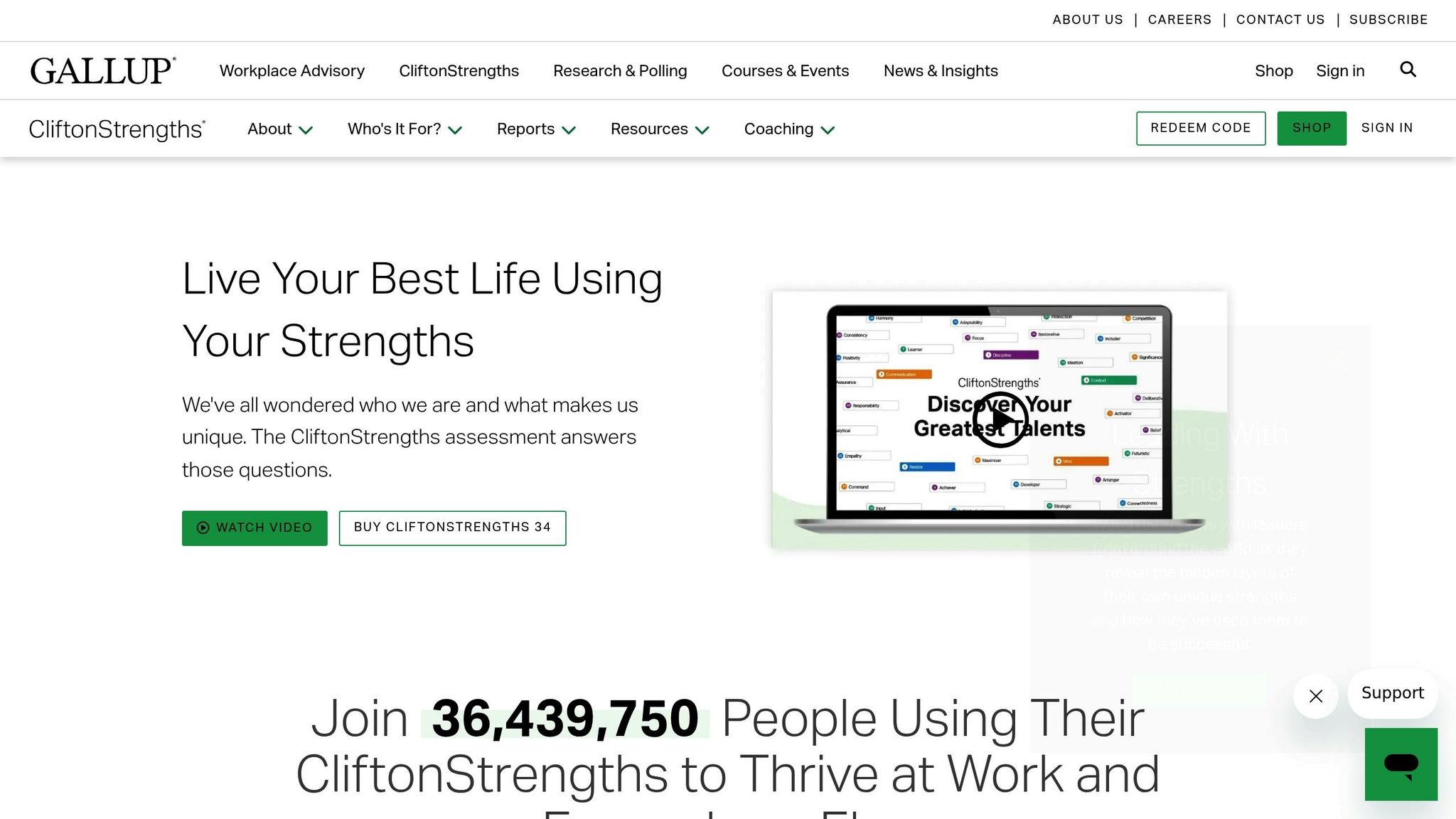
CliftonStrengths is one of the most popular assessments, with over 36 million users worldwide [7]. It evaluates 34 distinct talent themes across four domains: Strategic Thinking, Relationship Building, Influencing, and Executing [1].
For tech leaders, the Strategic Thinking domain is particularly valuable for tasks like shaping product roadmaps or making architecture decisions [1][5]. Meanwhile, the Executing domain, with themes like Restorative, plays a key role in troubleshooting and ensuring project delivery [1][5]. The CliftonStrengths for Leaders report not only identifies your top talents but also highlights how these strengths might occasionally hinder your leadership effectiveness [1].
"I saw my Individualization theme in a different way... The first 'hinder' statement startled me a bit, not that it isn't true, but because it is true. It's something I'm going to pay attention to" [1].
Pricing: The CliftonStrengths for Leaders report starts at $49.99, while the full 34-theme profile is available for $59.99 [8][1].
DISC Assessment
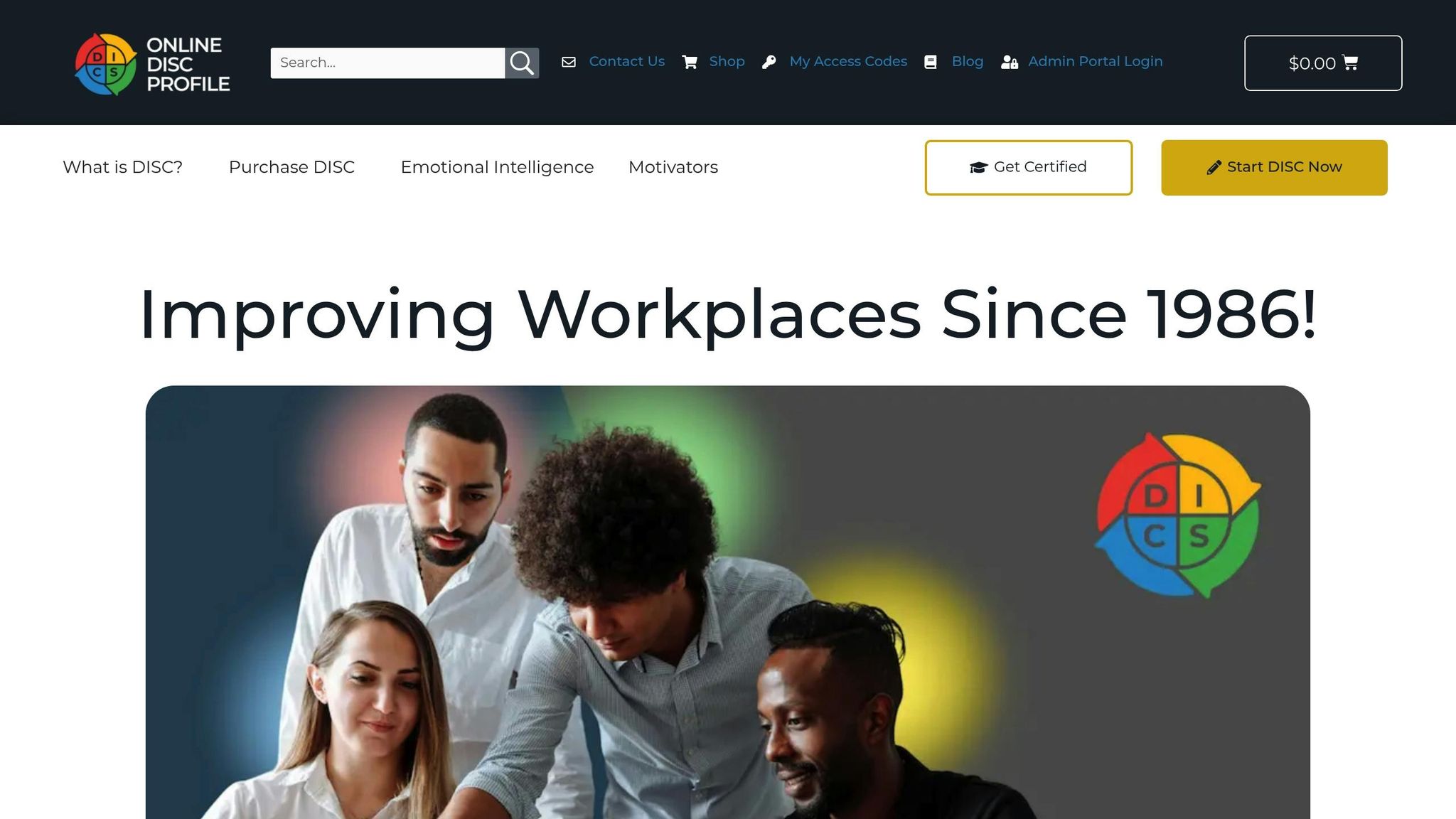
The DISC Assessment takes a behavioral approach, analyzing Dominance (D), Influence (I), Steadiness (S), and Conscientiousness (C) [3][5]. More than 2 million people have completed this quick, 15-minute assessment [9].
Tech leaders with high Dominance often thrive in fast-paced startup settings where decisive action is critical. On the other hand, those with high Conscientiousness excel in roles that demand precision, such as infrastructure engineering or quality assurance [5][6]. DISC also helps create a shared language for resolving conflicts within cross-functional teams [9].
"If there is a rare opportunity in life, it's self-awareness. Self-awareness of the difference between you and your patterns and the impact of your patterns on those around you" [9].
Pricing: The Tony Robbins version of DISC is available for free.
Myers-Briggs Type Indicator (MBTI)
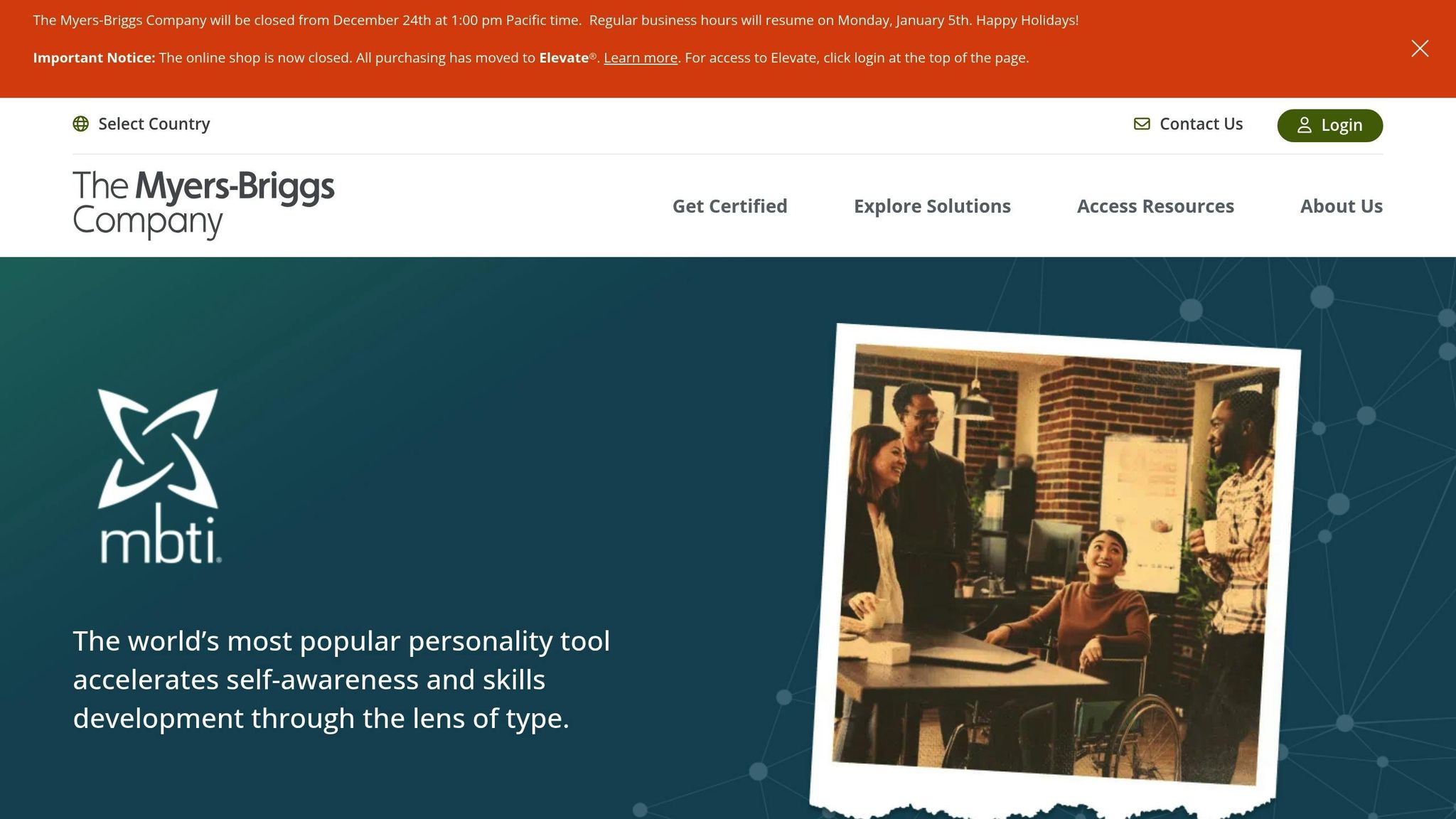
MBTI is ideal for tech leaders who want to better understand decision-making styles. It categorizes individuals into 16 personality types based on preferences like Thinking versus Feeling and Judging versus Perceiving [5][6].
Many tech leaders lean toward Thinking preferences, prioritizing logic and data in their decisions. However, understanding Feeling preferences can help them foster team harmony and handle diverse communication styles [5]. Additionally, knowing whether someone prefers structured planning or spontaneous problem-solving can guide leaders in adapting their approach to maximize team performance.
Hogan Assessments
Hogan Assessments provide a deeper look into leadership by evaluating three dimensions: the "Bright Side" (day-to-day strengths), the "Dark Side" (behaviors under stress), and the "Inside" (core motives and values) [5][6].
This tool is especially useful in high-pressure tech scenarios, such as system failures or product launches, where stress can expose leadership blind spots [5]. The Hogan 360 multirater feedback tool gathers insights from peers and direct reports, offering a practical view of how a leader is perceived [2]. This feedback helps leaders understand the environment they create and adjust their approach as needed [2].
Saville Assessment
The Saville Assessment evaluates both cognitive abilities and interpersonal dynamics, offering a balanced view of problem-solving skills and team interactions. Unlike tools that focus solely on behavior or strengths, Saville combines insights into intelligence, teamwork, and overall fit within tech organizations.
This dual focus is particularly useful for identifying whether someone has the analytical skills to tackle technical challenges while also demonstrating the interpersonal abilities needed for effective leadership. Pricing starts at $40 per use.
Each of these tools offers tech leaders a way to align their technical expertise with their leadership approach, helping them create stronger, more effective teams.
Comparison of Strengths Assessments
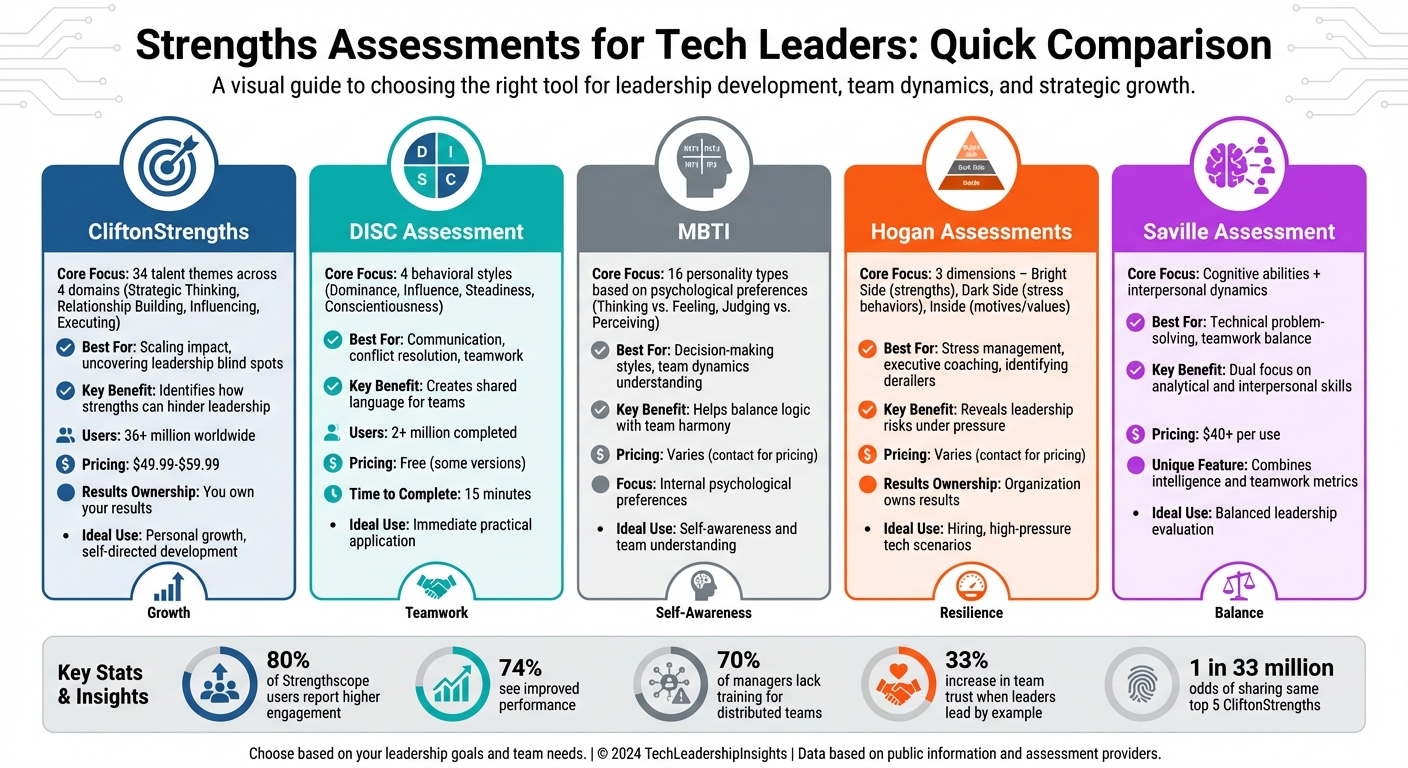
Strengths Assessment Comparison for Tech Leaders
Comparison Table
Choosing the right assessment depends on your leadership goals. Below is a detailed comparison to help tech leaders understand how each tool aligns with their needs and priorities.
| Assessment | Core Focus | Relevance for Tech Leaders | Pricing |
|---|---|---|---|
| Gallup CliftonStrengths | 34 talent themes across four domains | High - useful for scaling impact and uncovering leadership blind spots in tech settings | $24.99–$59.99 |
| DISC Assessment | 4 behavioral styles (Dominance, Influence, Steadiness, Conscientiousness) | High - enhances communication, conflict resolution, and teamwork | Contact for pricing |
| MBTI | 16 personality types based on psychological preferences | Moderate - supports self-awareness and understanding team dynamics and decision-making styles | Contact for pricing |
| Hogan Assessments | Evaluates leadership reputation and performance risks ("Dark Side") | High - key for identifying derailers and managing risks in high-pressure technical roles | Contact for pricing |
Each tool has its own distinct focus. For example, CliftonStrengths emphasizes natural talents and positive psychology - focusing on what’s "right" with people [11]. DISC, on the other hand, evaluates observable workplace behaviors [10]. MBTI dives into internal psychological preferences [10], while Hogan takes a unique approach, assessing potential risks and behaviors under stress [11].
Practical considerations also differ. With CliftonStrengths, you own your results, making it ideal for personal growth [11]. In contrast, Hogan results are often sent directly to your organization, which decides whether to share them with you [11]. This makes CliftonStrengths a better fit for self-directed development, while Hogan is frequently used in hiring and executive coaching [11].
DISC stands out for its simplicity and immediate application. Its four-category system offers practical insights that teams can use right away to improve communication and teamwork [10].
In high-pressure tech environments, Hogan’s focus on the "Dark Side" is especially valuable. It uncovers potential derailers, showing how stress might affect leadership performance.
sbb-itb-8feac72
How to Choose the Right Assessment
Factors to Evaluate
When selecting an assessment, focus on tools that provide meaningful, actionable insights tailored to leadership in your specific context. Start by ensuring the assessment is grounded in scientific research, such as those certified by the British Psychological Society [12].
Think about the depth of insight the tool offers. A brief report highlighting your top five strengths might feel motivating, but it may not expose underlying blind spots. On the other hand, a more detailed 34-theme report can offer a well-rounded view - not just showcasing your strengths but also identifying where those strengths could become challenges if overused. For example, a strength like "Analytical" might lead to analysis paralysis in high-pressure situations, especially in tech environments [1].
Marie, an Executive Coach, shared her perspective on the CliftonStrengths for Leaders report:
"I appreciate the directness of this report … for me, it's the appropriate tone to set when talking to a leader" [1].
For distributed teams, prioritize assessments that include digital dashboards and ROI tracking. Leadership tools for tech teams should not only identify strengths but also provide metrics and integration options essential for managing remote engineering teams. Strengthscope, for instance, reports that 80% of users experience higher engagement and 74% see improved performance [6][12].
Once you’ve considered these factors, focus on tailoring assessments specifically for technical leadership roles.
Tech-Specific Customization
Leadership in technical fields requires more than generic personality profiles. Look for tools that translate raw data into practical, role-specific insights. For example, CliftonStrengths for Leaders ($49.99) provides specialized reports with actionable recommendations and reflection questions tailored for management roles [1].
In technical environments, assessments that group strengths into domains - like "Strategic Thinking", which includes Analytical, Futuristic, Ideation, and Strategic themes - are particularly valuable. These domains align with the needs of tech leaders, such as long-term planning and solving complex problems. Janna, a Team Leader, highlighted this benefit:
"The content is scaled up to think bigger than self, and I think that's really useful. Especially for leaders trying to scale their impact beyond themselves" [1].
Additionally, consider whether the tool addresses the unique challenges of leading hybrid or remote teams. With 70% of managers lacking formal training for managing distributed teams [6], it’s crucial to choose assessments that identify traits critical for building trust and maintaining engagement across different time zones. Some tools now incorporate AI-driven insights to assess cognitive abilities and emotional intelligence, helping predict how leaders will handle real-world technical challenges [5].
To complement personality assessments, include tools that measure strategic problem-solving abilities [5] and identify areas like inefficiencies, which can be addressed through specialized software or AI-driven solutions [13]. In fields like engineering or IT, where leadership demands both technical expertise and interpersonal skills, this comprehensive approach is indispensable.
Finally, ensure the assessment integrates seamlessly with your broader development strategy. Programs like those from Tech Leaders help bridge the gap between technical knowledge and leadership skills, such as AI business strategy. When assessment results feed into a structured learning path, it becomes easier to turn insights into meaningful behavioral changes.
Conclusion
Reflecting on the assessment tools and selection strategies we've explored, it’s clear how these insights can fuel real leadership growth. Strengths assessments are a game-changer for tech leaders, helping shift focus from just technical execution to strategic leadership. They reveal your natural thought and behavior patterns, fostering self-awareness and enabling you to lead with confidence. As Gallup aptly puts it, "To lead others, you must first learn how to lead yourself" [1]. This foundation is especially crucial as technical roles continue to evolve.
Moving from a technical role to leadership isn’t just about mastering new skills - it’s about addressing gaps in areas like emotional intelligence, strategic thinking, and stress management [5][6]. These tools also help you understand your team’s unique "talent DNA", allowing you to build high-performing groups by leveraging individual strengths, rather than focusing solely on technical abilities [3][4]. With 70% of managers lacking training in leading hybrid teams [6], these insights are becoming a must-have for today’s tech leaders.
The real value of these assessments lies in turning insights into action. Opt for tools that align with your leadership needs - whether it’s CliftonStrengths for identifying your top talents or Hogan for highlighting potential risks under stress [5]. Use these findings to create a focused development plan. Programs like those offered by Tech Leaders bridge the gap between technical expertise and essential leadership skills, such as AI business strategy, helping you translate assessment results into meaningful behavioral changes.
Key Takeaways
- Start with a validated assessment: Choose tools that go beyond surface-level insights. For instance, the CliftonStrengths 34 report offers a detailed view of your strengths, with the odds of two people sharing the same top five strengths in the same order being 1 in 33 million [8].
- Combine multiple assessments: Use a mix of tools like CliftonStrengths, DISC, 360-degree feedback, and cognitive evaluations to gain a well-rounded understanding. This approach addresses various leadership demands, from fostering team trust (which can increase by 33% when leaders lead by example [5]) to managing stress during fast-paced changes.
- Follow through with action: Avoid the "dump and run" approach. Pair your insights with coaching and actionable plans to ensure they lead to real growth [6].
Use these tools and strategies as stepping stones to refine and elevate your leadership journey.
FAQs
How can strengths assessments help tech leaders transition into leadership roles?
Strengths assessments give tech leaders a clearer picture of their natural talents and how to use them effectively in leadership roles. Instead of relying solely on traditional "soft-skill" training, these tools focus on uncovering abilities like problem-solving, strategic thinking, or motivating teams. The idea is to build on what leaders already excel at, rather than starting from scratch.
For engineers transitioning into roles like people management or product strategy, this self-awareness marks a crucial shift - from thinking about "what I can build" to "how I can lead and inspire." By recognizing their strengths, tech leaders can enhance skills like communication, delegation, and decision-making. This not only strengthens trust and adaptability within their teams but also helps them connect their technical expertise to broader business and AI strategy objectives.
What’s the difference between the CliftonStrengths and DISC assessments for tech leaders?
The CliftonStrengths assessment is designed to uncover your natural talents across 34 specific themes, which are organized into four domains: Strategic Thinking, Relationship Building, Influencing, and Executing. The process involves a 30-minute questionnaire, after which you'll receive a ranked list of your top strengths along with practical insights to help you grow and excel as a leader.
In contrast, the DISC assessment focuses on behavioral traits, dividing individuals into four categories: Dominance, Influence, Steadiness, and Conscientiousness. While CliftonStrengths zeroes in on your personal talents, DISC is more about understanding your communication style and work preferences, making it especially useful for improving teamwork and collaboration.
For tech leaders, both tools can be incredibly useful but serve different purposes. CliftonStrengths helps pinpoint what you naturally excel at, while DISC provides clarity on how you interact with others in professional settings.
How can tech leaders apply strengths assessments to improve their leadership strategies?
Tech leaders can tap into strengths assessments to refine their leadership approach. These tools provide personalized insights, highlighting key strengths and offering actionable strategies to leverage them effectively. For instance, a leader identified with the "Achiever" strength might channel their energy into setting ambitious project milestones, whereas someone with "Positivity" could focus on uplifting team spirits during challenging times.
The next step is to build a clear plan to incorporate these strengths into everyday leadership practices. This could involve aligning strengths with specific goals, seeking input from team members, and establishing routines like regular check-ins or retrospectives to monitor progress. By embedding these strengths into daily workflows, leaders can ensure their approach benefits both the team and the broader business objectives.
To make this process impactful, it’s crucial to track and evaluate the outcomes over time. Regularly reviewing progress, tweaking strategies as needed, and celebrating achievements can help leaders fine-tune their methods. This ongoing effort not only strengthens their leadership style but also nurtures a positive and productive team environment.