
Case Studies: Ethical Stakeholder Decisions in Tech
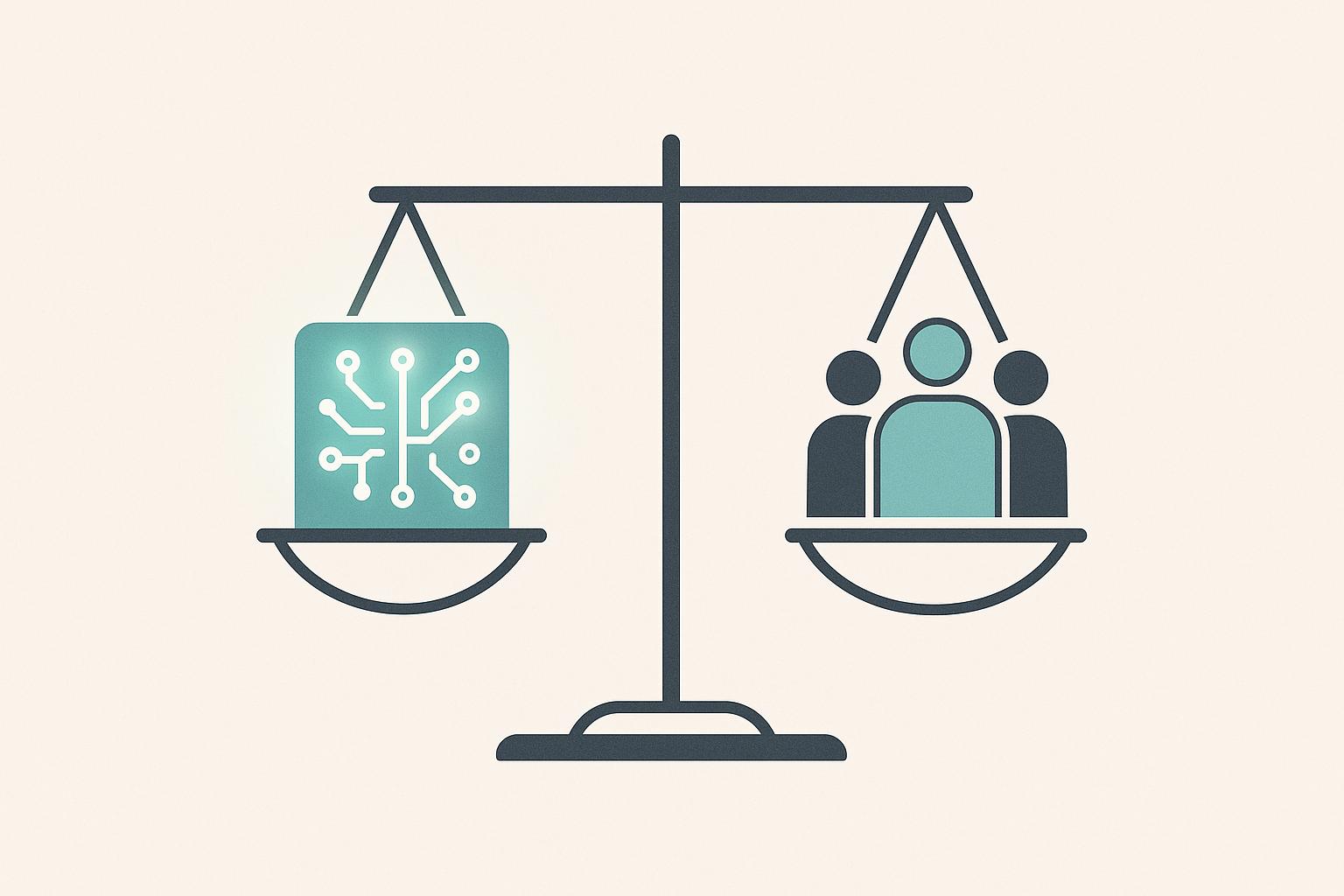
Ethical decision-making in technology is more important than ever. Companies like Microsoft, Google, IBM, Salesforce, and OpenAI are navigating complex challenges where decisions impact users, employees, investors, and society at large. Balancing these interests requires structured frameworks and clear processes to ensure fairness, trust, and accountability.
Key takeaways from this article include:
- Frameworks for ethical decisions: Utilize approaches like utilitarianism (outcomes-focused), deontological ethics (rule-based), and virtue ethics (value-driven).
- Steps for decision-making: Identify stakeholders, gather information, apply frameworks, consult stakeholders, assess impacts, and communicate decisions transparently.
- Real-world examples: Microsoft uses an AI ethics committee, Google adheres to AI principles, IBM created tools to reduce bias, Salesforce enforces ethical policies, and OpenAI prioritizes public engagement.
- Best practices for leaders: Encourage diverse input, maintain transparency, and integrate ethics into workplace culture through hiring, training, and open communication.
Ethical leadership isn't just about avoiding harm - it's a key driver of trust, loyalty, and long-term success in the tech industry.
Ethics in Tech
Ethical Decision Making Methods
When tech leaders face challenging stakeholder decisions, they need structured approaches to navigate competing interests. Various established frameworks offer distinct perspectives for evaluating ethical dilemmas in technology. These frameworks serve as the foundation for the step-by-step process outlined below.
Common Ethical Frameworks
Utilitarianism focuses on outcomes, asking which decision benefits the greatest number of people. This often involves balancing broad benefits against localized harms. For example, a company might implement policies that enhance overall user well-being, even if they limit certain individual freedoms.
Deontological ethics takes a different stance by focusing on the morality of actions themselves, regardless of their outcomes. This framework emphasizes adherence to duties, rights, and rules. A tech company applying deontological principles might refuse to create surveillance tools for oppressive purposes, prioritizing privacy as an unshakable right.
Virtue ethics shifts the focus to character and values, encouraging actions that reflect qualities like honesty, fairness, and integrity. Instead of rigidly following rules or calculating outcomes, this framework asks leaders to consider what a person with strong moral character would do in the same situation.
The ACM Code of Ethics and Professional Conduct offers specific guidance tailored to computing professionals. Updated in 2018, it highlights principles like contributing to societal well-being, avoiding harm, fostering trust, and respecting privacy. This code provides actionable advice for tech leaders facing ethical challenges.
Step-by-Step Decision Process
Using these frameworks, leaders can follow a structured process to tackle complex decisions. Ethical decision-making typically unfolds in several key steps:
- Stakeholder identification: The first step is identifying everyone affected by the decision, including not only shareholders and employees but also users, regulators, competitors, and society as a whole. Understanding the concerns and potential impacts on each group is crucial.
- Information gathering: Leaders must collect all relevant data, such as technical details, legal requirements, market conditions, and potential risks. Incorporating diverse perspectives ensures more informed decisions.
- Framework application: Once the information is in hand, leaders apply one or more ethical frameworks to evaluate their options. For instance, they might use utilitarianism to weigh overall benefits and harms, deontological ethics to protect core rights, or virtue ethics to align decisions with organizational values.
- Stakeholder consultation: Engaging with affected parties adds valuable insights and promotes transparency. While stakeholders may not have final decision-making power, their input can highlight overlooked concerns.
- Impact assessment: Leaders must carefully consider both immediate effects and long-term consequences. Since tech decisions often create ripple effects, evaluating potential unintended outcomes is essential.
- Documentation and communication: Finally, leaders should document their reasoning clearly and communicate their decisions to stakeholders. This step builds trust by demonstrating transparency and accountability.
Using Frameworks in Tech Situations
These frameworks and processes are especially helpful when addressing real-world tech challenges. Here are a few examples of how they can guide ethical decision-making:
- Algorithmic transparency vs. competitive advantage: A company might develop a highly effective recommendation algorithm. While transparency about its workings could foster trust, it might also expose the company to competitive risks or misuse by bad actors. Balancing these concerns requires careful analysis of stakeholder priorities.
- Data collection decisions: A health app considering additional biometric data collection to improve recommendations faces a tough choice. Leaders must weigh the potential health benefits against privacy concerns while respecting user autonomy.
- AI bias mitigation: If an AI hiring tool exhibits bias against certain demographic groups, leaders must address the issue by balancing fairness and justice with the goal of reducing overall discrimination.
Ethical decisions in technology rarely offer perfect solutions. Each framework brings different priorities to light, and stakeholder interests often conflict. By using a structured, multi-framework approach, tech leaders can make well-reasoned decisions that are transparent and defensible to all affected parties.
Case Studies of Ethical Stakeholder Decisions
Examining real-world examples can shed light on how tech companies navigate ethical challenges while addressing the needs of diverse stakeholders. Here are some standout cases that highlight different strategies for ethical decision-making in the tech industry.
Microsoft's AI Ethics Committee
Microsoft has taken a proactive approach by creating an internal AI ethics committee. This group - composed of engineers, researchers, policy experts, and social scientists - oversees AI projects to ensure ethical practices are upheld. When instances of algorithmic bias arise, the committee steps in to reexamine projects and refine how technologies are deployed. This ongoing review process helps Microsoft address ethical concerns and adapt its practices as needed.
Other major tech companies have also implemented their own ethical frameworks to guide AI development.
Google's AI Principles
Google introduced its AI Principles in response to growing concerns about the potential misuse of AI technologies, particularly in government applications. These principles explicitly state that the company will not develop technologies for harmful purposes, such as weaponization or activities that infringe on human rights. For example, internal feedback led Google to cancel a project involving a restricted search engine, highlighting the importance of ethical oversight.
These principles have also shaped Google's business decisions, such as avoiding AI applications in areas that could harm the environment and launching initiatives that aim to benefit society. Google's approach illustrates how clear ethical guidelines can influence both internal policies and external actions.
IBM's AI Fairness 360 Toolkit
IBM has taken a technical route to address ethical challenges with its open-source AI Fairness 360 toolkit. This tool helps developers identify and reduce bias in AI systems using various fairness metrics and bias mitigation techniques. By collaborating with academic partners, IBM has worked to standardize methods for measuring bias, making the toolkit a valuable resource for improving AI systems.
One notable application of the toolkit has been in healthcare, where it has helped address imbalances in treatment recommendations. Alongside this technical solution, IBM's internal ethics board further supports ethical decision-making, particularly in sensitive areas like facial recognition. This dual approach has set a precedent for other companies to adopt similar safeguards.
Salesforce's Ethical CRM Initiatives
Salesforce has integrated ethical considerations directly into its CRM platform. The company enforces an Ethical Use Policy, which includes terminating partnerships with organizations that engage in unethical practices. Additionally, Salesforce has developed AI features to detect and address biases in sales and marketing processes, ensuring fair treatment for all customers.
To further strengthen its commitment, Salesforce established an internal office focused on ethical and humane AI use. This team conducts proactive reviews of customer implementations, emphasizing transparency and accountability in AI deployment.
OpenAI's Public Engagement on AI Safety
OpenAI has embraced public engagement as a cornerstone of its ethical strategy. By adopting a staged release approach, OpenAI ensures that its language models undergo extensive safety testing before public deployment. The company also collaborates with external researchers to refine its technologies and mitigate risks, such as deepfakes and misinformation.
To encourage broader societal involvement, OpenAI launched a grant program to support research on public participation in AI policymaking. This initiative reflects OpenAI's belief that ethical AI development should include diverse perspectives. By delaying releases and documenting safety measures, OpenAI has demonstrated a commitment to cautious and responsible innovation.
These examples highlight a variety of approaches to ethical decision-making in technology. Each organization's framework reflects its unique priorities, but collectively, they contribute to a deeper understanding of how responsible AI development can be achieved.
sbb-itb-8feac72
Comparing Different Approaches
Building on the case studies discussed earlier, let’s take a closer look at how these companies approach ethical stakeholder management. Each of the five organizations examined demonstrates a distinct strategy shaped by its priorities, internal culture, and operating context. What becomes clear is that there’s no one-size-fits-all solution.
Side-by-Side Strategy Comparison
Microsoft leans on a committee-based approach for ethical oversight, ensuring decisions undergo a thorough review process. In contrast, Google relies on well-defined ethical guidelines to steer its decision-making processes. IBM takes a more technical route, using tools specifically designed to detect and address bias in code, focusing on measurable solutions. Salesforce incorporates ethics into its day-to-day operations, embedding accountability through internal policies. Meanwhile, OpenAI emphasizes transparency and external input, actively engaging with a wide range of stakeholders to shape its decisions.
Many companies blend these strategies to tackle the complexities of ethical challenges. For instance, some combine committee reviews with technical safeguards and external consultations. Approaches to stakeholder engagement also differ - some prioritize collaboration with external experts, while others focus on gathering insights from employees and customers.
Transparency and regulatory environments further influence these strategies. Some organizations share their safety measures and research publicly, while others prefer a more internal approach. Firms in heavily regulated industries often adopt structured frameworks to ensure compliance, while research-driven companies might emphasize public engagement and collaboration with academic institutions. There’s also a balancing act between thorough oversight and efficiency - while clear principles can speed up decision-making, comprehensive reviews often take more time but allow for deeper scrutiny.
Ultimately, the best approach depends on a company’s specific needs, risk tolerance, and cultural environment. Customization is key, as no single strategy works for every situation.
Lessons for Technical Leadership
Case studies from the tech world clearly show that proactive ethics and incorporating diverse viewpoints can build trust and align business goals. These lessons naturally translate into strategies for leadership training and fostering an ethical workplace culture.
Main Lessons for Tech Leaders
Proactive ethics prevent crises. Companies that excel in ethical practices don’t wait for problems to arise. For example, Microsoft set up its AI Ethics Committee before rolling out major AI projects, and OpenAI consulted external stakeholders during development rather than after launching products. This approach strengthens stakeholder relationships and avoids the chaos of reactive damage control.
Diverse input reduces blind spots. Ethical challenges often require perspectives beyond the technical realm. Successful decisions in these cases involved insights from legal teams for compliance, customer service teams for user pain points, and external advisors for broader industry perspectives. Leaders who actively seek out differing opinions and encourage disagreement tend to make better decisions.
Transparency builds trust. Companies like Google and IBM demonstrate how openness can be a strength, not a weakness. Google's published AI Principles and IBM's open-source Fairness 360 Toolkit show that sharing reasoning and tools not only fosters trust but also reinforces a company’s reputation, even when stakeholders may not agree with every decision.
Small ethical lapses can snowball. Case studies reveal that maintaining strict ethical standards from the start helps companies avoid major crises later. Leaders who allow exceptions, like "just this once" shortcuts, often find themselves in increasingly difficult positions. Salesforce exemplifies this by applying consistent ethical CRM practices across all customer segments, regardless of account size.
Technology supports, but doesn’t replace, human judgment. Tools like IBM's AI Fairness 360 Toolkit are effective because humans interpret the results and make decisions. Ethical leadership requires resisting the urge to fully automate decisions. Algorithms can flag potential issues, but humans must weigh trade-offs and make the final call.
These lessons underscore the importance of equipping technical leaders with the right training to navigate ethical complexities.
How Leadership Training Helps
Technical expertise alone doesn’t prepare professionals for the challenges of leadership. Programs like those offered by Tech Leaders focus on building the skills needed to manage ethical dilemmas and balance competing priorities.
Leadership training broadens the perspective of technical professionals to include stakeholder management beyond their immediate teams. Engineers naturally focus on users and system requirements, but leadership roles demand balancing investor expectations, regulatory requirements, employee needs, and community impact. These competing interests often clash, and resolving them requires practice and guidance.
Tech Leaders combines traditional leadership skills with a focus on AI business strategy, recognizing that today’s leaders must understand both the potential and limitations of AI systems. This dual approach ensures that leaders can make informed decisions while considering ethical implications. Peer masterminds within the program also provide a platform for discussing real-world ethical challenges with others in similar roles.
For those transitioning to consulting or launching their own ventures, entrepreneurship components in leadership training are especially valuable. Independent consultants lack the safety net of corporate policies or legal departments, so these programs help develop the frameworks and confidence needed to navigate ethical decisions independently.
Creating an Ethical Workplace Culture
Turning these lessons into action requires embedding ethics into the workplace culture. A strong ethical culture ensures that ethical behavior becomes a daily practice rather than just a compliance checkbox.
Start with hiring and onboarding. Teams that consistently make ethical decisions are built with people who value integrity. During interviews, ask candidates how they’ve handled ethical dilemmas in the past. During onboarding, emphasize the company’s values and make it clear that raising ethical concerns is both expected and appreciated.
Make ethics a regular topic. Incorporate discussions about ethical implications into team meetings. This doesn’t mean diving into lengthy debates but asking practical questions like, “Who could be negatively impacted by this feature?” or “What risks come with using this data?” Regular conversations help teams develop the skills to spot and address ethical issues early.
Recognize those who speak up. Ignoring or punishing employees who raise concerns is the fastest way to erode an ethical culture. Leaders should thank and publicly acknowledge team members who identify potential issues, even if those concerns don’t pan out. This approach encourages others to come forward and reinforces the organization’s commitment to integrity.
Show how ethics drive success. Teams are more likely to follow ethical guidelines when they see how these practices contribute to business success. Case studies consistently show that companies with strong ethical practices avoid costly mistakes and build better stakeholder relationships. Leaders should share real examples of how ethical decisions have led to positive outcomes.
Provide clear escalation paths. Employees need a clear process for escalating ethical concerns if their immediate supervisor doesn’t address them. This includes options for anonymous reporting and clear communication about how such reports are handled. When leaders demonstrate that they take these reports seriously, it reinforces trust and ensures important issues don’t get overlooked.
Conclusion
The case studies highlighted in this article emphasize that ethical decision-making isn't just about doing the right thing - it's essential for long-term business success. Companies like Microsoft, Google, IBM, Salesforce, and OpenAI show how adopting proactive ethical frameworks can strengthen stakeholder trust while offering a clear edge in competitive markets.
The numbers back this up. While 82% of technology professionals believe their companies act ethically, only 24% strongly agree that the tech industry as a whole takes an ethical approach to products and services[2]. On the consumer side, 84% of buyers now factor in a company's ethics and values before making a purchase decision[2].
Firms with well-established ethical frameworks consistently outperform their peers. They see, on average, 33% higher revenue, 72% greater employee engagement, and 59% lower turnover rates[3]. These statistics underline how crucial it is to weave ethical decision-making into leadership training and development.
As professionals transition from technical roles to leadership positions, a broader skill set becomes critical - one that goes beyond technical expertise. With 73% of tech workers identifying workplace culture as a major factor in decision-making and 70% of future workforce talent emphasizing the growing importance of business ethics, it's clear that leadership training must incorporate ethical considerations[1][3].
Ethical leadership is not a one-and-done effort; it requires ongoing adaptation as technology evolves. The companies discussed here demonstrate that such efforts lead to stronger stakeholder relationships, lower regulatory risks, and sustainable advantages in the marketplace. For those stepping into leadership roles in tech, ethics is a non-negotiable priority.
These examples reaffirm that ethical decision-making is a cornerstone of effective, sustainable leadership. At Tech Leaders, we are committed to equipping technical professionals with the ethical and leadership tools they need to thrive in today’s ever-changing digital world.
FAQs
How can tech companies make ethical decisions while staying competitive?
Tech companies can navigate the tricky balance between ethical decision-making and competitive pressures by establishing clear frameworks that emphasize trust, transparency, and long-term vision instead of chasing short-term wins. Using structured processes, like ethical decision-making models, allows companies to carefully assess their options and weigh the potential consequences.
Equally important is creating a workplace culture that values open communication and ethical leadership. When leaders consistently make choices that reflect the company’s core values, it helps maintain integrity - even in fiercely competitive environments. These strategies not only build confidence among stakeholders but also lay the groundwork for steady, sustainable growth.
What challenges and benefits come with adding ethical frameworks to a tech company’s operations?
Incorporating ethical frameworks into a tech company’s operations isn’t always straightforward. The rapid pace of technological progress, murky ethical boundaries, ingrained biases, privacy challenges, and slow-moving regulations can create significant obstacles. These factors often make it tough to implement and maintain ethical practices consistently.
That said, the rewards are hard to ignore. Ethical frameworks help build trust with stakeholders, promote responsible decision-making, and ensure that technology aligns with societal values. They can also boost a company’s reputation, encourage transparency, and minimize risks - key ingredients for sustained success in the tech world.
How do major tech companies like Microsoft and Google ensure ethical guidelines are followed across their teams and projects?
When it comes to promoting ethical practices, tech giants like Microsoft and Google take a structured approach. They rely on clear policies, specialized ethics teams, and ongoing training to guide their efforts. The goal? To tackle challenges such as data privacy, AI bias, and balancing stakeholder interests effectively.
These companies often set up cross-functional committees to oversee ethical standards, weaving ethical reviews directly into project workflows. Employees are also provided with tools and resources to spot and address potential issues. By making ethics an integral part of their culture and operations, they strive to maintain consistency across all teams and initiatives.