
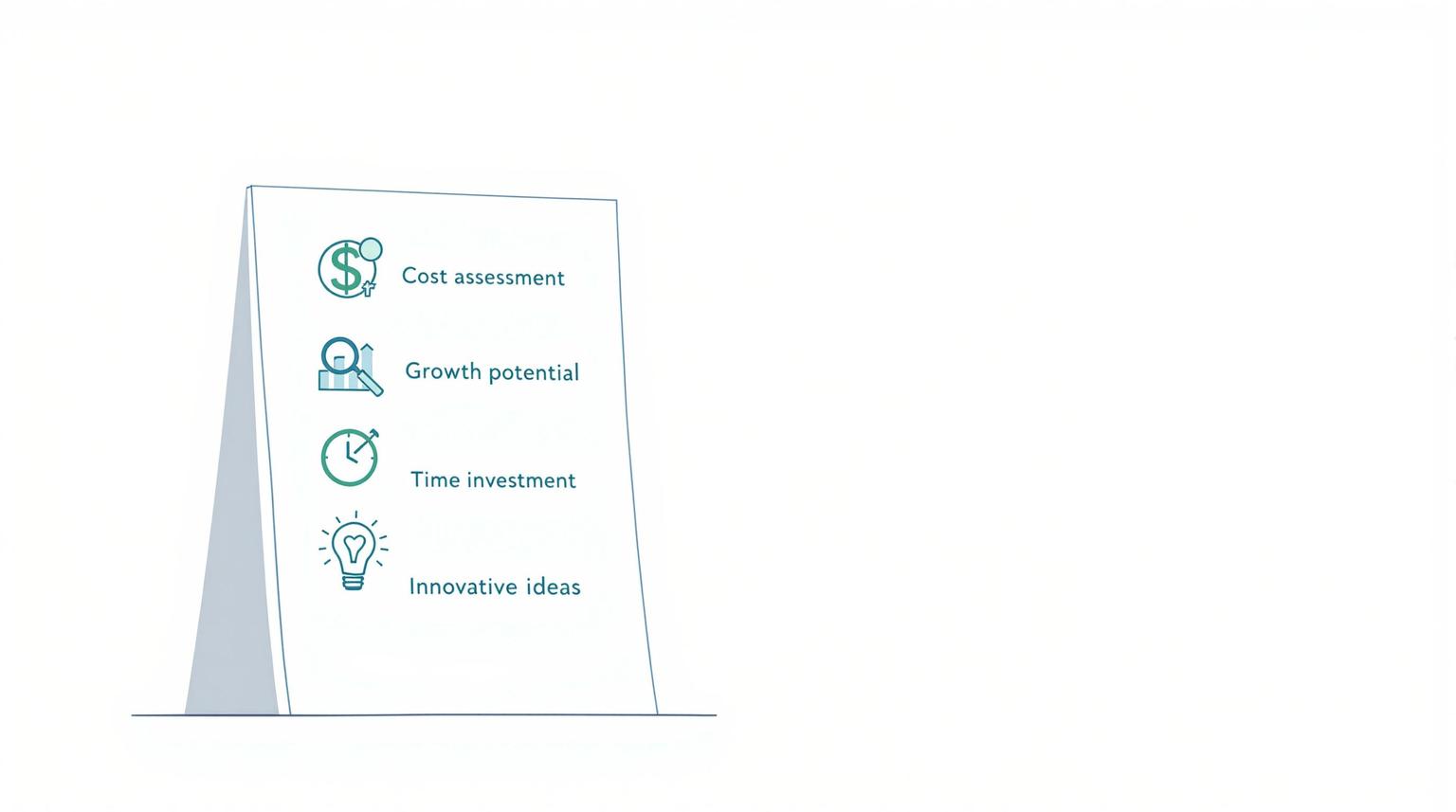
Checklist: Evaluate Certification ROI Before Investing
Certifications can boost your career, but they come with significant costs. Use this checklist to evaluate if a certification is worth your time and money.
Key Steps to Assess ROI:
- Calculate Total Costs: Include exam fees, study materials, training, travel, and renewal fees.
- Measure Career Benefits: Research job market demand, salary increases, and promotion opportunities linked to the certification.
- Evaluate Skills Gained: Ensure the certification provides relevant technical and leadership skills for your career goals.
- Check Market Value: Get employer feedback and assess the certification provider’s reputation.
- Do the Math: Compare total costs with potential financial and career benefits.
Quick ROI Example:
- Investment: $4,500
- Annual Salary Increase: $12,750
- Break-even Point: ~4 months
By following this checklist, you can make a smart, data-driven decision about pursuing certifications.
AI-Powered Certification ROI Calculator: Maximize Your Training Investment
Step 1: List All Costs
Before committing to a certification, break down all costs into three main categories to get a clear picture of the investment.
Add Up Direct Costs
Start with the core expenses:
- Exam fees: $150–$2,500
- Study materials: $200–$1,000
- Training programs: $1,500–$5,000
- Renewal fees
- Travel expenses
- Equipment needs
Here's a quick look at typical costs and renewal timelines:
| Cost Category | Typical Range | Renewal Period |
|---|---|---|
| Entry-Level Certs | $150–$500 | 2–3 years |
| Mid-Level Certs | $500–$2,000 | 1–2 years |
| Advanced Certs | $2,000–$5,000 | Annual |
Be sure to also factor in the time required to complete these steps.
Measure Time Requirements
Consider the time you'll need to invest:
- Study hours: 60–120 hours for most certifications
- Practice labs: 20–40 hours
- Exam duration: 2–4 hours, plus travel time
- Continuing education: 20–40 hours annually
- Preparation timeline: 3–6 months if studying part-time
Opportunity Costs
Think about what you might miss out on while pursuing the certification:
- Time spent on work projects or billable hours
- Other training opportunities you could explore
- Personal time, like evenings or weekends spent studying
- Potential impact on current job performance
- Time away from family or personal commitments
Understanding these costs upfront can help you make a more informed decision.
Step 2: Check Career Benefits
After figuring out the costs, take a closer look at how the certification might help your career and increase your earning potential. Choosing the right certification can shape your career path in meaningful ways.
Look at Job Market Demand
Dive into job postings to see how much demand there is for the certification you're considering:
- Search popular job boards like LinkedIn, Indeed, and platforms specific to your industry.
- Filter for positions that either require or prefer the certification you're targeting.
- Pay attention to the seniority levels where this certification is commonly mentioned.
- Spot companies that frequently list the certification in their job descriptions.
Focus on certifications that match current industry trends. For example, the growing focus on AI and digital transformation has made programs combining technical knowledge with leadership skills more appealing. Once you've gauged demand, think about how this aligns with potential salary increases or promotion opportunities.
Compare Salary and Promotion Potential
Use industry reports and job postings to get a clear picture of how the certification could affect your pay and career advancement. The right certification can be a stepping stone to higher-level roles and better compensation.
Align with Your Career Goals
Take what you've learned about market demand and earning potential, and see how it fits with your long-term career plans:
- Identify the roles or promotions you want to aim for.
- Connect the certification's benefits to your future career moves.
- Make sure the skills covered by the certification align with your career vision.
- Check whether employers in your target field truly value this certification.
Certifications that combine technical skills with leadership training can be especially helpful if you're aiming for senior positions or considering a shift to independent consulting.
Step 3: Review Skills and Use Cases
After analyzing the career advantages, it's time to dive into the skills you'll gain and how they fit into real-world situations.
Identify New Skills
Focus on both technical and leadership abilities that can expand your capabilities. Think about how these skills might help you:
- Transition from a technical role to a leadership position
- Navigate leadership challenges in the AI-driven landscape
- Combine entrepreneurial thinking with technical expertise
- Develop strategic decision-making for a broader business impact
Certifications that blend multiple skill areas are often the most impactful. For instance, a technical leadership certification might mix AI strategy insights with team management techniques, creating a well-rounded skill set that stands out in today's competitive market.
Next, evaluate how these skills align with your job responsibilities and improve your overall effectiveness.
Evaluate Job Relevance
Once you've identified the new skills, take a closer look at how they will influence your current and future roles.
1. Impact on Daily Work
Consider how these skills can enhance your day-to-day responsibilities, such as:
- Running more effective daily standups
- Allocating resources more efficiently
- Strengthening team communication and boosting productivity
2. Preparation for Future Roles
"The Tech Leader Program is the missing support system I needed when I was growing my career... a go-to resource for each and every question about how to diversify and grow our impact, influence, and income without depending on our employers." [1]
3. Timeline for Applying Skills
| Timeframe | Focus for Skill Application |
|---|---|
| Immediate | Enhance current role and team performance |
| Mid-term | Lead projects and plan strategically |
| Long-term | Pursue business development and entrepreneurship |
Look for certifications that strike a balance between practical skills you can use right away and those that support future growth. The best programs equip you with tools to excel in your current role while preparing you for bigger opportunities down the line.
sbb-itb-8feac72
Step 4: Check Market Value
Before committing to a certification, it's essential to evaluate its value in your industry. This helps ensure it leads to real career opportunities.
Get Feedback from Employers
-
Talk to Industry Professionals
Reach out to hiring managers or technical leaders at your target companies. Ask about their views on certifications, including:- Whether they require or prefer specific ones
- How certifications impact promotions
- If certifications influence compensation or candidate selection
-
Analyze Job Listings
Look at job postings from the past 3 to 6 months for your desired role. Pay attention to these trends:
| Aspect | What to Look For |
|---|---|
| Requirements | Is the certification listed as required or preferred? |
| Compensation | Do roles offering higher pay mention certifications? |
| Career Level | At what career stages are certifications most valued? |
| Industry Sectors | Which industries place more emphasis on certifications? |
Once you gather insights from employers and job postings, it’s time to assess the certification provider.
Evaluate the Certification Provider
The reputation of the organization issuing the certification matters. Here's how to assess it:
Industry Reputation
Choose providers with strong connections in the field. For example, Tech Leaders collaborates with professionals from top companies and startups to deliver programs that combine technical knowledge with leadership skills.
"We partner with leaders and entrepreneurs from leading companies and innovative startups around the world to help you gain objective insights, anticipate challenges, and speed up your learning curve in a high-performing and psychologically safe environment." [1]
Signs of Program Quality
Look for these indicators when reviewing a certification program:
- Partnerships with respected companies
- Positive outcomes for graduates
- Relevant and up-to-date curriculum
- Effective teaching methods
Provider History and Success
Dig into the provider's track record by checking:
- How long they’ve been operating
- The number of professionals they've certified
- Success stories from past participants
- Industry acceptance of their certifications
- How frequently they update their curriculum
Thoroughly evaluating these factors will help you determine if a certification is worth your investment.
Step 5: Do the Math
Now it’s time to crunch the numbers and figure out the financial returns of earning your certification.
Calculate Financial Gains
Use this table to estimate how much you could gain financially:
| Benefit Category | How to Calculate | Example |
|---|---|---|
| Salary Increase | Current salary × Expected % increase | $85,000 × 15% = $12,750 annual increase |
| Bonus Eligibility | Potential bonus in a new position | Additional $5,000–$10,000 annually |
| New Role Premium | Difference between current and target role | Technical Lead ($120,000) vs. Engineer ($85,000) = $35,000 increase |
| Training Budget | Percentage of costs reimbursed by employer | 50–100% of certification costs covered |
Don’t forget to look at the long-term financial impact - what these numbers mean over several years.
Compare Costs to Returns
Figure out how long it will take to recover your investment. Compare what you’re spending (certification fees, study materials, travel, and any income loss) with your expected financial benefits:
- Total Investment: $4,500
- Annual Financial Benefit: $12,750
- Break-even Point: About 4.2 months
To simplify:
Monthly Return = (Annual Benefit – Total Investment) ÷ 12
Beyond the Numbers
Certifications aren’t just about the money. They also offer non-financial perks that can be just as impactful.
For example, programs like Tech Leaders provide a long-term support system to help you grow professionally.
"The Tech Leader Program is the missing support system I needed when I was growing my career... It's hard to find the right coaching, mentorship and training on-the-job so we designed what I always wanted for myself: a go-to resource for each and every question about how to diversify and grow our impact, influence, and income without depending on our employers." – Todd Larsen, Co-Founder [1]
Other benefits include building your credibility, expanding your professional network, improving leadership and problem-solving skills, and gaining stronger recognition in your industry.
Extra: Leadership Growth Options
Certifications are great for building technical expertise, but pairing them with leadership training can take your career to the next level. Leadership training adds essential non-technical skills to your toolkit, boosting the value of your certifications. Let’s explore how leadership training complements technical certifications.
Tech Leaders Training Overview
Technical certifications often emphasize hard skills, but they don’t always cover leadership or entrepreneurial abilities. That’s where Tech Leaders (https://technical-leaders.com) steps in, providing technical professionals with the leadership skills they need to thrive.
Here’s how leadership training can work alongside technical certifications:
| Aspect | Technical Certification | Leadership Training | Combined Impact |
|---|---|---|---|
| Skills Focus | Technical expertise | Leadership and entrepreneurship | A well-rounded skill set |
| Career Impact | Role-specific advancement | Broader career opportunities | Faster career growth |
| Income Sources | Potential salary increases | New revenue opportunities | Greater earning potential |
By combining these two areas, you can gain benefits like faster career progression and better communication with stakeholders. Here’s what that could look like:
- Quicker career advancement by building both technical and leadership skills
- Improved ability to explain technical concepts to business leaders
- More opportunities for consulting or entrepreneurial ventures
- Better positioning for senior leadership roles in technical fields
The key is to choose leadership programs that align with your certification goals and career aspirations.
When evaluating leadership training, look for programs that offer:
- Tailored learning paths that match your specific goals
- Real-world application of leadership skills in technical settings
- Access to mentors and networking with peers in your industry
Combining technical expertise with leadership skills can open doors to new opportunities and help you stand out in your field.
Conclusion: Next Steps
You've worked through the ROI checklist - now it's time to determine whether investing in a certification makes sense for you. Here's how to move forward:
Create an ROI scorecard by summarizing your insights from each checklist section:
| Evaluation Area | What to Include | Action Items |
|---|---|---|
| Financial Impact | Direct costs, time commitment, potential salary gains | Compare total investment with expected returns over 2–3 years |
| Career Growth | Market demand, promotion potential, skill relevance | Align certification benefits with your career goals |
| Market Value | Employer feedback, provider credibility | Gather input from 2–3 industry professionals |
This scorecard will help you evaluate whether the certification is worth pursuing.
If your scorecard points to a positive ROI, take these steps:
- Document your baseline: Note your current salary, position, and skill set before starting the certification.
- Set clear milestones: Define specific goals for applying new skills within 3–6 months after completing the certification.
- Plan your timing: Schedule the certification during a period when your cash flow is stable, like peak earning months.
Enhance your certification journey by pairing it with leadership development opportunities. This combination can help you build a stronger career path.
Also, consider reviewing your certification's impact every quarter. Check how it affects your career growth and income, and adjust your professional development plans if needed. Regular reviews will help you confirm the ROI and refine your strategy.
If your analysis raises concerns about the ROI, don't rush into the certification. Look into other professional development options or wait for a better time to invest. The key is to make a smart, well-timed decision that supports both your financial goals and career aspirations.