
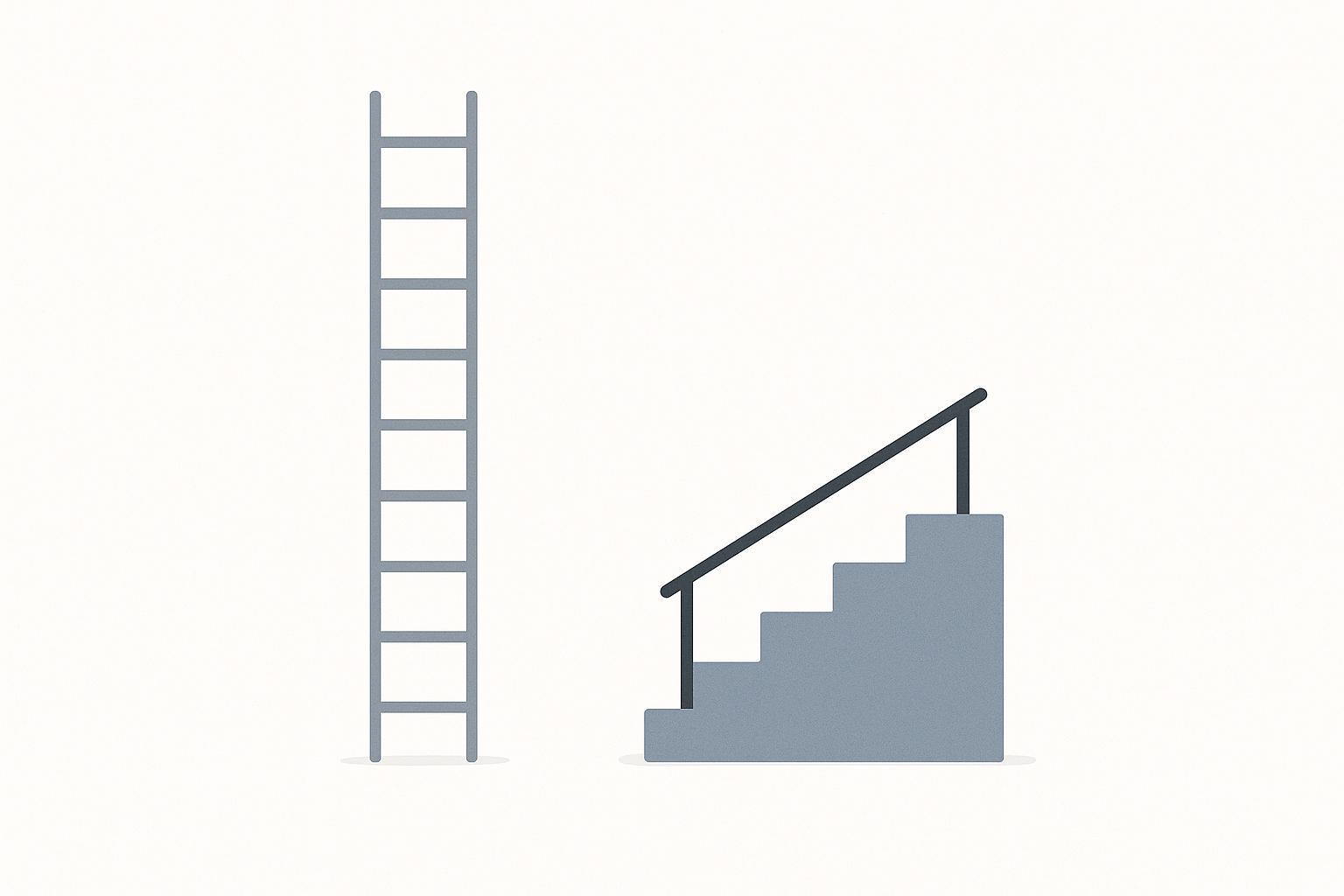
Hierarchy in Leadership: High vs. Low Power Distance
High power distance and low power distance leadership styles shape how organizations operate, communicate, and make decisions. High power distance emphasizes strict hierarchies, top-down authority, and formal communication. It works well for quick decisions but can limit employee input and engagement. Low power distance prioritizes collaboration, open communication, and shared decision-making, which encourages innovation but may slow processes in fast-paced settings. Understanding these differences is crucial for leaders managing diverse teams or global operations.
Key Takeaways:
- High Power Distance: Centralized authority, formal communication, quick decisions, but limited feedback and innovation.
- Low Power Distance: Decentralized authority, open communication, encourages creativity, but slower decision-making.
| Criteria | High Power Distance | Low Power Distance |
|---|---|---|
| Structure | Rigid hierarchy | Flat and decentralized |
| Leadership Style | Autocratic, directive | Democratic, participative |
| Communication | Formal, top-down | Open, free-flowing |
| Strengths | Speed in decisions, clear roles | Employee engagement, creativity |
| Challenges | Suppressed input, disengagement | Slower decisions, blurred roles |
Leaders should tailor their approach based on team needs and organizational goals while considering these dynamics.
1. High Power Distance Leadership
Organizational Structure
In high power distance organizations, authority is concentrated at the top, creating a rigid hierarchy that resembles a steep pyramid. Decisions are made primarily by executives, with little room for input from lower-level employees. These hierarchies are well-defined, with formal protocols governing interactions between ranks. Status symbols, like spacious offices or prestigious job titles, further emphasize these distinctions[1].
This centralized structure is prevalent in countries like China, India, Russia, and many Middle Eastern nations. Large multinational companies in these regions often operate under this model, with senior executives steering strategic decisions while lower-level employees focus on execution[1]. This setup naturally aligns with a leadership style that leans heavily on directive authority.
Leadership Style
Leaders in high power distance settings typically adopt an autocratic approach. They make decisions independently, rarely seeking input from their teams, and maintain a professional distance from subordinates[1].
This leadership style relies on obedience and respect for authority. Leaders expect their directives to be carried out without question, viewing consultation as a potential threat to their authority. Research by Kirkman et al. highlights that employees in such organizations are more likely to align with and follow leaders, particularly when those leaders exhibit ethical behavior[3]. However, this approach limits upward communication, as the focus remains on top-down directives.
Communication Dynamics
Communication in high power distance organizations is formal and flows almost exclusively from the top down. Subordinates are less likely to challenge authority, voice concerns, or provide feedback, which reinforces the existing power structure[2].
Fear of authority often shapes how employees communicate. Many may avoid direct confrontation or remain silent to sidestep conflict, which can hinder teamwork and problem-solving. Brockner et al. found that individuals in high power distance cultures are less inclined to seek opportunities to voice their opinions compared to those in low power distance environments[3]. This lack of open communication can disrupt the flow of information, leading to errors or missed opportunities for improvement[2].
Advantages and Challenges
High power distance leadership offers certain benefits, particularly when quick decision-making is essential. Centralized authority allows organizations to respond swiftly to crises or market changes, while clearly defined roles reduce uncertainty about responsibilities[1].
However, this model has its downsides. Employees often feel disengaged when their input is disregarded, which can stifle innovation and creativity. The absence of upward feedback can result in incomplete information and costly mistakes[2]. Additionally, rigid hierarchies may lead to higher turnover and lower morale, as employees seek workplaces where their contributions are valued. These structures can also hinder efforts to build inclusive and collaborative environments[2].
Understanding these dynamics is crucial when comparing high power distance leadership to the more participatory approach seen in low power distance organizations.
2. Low Power Distance Leadership
Organizational Structure
Low power distance leadership emphasizes accessibility and teamwork, breaking away from the rigid hierarchies typical of high power distance models. These organizations favor flat structures and shared decision-making, creating a framework where employees can easily approach leaders and contribute to strategic conversations[1].
In these setups, status symbols take a backseat, and leaders often adopt open-door policies, fostering direct engagement across all levels. For instance, many U.S.-based technology companies, such as Google, exemplify this approach by prioritizing open communication and inclusivity[1]. This flatter structure often leads to smaller gaps in pay between executives and employees, reflecting the egalitarian principles of this leadership style[4].
By spreading responsibilities more evenly, these organizations not only empower their teams but also enhance the speed and efficiency of information flow.
Leadership Style
Leaders in low power distance environments lean toward a democratic and inclusive style. Unlike the top-down, directive approach seen in more hierarchical models, they actively seek input from employees at all levels. This collaborative mindset values diverse perspectives as vital to sound decision-making[1].
Rather than issuing orders, these leaders focus on building consensus and encouraging team buy-in. They act more as mentors or coaches, guiding their teams through challenges and enabling them to take ownership of decisions within their areas of expertise. Emotional intelligence, active listening, and adaptability are key traits for leaders in such settings.
Communication Dynamics
In low power distance organizations, communication flows freely and openly across all levels. Employees are encouraged to share their thoughts and provide feedback without fear of negative consequences[2].
This open exchange of ideas eliminates many of the barriers found in more hierarchical systems. Regular, candid discussions about company goals, project hurdles, and potential improvements ensure that innovative ideas can surface from any level and quickly gain traction. However, leaders must carefully manage these open channels to strike a balance between transparency and operational efficiency.
Advantages and Challenges
Adopting low power distance leadership comes with several benefits, particularly in encouraging innovation and boosting employee engagement. When employees feel their voices are heard, they tend to be more committed to the organization's success. This often translates into higher job satisfaction, lower turnover rates, and greater creativity[1][2].
The collaborative nature of this approach also enhances an organization's ability to adapt to changes. Open communication and diverse viewpoints enable teams to identify opportunities and challenges more effectively. On the flip side, the emphasis on consensus can slow decision-making, which may pose challenges in fast-paced industries or during crises[1]. Additionally, spreading authority too broadly can sometimes lead to unclear accountability if decision-making processes aren't well-defined.
To address these challenges, programs that focus on developing collaborative leadership skills can be invaluable. For instance, Tech Leaders (https://technical-leaders.com) offers training designed to help technical experts build the interpersonal skills needed to excel in decentralized, modern workplaces. These initiatives can help bridge the gap between technical expertise and the collaborative demands of low power distance environments, offering a solid foundation for comparison with other leadership models.
10 minutes with Geert Hofstede... on Power Distance 10112014
sbb-itb-8feac72
Comparison: Benefits and Drawbacks
Examining high and low power distance leadership models reveals distinct strengths and challenges. These two approaches differ significantly in how they structure organizations - centralized versus decentralized - which directly impacts communication styles and strategic decision-making.
The table below highlights the main differences between these leadership styles:
| Criteria | High Power Distance Leadership | Low Power Distance Leadership |
|---|---|---|
| Organizational Structure | Centralized, rigid hierarchy with clear lines of authority | Decentralized, flat structure with distributed authority |
| Leadership Style | Autocratic, directive, top-down decision-making | Democratic, participative, collaborative approach |
| Communication Dynamics | Formal, indirect, status-conscious interactions | Informal, direct, open communication channels |
| Primary Advantages | Quick decisions, clear roles, efficient crisis response | Innovation, employee engagement, adaptability |
| Main Challenges | Suppressed input, blind spots, employee disengagement | Slower decisions, blurred roles, potential miscommunication |
Research underscores how communication in these models diverges. In high power distance organizations, communication often suffers due to fear of authority and reluctance to provide feedback, which can undermine overall performance despite intentions for efficiency[2]. On the other hand, low power distance environments thrive on open communication, which is essential for fostering safety and success. However, the focus on consensus can slow decision-making, creating challenges during high-pressure situations or in fast-moving industries[1].
Employee behavior also varies greatly. High power distance cultures emphasize obedience to authority, where ethical leadership strongly influences psychological safety and organizational culture[3]. Studies, such as those by Kirkman et al. (2009), show that employees in these environments are more likely to follow leaders without question. In contrast, low power distance cultures encourage employees to express their opinions and seek fairness, creating a more participatory workplace dynamic[3].
Innovation is another area where these models diverge. High power distance organizations often face hurdles in fostering innovation due to rigid structures that discourage questioning established norms. By contrast, low power distance organizations empower employees to challenge ideas and share their perspectives, driving creativity and progress. In the U.S., where low power distance is culturally preferred, employees generally expect participative leadership and opportunities to contribute to decision-making.
Financially, these differences are significant. High power distance structures may achieve short-term efficiency through rapid decision-making but often face higher turnover and missed opportunities due to limited input from employees. Meanwhile, low power distance organizations, while slower to reach decisions, benefit from engaged employees and innovative solutions, which support long-term growth.
These contrasts influence not only internal operations but also leadership effectiveness on a global scale. As globalization pushes organizations toward hybrid models, many Western companies, especially in the U.S., are adopting low power distance structures while retaining some hierarchical elements for operational efficiency[1][4]. The challenge lies in choosing the right approach for the situation - whether it’s leveraging high power distance for quick decisions in a crisis or embracing low power distance for collaboration in creative industries.
For technical professionals stepping into leadership roles, understanding these dynamics is essential for managing teams effectively. Programs like Tech Leaders are designed to equip professionals with the skills needed to excel in decentralized workplaces, balancing the need for decisiveness with the benefits of collaboration.
Conclusion
Choosing between high and low power distance leadership isn’t about picking one approach as universally better. Instead, it’s about aligning your leadership style with the specific needs of the situation. Effective leaders understand the importance of adjusting their approach based on organizational demands, cultural norms, and team dynamics.
High power distance leadership often thrives in environments like crisis management, heavily regulated industries, or workplaces that require clear command structures. On the other hand, low power distance leadership works well in creative fields, tech companies, and organizations that emphasize innovation and employee engagement. Success in leadership comes from recognizing these cultural contexts and adapting accordingly, rather than sticking rigidly to a single method.
For instance, in a diverse team, you might find a software engineer from a high power distance culture expecting precise instructions and formal communication. Meanwhile, a colleague from the U.S., a traditionally low power distance culture, may lean toward collaborative problem-solving and open discussions. Balancing these expectations requires a nuanced understanding of cultural differences.
Cross-cultural competence is a critical skill for leaders. Research supports this: Kirkman et al. (2009) found that employees in high power distance organizations are more likely to follow and identify with their leaders, while Brockner et al. (2001) showed that people in low power distance cultures value opportunities for self-expression and fairness in decision-making [3]. Understanding these dynamics can significantly improve communication and team cohesion.
It’s not just about technical expertise - leaders also need strong interpersonal skills. Programs like Tech Leaders are designed to bridge this gap, focusing on leadership development and cross-cultural communication. Stephen Bates from Tech Leaders highlights the importance of cultivating a global perspective to lead effectively in today’s interconnected world.
Start applying these insights by examining your leadership style. Get feedback from your team about how they prefer to communicate and make decisions. Take cultural backgrounds into account and adjust your approach as needed. Flexibility and awareness are far more effective than rigidly adhering to any one leadership philosophy.
The best leaders are those who can seamlessly navigate between hierarchical and egalitarian styles, driving their teams toward success. In a world that’s increasingly interconnected, the ability to adapt to diverse cultural settings is a hallmark of exceptional leadership.
FAQs
How can leaders successfully manage both high and low power distance dynamics in multicultural teams?
Balancing leadership styles between high and low power distance cultures is all about understanding and adapting to the expectations of your team. In high power distance cultures, leaders are typically viewed as authority figures, with clear hierarchies playing a central role in workplace dynamics. On the other hand, low power distance cultures prioritize equality, open communication, and shared decision-making.
To lead effectively in such diverse settings, it’s important to cultivate cultural awareness and encourage open conversations to learn what works best for your team. A thoughtful approach might involve blending structured leadership with opportunities for collaboration. For instance, leaders can establish clear expectations and guidelines while also creating space for feedback and inclusive discussions. This way, every team member feels valued and engaged, no matter their cultural background.
How can leaders shift from a high power distance to a low power distance leadership style?
Shifting from a high power distance to a low power distance leadership style means creating an environment built on collaboration, openness, and trust. Start by encouraging team members to voice their ideas and opinions, no matter their position. Listen actively, acknowledge their input, and show genuine appreciation - this helps build trust and mutual respect.
To break down hierarchical barriers, focus on sharing decision-making responsibilities. Empower employees to take ownership of their tasks and make meaningful contributions. Regular, constructive feedback and an emphasis on teamwork over rigid authority can further reinforce this transition. The ultimate aim? A workplace where everyone feels valued and motivated to play an active role.
When can a combination of high and low power distance leadership styles benefit an organization?
A blend of high and low power distance leadership styles can work wonders in organizations where both strong authority and open communication are essential. Take industries where rapid decision-making is crucial - here, a high power distance structure can provide the necessary efficiency and accountability. At the same time, weaving in aspects of low power distance, like encouraging employee input and teamwork, can spark creativity and adaptability.
This mixed approach is especially effective in diverse teams or global companies, where cultural backgrounds shape how people view hierarchy. By combining these styles, leaders can maintain order while giving team members the confidence to share their expertise and ideas.