
User Story Mapping: A Guide for Stakeholder Collaboration
User story mapping simplifies product planning by visually organizing user journeys and prioritizing tasks. It bridges gaps between technical teams and stakeholders, ensuring alignment on user needs and business goals. This method, developed by Jeff Patton, arranges user stories horizontally (user journey) and vertically (priorities), creating a clear, actionable plan.
Key takeaways:
- What it is: A visual tool to map user journeys and prioritize features.
- Why it matters: Aligns stakeholders, uncovers dependencies, and clarifies priorities.
- How it helps: Improves collaboration, refines product vision, and supports iterative planning.
This approach is especially useful for technical leaders and entrepreneurs, helping them connect technical execution with business strategy while honing leadership skills like facilitation and negotiation.
User Stories & Story Mapping Demystified by Jeff Patton
Core Principles of User Story Mapping
Building on the earlier discussion about teamwork and alignment, these principles explain how user story mapping turns abstract ideas into actionable plans. At its core, user story mapping relies on three key principles that make it an effective tool for collaboration. These principles create a foundation for productive and focused mapping sessions.
Structure and Components of a User Story Map
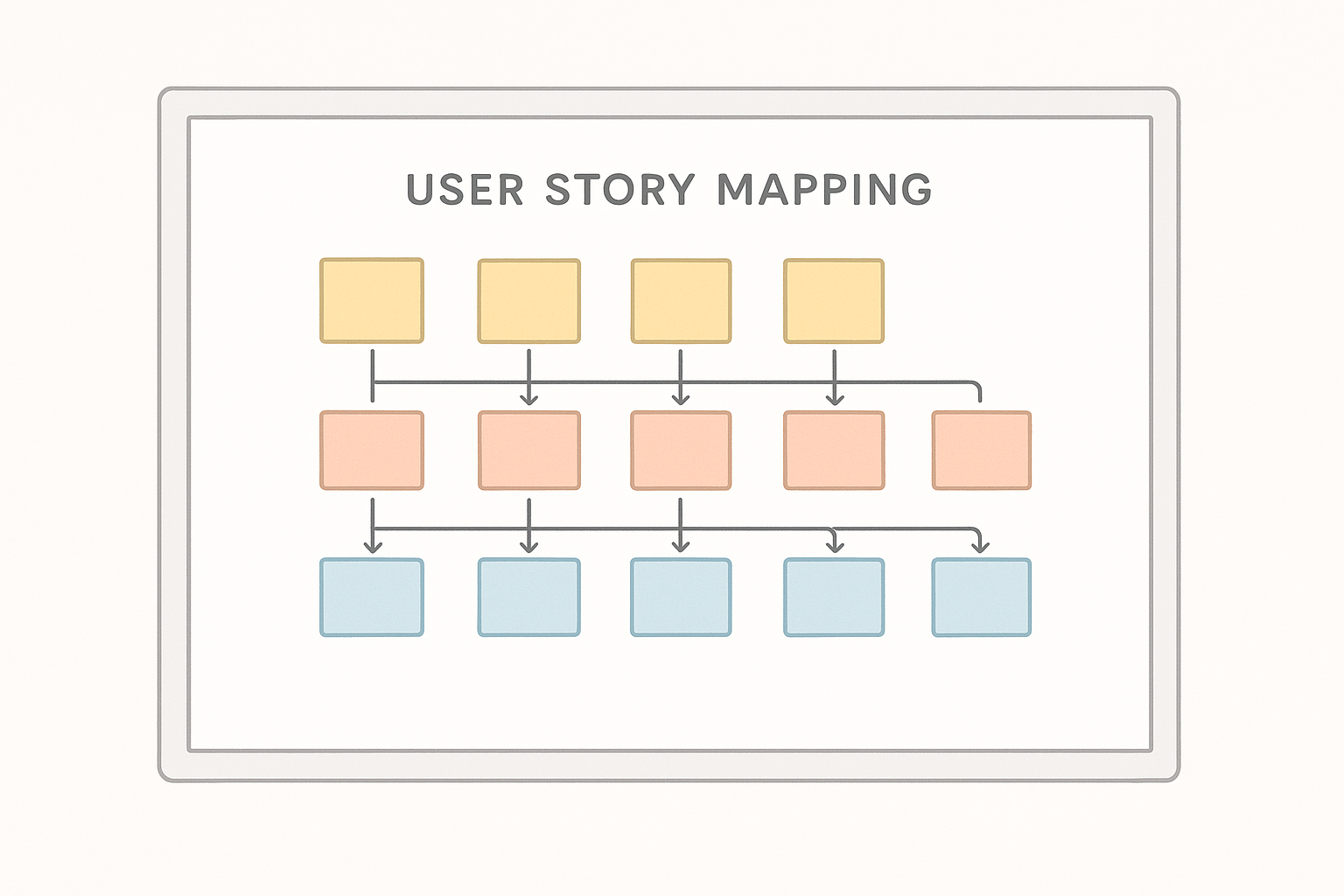
A user story map is built around a clear, two-dimensional framework that transforms broad concepts into a visual, organized plan. The horizontal axis represents the user's journey through the product, flowing from left to right in chronological order. This journey is divided into high-level activities, which represent the major objectives users aim to achieve.
These activities form the "backbone" of the map and are placed at the top of vertical columns. Beneath each activity, you'll find user tasks - specific actions users take to complete those broader activities. These tasks create the second horizontal layer, offering more detailed insights into the user experience.
The vertical axis reflects priority and implementation order. At the top of each column are the most critical user stories, directly tied to the user tasks. Moving downward, the stories become less essential for the main user experience. This vertical stacking naturally defines release boundaries, with the top slice often representing the minimum viable product (MVP).
Think of this structure like planning a road trip. The horizontal axis is the route, while the vertical axis highlights the must-visit stops and their order of importance. This layout also makes dependencies clear, helping stakeholders understand why certain features must come first. It prevents the common pitfall of creating disconnected features that fail to deliver a cohesive user experience.
User-Centered Approach
The best mapping sessions always put the user front and center. Every discussion starts with the question: "What is the user trying to do?" rather than "What features should we build?"
This shift in focus moves the conversation from features to user outcomes. Instead of debating whether a feature is technically feasible or strategically important, teams ask whether it genuinely helps users achieve their goals. This approach naturally filters out "nice-to-have" features that don’t add meaningful value.
A user-centered approach also means relying on actual user research and data during mapping sessions. Personas, interview findings, and usage data should guide discussions. When disagreements arise, user evidence becomes the deciding factor, not internal politics or personal opinions.
Even the language used during mapping reflects this focus. User stories should follow the classic format: "As a [user type], I want [functionality] so that [benefit]." This structure keeps the team focused on delivering value to users, rather than just listing system capabilities.
That said, prioritizing the user doesn’t mean ignoring business goals or technical constraints. Instead, it provides a way to evaluate how these factors impact the user experience. When stakeholders see how their requests affect users, they’re often more willing to adjust their expectations around timing and implementation details.
Required Prerequisites
Effective user story mapping doesn’t just happen - it requires preparation and the right mindset from everyone involved. One of the most important prerequisites is stakeholder alignment on the session's purpose. Everyone should be clear on whether the goal is to create an initial product vision, plan a specific release, or identify gaps in an existing product.
Another essential step is having a clear definition of the user. Teams need to agree on who their primary users are before mapping their journeys. This means using well-documented personas or user segments that everyone understands. Vague or overly broad definitions lead to maps that try to cater to everyone but end up serving no one effectively.
Dedicated time and space is also critical. Productive mapping sessions require focused effort from key stakeholders. Instead of cramming everything into one long meeting, plan for multiple sessions with enough time to think and refine ideas.
Participants must also have a shared understanding of user stories. While they don’t need to be Agile experts, everyone should know what user stories are and how they differ from traditional requirements. A quick refresher before the session can help avoid confusion and keep discussions on track.
Lastly, access to user research and data is invaluable. Whether it’s survey results, interview notes, or analytics, real user insights ground the discussion in facts, not assumptions. Meeting these prerequisites ensures that your mapping session stays focused, productive, and aligned with the goal of creating the best possible user experience.
Step-by-Step Guide to Collaborative User Story Mapping
Now that you’re familiar with the core concepts, it’s time to roll up your sleeves and put them into action. Running a successful user story mapping session requires thoughtful preparation, skilled facilitation, and a well-organized follow-up. Each step turns abstract ideas into actionable plans.
Preparing for Mapping Sessions
The foundation of a productive session lies in careful planning. Start by defining clear objectives: What product or feature are you mapping? What key decisions need to be made? What measurable outcomes, like the number of user stories created or the level of team alignment, will signal success? [4]
Next, assemble a cross-functional team of 5–8 people. Include representatives from product management, design, development, customer support, sales/marketing, the business owner, UX research, and a facilitator [1]. Keep the group small and focused - if you have too many stakeholders, consider holding multiple sessions or inviting some participants as observers [4]. Aim for a mix of collaborative, open-minded individuals who are closely connected to the user experience. For technical leaders transitioning into entrepreneurship, this kind of cross-functional collaboration offers invaluable insights into how different perspectives shape product decisions.
If you’re hosting an in-person session, gather materials like whiteboards, sticky notes, markers, and ensure the space is comfortable. For remote sessions, choose digital tools like CardBoard, Miro, or storiesonboard.com [1]. Create a sample legend for sticky note colors - green for user paths, yellow for user stories, red for challenges, and small bright stickers for business preferences [3]. Lay out the user journey horizontally to provide structure [3]. Additionally, set up a "Data corner" with user personas and analytics, and designate a "Parking Lot" for unexpected questions or issues [3][4].
To get everyone on the same page, send a one-page brief at least 48 hours before the session. Include the objectives, key questions, and relevant background information [4].
Running Effective Mapping Sessions
Once everything is set, focus on creating an atmosphere of structured and inclusive collaboration. Start by fostering psychological safety - make it clear that all ideas are welcome, and the goal is to learn and improve together. Establish ground rules like “Critique ideas, not people” and “Build on others’ ideas” [4].
For in-person sessions, ask participants to put away phones and laptops (except for the facilitator) [2]. Begin with relevant data - like user research, analytics, and personas - to ground the discussion before diving into customer journeys [2].
Break the session into manageable chunks. Use an agenda that includes icebreakers to warm up the group and schedule regular breaks to prevent burnout. If needed, divide the session into 2–3-hour segments spread over several days. This approach accommodates different schedules and gives participants time to reflect [5][2].
During the brainstorming phase, encourage participants to jot down user stories on sticky notes and place them under the relevant activities in the user journey. Rotate who presents ideas to keep everyone engaged, and ask open-ended questions like, “What would the user do next?” or “What challenges might arise here?” When disagreements occur, refer back to user research and data to keep the discussion fact-based. Allow time for reflection - sometimes stepping away and revisiting ideas later leads to better outcomes [2].
After brainstorming, move on to prioritizing and refining the user stories.
Prioritizing and Refining User Stories
Once you’ve gathered a range of ideas, it’s time to organize them. Arrange user stories vertically by priority: the most critical ones - those essential for users to complete their main tasks - go at the top, while less important ones sit lower.
Use a value matrix to guide prioritization, weighing user value against implementation effort [1][5]. Stories that offer high user value with low effort should be tackled first, while those requiring significant effort but delivering minimal value may need to be reconsidered.
Incorporate feedback from stakeholders through structured discussions. Refine the stories iteratively, breaking down large or complex ones into smaller, more manageable pieces. Ask questions like, “If we only built the top row, would users still be able to achieve their main goal?” or “What’s the impact if we push this story to a later release?” Identify and split stories that span multiple tasks or are too broad for a single sprint. Document any dependencies or assumptions that emerge during this process.
The outcome is a prioritized backlog that everyone understands and supports. Each team member should leave knowing what will be built first, why those choices were made, and how their input shaped the final plan. This clarity fosters ongoing collaboration throughout development.
"Typically, I'd run these things to try and get as much of the planning, personas, and backbone done on day one as possible. By that point, most people are tapped out because the cognitive load is high. Then the team can go away and sleep on it. Once they've had time to reflect on it, they'll come back with other ideas for user stories and thoughts about how they'd do the work before they start sequencing." - Nicholas Muldoon, Co-Founder, Easy Agile [2]
sbb-itb-8feac72
Best Practices for Stakeholder Engagement and Alignment
Effective stakeholder engagement is the backbone of successful user story mapping. Beyond initial mapping sessions, maintaining consistent involvement and alignment ensures long-term success. The key lies in fostering ongoing collaboration and a shared understanding. Here's how to make it happen.
Practical Tips for Engagement
Start with psychological safety. Before diving into mapping, establish a space where everyone feels comfortable sharing ideas. Set clear ground rules to encourage open participation. If conflicts arise, address them head-on with focused discussions that allow everyone to express their views. Practice empathetic listening, ask open-ended questions, and paraphrase responses to confirm understanding [9].
Clarify roles and shared language. Make sure everyone knows their responsibilities - who calls the shots, who provides technical expertise, and who represents the user’s perspective. Agree on a common vocabulary to avoid confusion when discussing user journeys and story priorities [1].
Encourage constructive conflict. Healthy debates can lead to better solutions. Focus on understanding shared problems, communicating respectfully, and staying open to different viewpoints. Avoid destructive conflicts where the goal becomes "winning" rather than solving the issue. Work together to uncover root causes and address key concerns [9].
By laying this groundwork, you create an environment that supports productive collaboration.
Sustaining Long-Term Collaboration
User story mapping is not a one-time event - it’s a living, evolving tool. As your understanding grows and project requirements shift, your story map should adapt. Keeping it visible and updated ensures transparency and alignment over time [6][7][1].
Hold regular check-ins. Use the story map as a central reference during sprint reviews to communicate progress and reinforce shared understanding [8][1].
Keep the map current. Regular updates are essential to reflect changes in priorities, new insights, or adjustments to the project scope [6][7][1].
Integrate feedback consistently. Establish feedback loops with stakeholders and end users to stay aligned with both user needs and business goals [7][1].
Document decisions and their reasoning. Record why certain stories were prioritized or deprioritized. This helps maintain clarity and ensures everyone understands the rationale behind key choices.
Encouraging open dialogue and incorporating diverse perspectives strengthens the development process [1].
When stakeholder alignment becomes an ongoing conversation, user story mapping transforms into a shared framework that keeps the team focused on delivering meaningful results for users.
Applying User Story Mapping in Technical Leadership and Entrepreneurship
User story mapping is proving to be a game-changer for technical leaders and entrepreneurs, helping align technical expertise with business goals. By connecting the dots between user needs and strategic objectives, it’s become an essential tool for those navigating leadership roles or launching ventures. Beyond clarifying user requirements, it’s now a driver for leadership growth and entrepreneurial success.
Bridging Technical and Non-Technical Skills
Technical leaders often excel at solving complex problems but may struggle to articulate how their solutions impact the business. This is where user story mapping shines - it creates a shared visual framework that ties technical tasks to user outcomes and business priorities.
With this tool, leaders can facilitate productive discussions among developers, designers, product managers, and business stakeholders. The map acts as a neutral space, allowing teams to balance technical constraints with user needs and business goals. Instead of getting bogged down in technical jargon, the focus shifts to user journeys and the value each story brings.
Story mapping also helps uncover gaps in understanding early on. For example, it can reveal where a team’s assumptions about user behavior don’t align with stakeholder expectations, preventing costly missteps later in the process. For distributed teams, it becomes a centralized guide that keeps everyone on the same page, regardless of time zones or communication challenges. It’s also a great onboarding tool, helping new team members quickly grasp the project’s goals and structure.
In addition, leading these mapping sessions hones critical soft skills for technical leaders, such as active listening, conflict resolution, and guiding discussions toward actionable outcomes. These skills are invaluable when presenting plans to executives or negotiating resources across departments.
Supporting Career Transitions
Beyond improving team collaboration, user story mapping plays a pivotal role in helping technical professionals advance their careers. For those transitioning into consulting or entrepreneurship, it provides a framework to think beyond technical execution and embrace a business-oriented mindset.
By focusing on the entire user experience, not just technical implementation, story mapping enables professionals to position their solutions as strategic assets. This shift in perspective helps them build credibility as trusted partners, making career moves smoother and more impactful.
In today’s tech landscape, understanding how solutions fit into broader business strategies is crucial. Story mapping helps identify where technologies like AI can genuinely enhance user experiences, ensuring that solutions address real-world problems rather than chasing trends. This user-first approach delivers measurable results that resonate with stakeholders.
The collaborative skills gained through story mapping also prepare professionals for the stakeholder management side of entrepreneurship. Whether it’s pitching to investors, gathering user feedback, or aligning co-founders, the ability to lead meaningful conversations about user needs becomes a significant advantage.
Tech Leaders has recognized this gap between technical expertise and business acumen. Their engineering leadership and entrepreneurship programs are designed to equip technical professionals with the tools they need - like stakeholder collaboration and AI business strategy - to thrive in today’s fast-evolving tech environment.
Conclusion
User story mapping has become a powerful tool for fostering collaboration among stakeholders by creating a common language that bridges technical and non-technical teams. This visual approach simplifies communication, aligns priorities, and helps transform team efforts into strategies that make a meaningful difference. By focusing on user journeys instead of technical details, it breaks down barriers and sparks productive conversations about what truly matters.
Beyond improving project clarity, story mapping also helps develop essential soft skills like facilitation, conflict resolution, and strategic thinking - skills that are vital for career growth. Whether you're managing distributed teams, presenting to executives, or stepping into consulting roles, the collaborative skills you build during story mapping sessions can become invaluable assets. These sessions are not just about planning; they are about shaping how teams work together and solve problems.
Story mapping also reshapes how technical professionals approach entrepreneurial opportunities. It encourages a shift from purely execution-focused thinking to a broader, business-driven perspective. By reframing technical tasks as strategic investments, this method highlights their value in driving business outcomes. This mindset is particularly useful when working with AI technologies, ensuring that innovation aligns with real user needs rather than chasing fleeting trends.
In today’s rapidly changing tech environment, blending technical expertise with business insight is more important than ever. User story mapping offers a practical way to cultivate these hybrid skills, making it an indispensable tool for technical professionals aiming to elevate their impact in the digital age.
For those ready to take their skills further, Tech Leaders provides engineering leadership training and entrepreneurship programs designed to help you turn your technical expertise into actionable, marketable solutions. Visit Tech Leaders to access more resources and take the next step in your professional journey.
FAQs
How does user story mapping help technical teams and stakeholders work together more effectively?
User story mapping is a powerful tool that helps technical teams and stakeholders work together by laying out a visual map of user journeys and project priorities. This shared visual framework ensures everyone is on the same page about the product's objectives and encourages open, productive communication.
When stakeholders actively participate in the mapping process, it brings in a variety of perspectives, highlights potential challenges early on, and aligns everyone on what matters most. This collaborative effort not only leads to smarter decisions but also builds stronger connections among team members, ultimately resulting in a more effective product.
What do you need to prepare for a successful user story mapping session?
To run an effective user story mapping session, begin by setting clear goals and gathering the right team. This typically includes key stakeholders and, where applicable, developers. Having a well-thought-out agenda is crucial for maintaining focus and ensuring enough time for everyone to collaborate effectively.
Another key step is to define user personas and map out the user journey beforehand. This groundwork fosters a shared understanding among participants and helps keep priorities aligned. Finally, create a collaborative atmosphere using tools like sticky notes or digital boards. These visual aids not only help organize ideas but also encourage active participation from everyone involved.
What are the benefits of user story mapping for technical leaders moving into entrepreneurial roles?
User story mapping provides technical leaders with a clear and visual way to navigate the shift into entrepreneurial roles. It lays out a framework that encourages collaboration and helps align everyone - technical and non-technical stakeholders alike - on shared project goals and user needs.
This method helps leaders zero in on top priorities, organize workflows more efficiently, and keep project scope manageable. By doing so, it minimizes risks and ensures efforts are directed toward delivering impactful results. With user story mapping, leaders can rally their teams, build agreement, and steer product development toward success in their entrepreneurial ventures.